

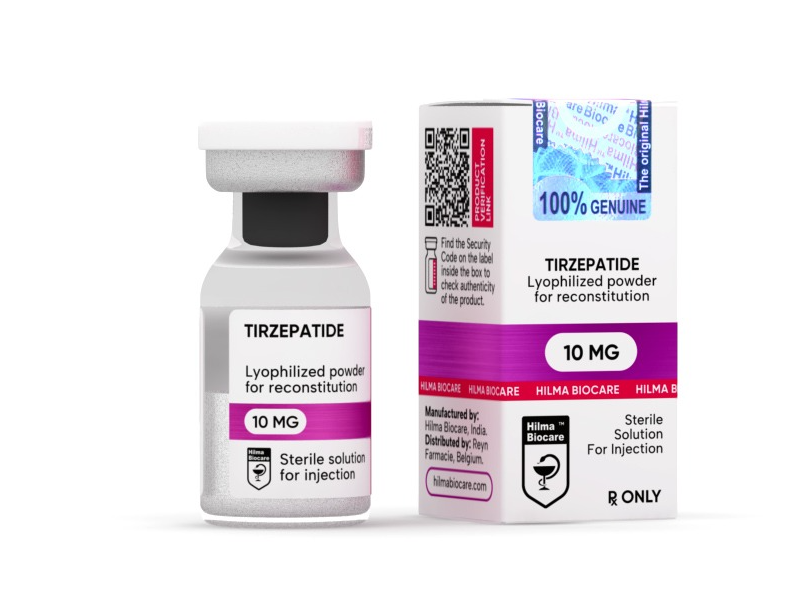
Tirzepatide 10mg
Tirzepatide Specifications:
Company: Hilma Biocare
Active ingredient half-life: up to 5 days
Group: Body weight correction
Subgroup: Injectable / lyophilized powder
Dosage: 10 mg/ml
Application (Men): 2.5–15 mg per week (consult your doctor)
Packaging: 1 vial
Contents (active ingredient): a dual agonist of GIP and GLP-1 receptors, an analogue of gastric inhibitory polypeptide (GIP) that stimulates insulin release by the pancreas.
Water retention: Depends on the situation, consult your doctor
Aromatization: No
Description:
Tirzepatide is a dual agonist of GIP and GLP-1 receptors. Tirzepatide is an analogue of gastric inhibitory polypeptide (GIP), a human hormone that stimulates insulin release from the pancreas. Tirzepatide is a linear polypeptide of 39 amino acids, chemically modified by lipidation to improve its cellular uptake and metabolic stability.
Indication:
Treatment of type 2 diabetes mellitus and weight loss. Tirzepatide is used to improve glycemic control in combination with diet and exercise.
Mechanism of action
: Tirzepatide has a higher affinity for GIP receptors than for GLP-1 receptors, and this dual agonist action provides a more pronounced reduction in hyperglycemia compared to a selective GLP-1 receptor agonist. Tirzepatide mimics the action of natural GIP at the GIP receptor. At the GLP-1 receptor, tirzepatide preferentially forms cAMP (a messenger involved in the regulation of glycogen, sugar, and lipid metabolism) instead of attracting beta-arrestin. This combination of its preference for the GIP receptor and the specific signaling properties of GLP-1 increases insulin secretion. Tirzepatide increases adiponectin and adipokine levels, which are involved in the regulation of glucose and lipid metabolism, with a maximum increase of 26% from baseline after 26 weeks at a 10 mg dose.
Peak plasma concentrations of tirzepatide occur 24 to 48 hours after injection, and steady state is reached after 4 to 5 weeks of treatment. The volume of distribution of tirzepatide is 5.27 L and its clearance is 0.0288 L/h. The pharmacokinetics of tirzepatide are not altered by renal impairment; no dose adjustments are necessary. No drug interactions have been identified.
Dosage and Administration:
Tirzepatide is administered subcutaneously, usually once a week. The injection site is not important. The standard starting dose for adults is 2.5 mg, which may be increased to 5 mg, 7.5 mg, 10 mg, or 15 mg, depending on individual response and tolerability. It is important to follow your doctor's instructions regarding dose adjustments.
Side effects:
Common side effects of tirnepide may include gastrointestinal disturbances such as nausea, stomach discomfort, constipation, and abdominal pain. Clinical studies have shown that serious side effects are rare and may include hypoglycemia, pancreatitis, renal and thyroid dysfunction, and allergic reactions. Inform your doctor immediately if any side effects occur.
Contraindications:
Tirzepatide is not recommended for use in patients with a personal or family history of medullary thyroid cancer or multiple endocrine neoplasia type 2 syndrome. The effect of tirzepatide on pancreatitis has not been studied. Tirzepatide is not indicated for patients with type 1 diabetes.
Drug Interactions:
Tirzepatide may interact with other medications, including insulin and other antidiabetic drugs that may increase the risk of hypoglycemia; medications that affect gastrointestinal motility; and certain blood pressure medications. Before taking tirzepatide, tell your doctor about all medications and supplements you are taking to avoid possible adverse interactions.
Tirzepatide Specifications:
Company: Hilma Biocare
Active ingredient half-life: up to 5 days
Group: Body weight correction
Subgroup: Injectable / lyophilized powder
Dosage: 10 mg/ml
Application (Men): 2.5–15 mg per week (consult your doctor)
Packaging: 1 vial
Contents (active ingredient): a dual agonist of GIP and GLP-1 receptors, an analogue of gastric inhibitory polypeptide (GIP) that stimulates insulin release by the pancreas.
Water retention: Depends on the situation, consult your doctor
Aromatization: No
Description:
Tirzepatide is a dual agonist of GIP and GLP-1 receptors. Tirzepatide is an analogue of gastric inhibitory polypeptide (GIP), a human hormone that stimulates insulin release from the pancreas. Tirzepatide is a linear polypeptide of 39 amino acids, chemically modified by lipidation to improve its cellular uptake and metabolic stability.
Indication:
Treatment of type 2 diabetes mellitus and weight loss. Tirzepatide is used to improve glycemic control in combination with diet and exercise.
Mechanism of action
: Tirzepatide has a higher affinity for GIP receptors than for GLP-1 receptors, and this dual agonist action provides a more pronounced reduction in hyperglycemia compared to a selective GLP-1 receptor agonist. Tirzepatide mimics the action of natural GIP at the GIP receptor. At the GLP-1 receptor, tirzepatide preferentially forms cAMP (a messenger involved in the regulation of glycogen, sugar, and lipid metabolism) instead of attracting beta-arrestin. This combination of its preference for the GIP receptor and the specific signaling properties of GLP-1 increases insulin secretion. Tirzepatide increases adiponectin and adipokine levels, which are involved in the regulation of glucose and lipid metabolism, with a maximum increase of 26% from baseline after 26 weeks at a 10 mg dose.
Peak plasma concentrations of tirzepatide occur 24 to 48 hours after injection, and steady state is reached after 4 to 5 weeks of treatment. The volume of distribution of tirzepatide is 5.27 L and its clearance is 0.0288 L/h. The pharmacokinetics of tirzepatide are not altered by renal impairment; no dose adjustments are necessary. No drug interactions have been identified.
Dosage and Administration:
Tirzepatide is administered subcutaneously, usually once a week. The injection site is not important. The standard starting dose for adults is 2.5 mg, which may be increased to 5 mg, 7.5 mg, 10 mg, or 15 mg, depending on individual response and tolerability. It is important to follow your doctor's instructions regarding dose adjustments.
Side effects:
Common side effects of tirnepide may include gastrointestinal disturbances such as nausea, stomach discomfort, constipation, and abdominal pain. Clinical studies have shown that serious side effects are rare and may include hypoglycemia, pancreatitis, renal and thyroid dysfunction, and allergic reactions. Inform your doctor immediately if any side effects occur.
Contraindications:
Tirzepatide is not recommended for use in patients with a personal or family history of medullary thyroid cancer or multiple endocrine neoplasia type 2 syndrome. The effect of tirzepatide on pancreatitis has not been studied. Tirzepatide is not indicated for patients with type 1 diabetes.
Drug Interactions:
Tirzepatide may interact with other medications, including insulin and other antidiabetic drugs that may increase the risk of hypoglycemia; medications that affect gastrointestinal motility; and certain blood pressure medications. Before taking tirzepatide, tell your doctor about all medications and supplements you are taking to avoid possible adverse interactions.