

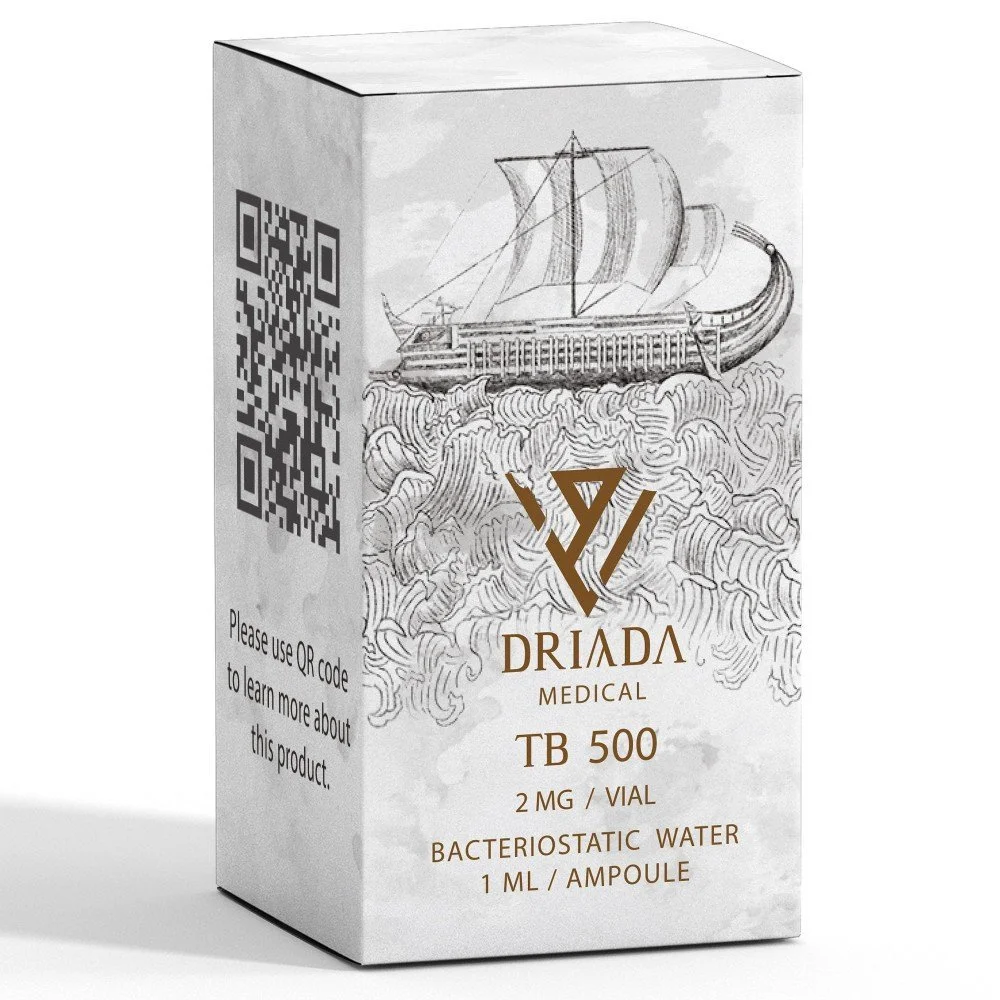
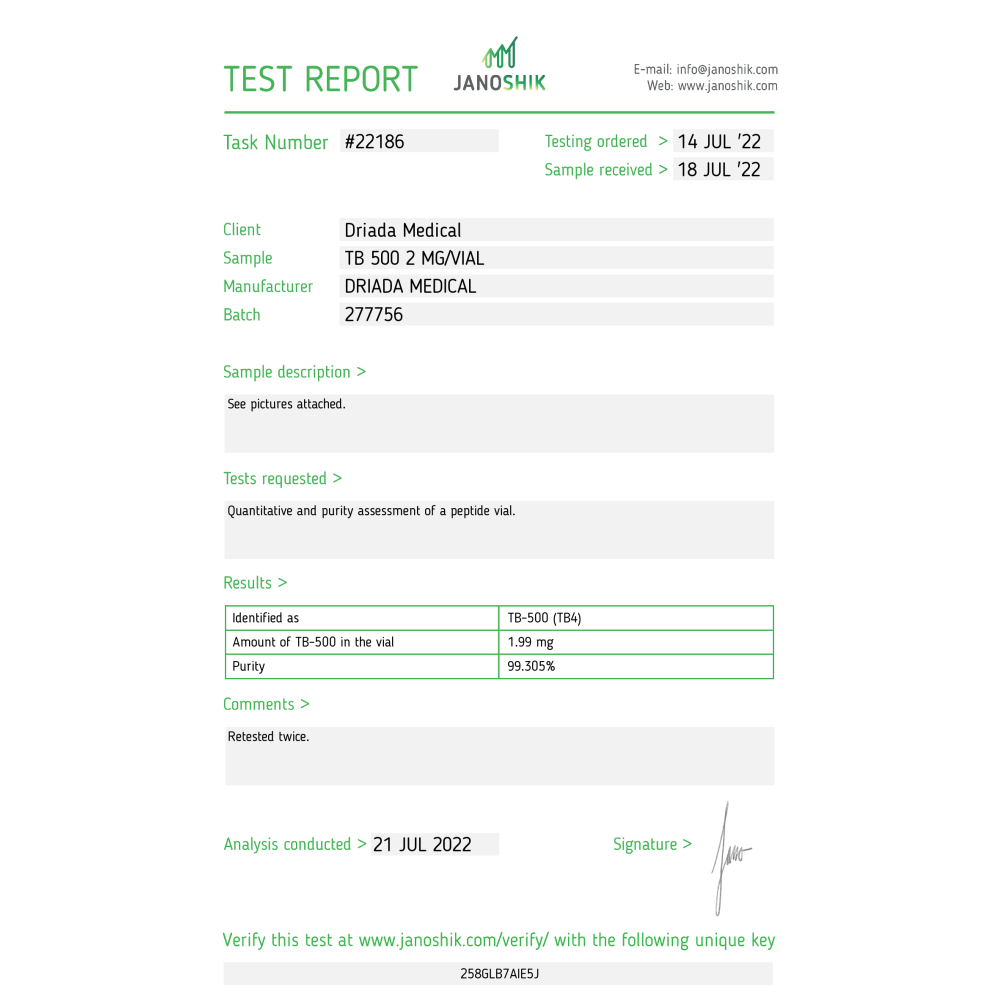
TB500 2mg
Description:
Thymosins are small proteins found in many animal tissues. They are named as such because they were originally isolated from the thymus, but most are now known to be present in many other tissues. Thymosins have a variety of biological activities, and two thymosins, α1 and β4, in particular, have potentially important medical applications, some of which are already being used in clinics and not just laboratories.
TB-500 is a small peptide or fragment of the natural hormone Thymosin Beta 4. TB-500 is not Thymosin Beta 4, although it is often sold under that name. In the body, Thymosin Beta 4 is released by the thymus, a gland that is most prominent in children, atrophies in adulthood, and is virtually absent in the elderly. It is also produced locally in various cells and, in particular, is found in wound secretions, as well as in fairly high concentrations in the cytoplasm of some cells. Several studies have found that Thymosin Beta 4 can promote various forms of wound healing by promoting stem cell differentiation and also reducing inflammation.
The peptide sequence of TB-500 corresponds to the active region of Thymosin Beta 4 and shares many, and possibly all, of the properties of Thymosin Beta 4, while also being more economical to manufacture. TB-500 can be used to promote healing, increase range of motion in case of injury, or reduce pain in an injury by reducing inflammation. Currently, TB-500 is of greatest interest to athletes and bodybuilders who see it as a way to achieve faster post-workout recovery. In addition, it is often considered an aid in the treatment of sports injuries and a kind of protection against injuries.
Mechanism of action
Among the thymoses, the peptide Thymosin Beta 4 is considered the most abundant, best-studied, and probably the most biologically active member of the beta-thymosin family. Because the Thymosin Beta 4 molecule is an actin-binding peptide, it regulates actin polymerization and, as a result, regulates cell migration, which is important for the process of angiogenesis, the regeneration of damaged tissues. It has been repeatedly demonstrated in various cellular models and at the body level that the Thymosin Beta 4 molecule has unique cardioprotective properties, participates in the stimulation of angiogenesis under conditions of cardiac muscle ischemia, blocks pro-apoptotic cascades in cardiomyocytes, and conversely, activates intracellular signaling pathways responsible for cell survival under stress. The regenerative potential of the Thymosin Beta 4 molecule is being actively studied in other areas of medicine.
The activity of this molecule is manifested in the treatment of trophic ulcers, wounds, and burns of the human cornea. Due to its anti-inflammatory properties, Tr4 has established itself as an active ingredient in preparations for the treatment of signs of skin inflammation – chronic dermatitis. Thymosin Beta 4 also activates the formation and growth of blood vessels (angiogenesis) and effects the differentiation of stem cells.
With such a wide range of potentially beneficial activities, it is not surprising that Thymosin Beta 4 is attracting much attention from both drug developers and commercial structures working in the field of cosmetic chemistry, since its anti-inflammatory effects, accelerated wound healing, and tissue regeneration are fundamental in the restoration of various muscles, including cardiac and anti-aging approaches, for example, to stimulate hair growth. Currently, the ClinicalTrials.gov database contains 11 phase 1-3 clinical trials of Thymosin Beta 4, of which 6 have been completed.
Wound healing
Thymosin Beta 4 plays a vital role in the repair and regeneration of damaged cells and tissues. Following injury, Thymosin Beta 4 is released by platelets, macrophages, and many other cell types to protect cells and tissues from further damage and reduce apoptosis, inflammation, and microbial growth. Thymosin Beta 4 binds to actin and promotes cell migration, including the mobilization, migration, and differentiation of stem/progenitor cells that form new blood vessels and regenerate tissues. Thymosin Beta 4 also reduces the number of myofibroblasts in wounds, resulting in reduced scarring and fibrosis.
TB-500 supports the treatment of muscle, tendon, and ligament injuries. It accelerates healing and reduces the intensity of inflammation. TB-500 may be recommended in cases of acute injuries where, according to experience, recovery may be slow, or in cases of chronic injuries where recovery simply does not occur. The types of injuries for which this medication can be used include tendinitis and muscle ruptures or spasms, as well as various types of muscle and connective tissue injuries, and skin lesions. Furthermore, it reduces the risk of pathological and interstitial adhesions, which can interfere with tissue mobility. This peptide is also frequently used for protective purposes. It has a positive effect on muscle tension, helps maintain sufficient flexibility in tendons and ligaments, and therefore can help reduce the risk of injury. TB-500 can significantly accelerate the healing of superficial wounds, cuts, and burns, while reducing the risk of unsightly scarring. This has been confirmed in several clinical trials. One of them involved patients with pressure ulcers. Administration of Thymosin Beta 4 significantly accelerated wound healing. The treatment appeared to be safe and well-tolerated. Two independent phase 2 clinical trials evaluated the safety and efficacy of the gel in treating 143 patients with chronic pressure ulcers and venous trophic ulcers; most patients presented with varicose veins and open ulceration. The healing rate in patients receiving the average dose (0.02%) was approximately one month faster than those receiving placebo or other doses of Thymosin Beta 4.
TB-500 Vision
can be used in ophthalmology. It is used in the treatment of dry eye syndrome and neurotrophic keratopathy. Animal studies have shown that it promotes rapid and complete healing of damaged corneas. It is worth noting that research in this area has been conducted not only on animals but also on humans. Patients with moderate to severe dry eye symptoms who received TB-500 eye drops reported significant and sustained improvement. In most people, the symptoms of the disease did not return after the end of treatment.
The cardiovascular system
Scientists suggest that the healing properties of Thymosin Beta 4 may be used to regenerate human heart muscle damaged by a heart attack or other heart disease. Studies with rodents have shown that administering Thymosin Beta 4 stimulates the formation of new myocardial cells from inactive precursor cells present in the heart lining. Furthermore, in damaged myocardium, Thymosin Beta 4 has been found to promote angiogenesis and, due to its antifibrotic effect, has a positive effect on myocardial cell remodeling.
It is known that the peptide promotes the migration, survival, and recovery of cardiac cells, which has been demonstrated in cell cultures of embryonic and postnatal cardiomyocytes – cell survival was improved. Furthermore, in in vivo experiments after coronary artery ligation in mice, treatment with Thymosin Beta 4 resulted in increased survival of early myocytes and improved cardiac function. Thymosin Beta 4 facilitates epicardial neovascularization in the hearts of injured and healthy adult mammals, as demonstrated in an in vivo mouse model. Thymosin Beta 4 significantly improved long-term neurological recovery in a rat stroke model.
These results suggest that Thymosin Beta 4 may have significant therapeutic potential in humans for protecting the myocardium and promoting cardiomyocyte survival in the acute stages of coronary artery disease. As early as 2007, more than 15 animal studies, including primates, on the pharmacology and toxicology of Thymosin Beta 4 in various pharmaceutical forms were conducted, demonstrating its good tolerability and low toxicity.
The peptide was also studied in humans for the treatment of patients with acute myocardial infarction, according to a phase 1 and 2 clinical trial protocol to assess safety, tolerability, and pharmacokinetics in both human and healthy patients. During the phase 2 study, the drug appeared to be well tolerated and safe, but the trials were interrupted, and the reasons are unknown.
The presence of numerous data obtained in animal and in vitro models, speaking about the effectiveness of Thymosin Beta 4 in damage to the cardiovascular and peripheral nervous systems, still leaves hope for the success of the drug in humans at the appropriate concentration or in combination with other drugs.
Hair growth
Scientists conducted a series of studies in animal models to see how TB-500 affects hair growth. After analyzing the results, they concluded that this peptide can promote the development of stem cells in hair follicles, as well as promote their differentiation and migration. This action is believed to accelerate hair growth. As expected, thymus peptides have been proposed as anti-alopecia (baldness) agents that prevent hair loss by inhibiting the catagen phase. The catagen phase is notable because during this period, which lasts about two weeks, the hair follicle shrinks due to the onset of decay and the hair papilla 'rests', cutting off the hair from the blood supply that feeds it. On the other hand, there is evidence indicating that thymosin beta 4 has a subtle but distinct effect on human hair shaft production in vitro, which the authors attribute to a reduction in the anagen phase (the physical growth of hair). On internet forums, you can find posts from patients suffering from androgenic alopecia who have decided to undergo TB-500 treatment. In their opinion, the peptide is very effective – it not only prevents hair loss but also stimulates hair growth.
Nervous system
Thymosin Beta 4 has been found in cells of the central nervous system. It is believed to play a protective role in the nervous system and, to some extent, influence synaptogenesis, axonal growth, cell migration, and brain elasticity. Evidence also suggests that Thymosin Beta 4 plays a role in neural development, especially in sensory neurons. This peptide has been found to exhibit increased activity in several pathological conditions, such as transient ischemic attack (TIA), Alzheimer's disease, Huntington's disease, and hippocampal sclerosis.
Correction of the inflammatory response and the consequences of tissue inflammation resulting from neurological injury is vital for neurological recovery, and Thymosin Beta 4 improves vascular remodeling of the nervous system and the elasticity of the central nervous system, leading to neurological recovery in many neurobiological diseases. Due to the significant role of Thymosin Beta 4 in oligodendrocytes, neurons, and microglial cells in neurological recovery, it has been suggested that Thymosin Beta 4 regulates pro-inflammatory Toll-like receptor (TLR) signaling, positively regulating miR-146a in neurological disorders.
Effects
: Accelerates the recovery of muscles, ligaments, joints, and skin. Has a pronounced reparative potential in many tissues.
Anti-inflammatory effect.
Angiogenesis is the growth of new blood vessels in muscles, which improves their nutrition.
Supposed protective and restorative effect on the nervous system.
Stimulates the secretion of luteinizing hormone and, consequently, testosterone.
Increases tissue sensitivity to insulin.
It is cardioprotective and reduces the risk of myocardial infarction, restoring the myocardium. Possesses regenerative properties even in myocardial ischemia.
Possesses anti-inflammatory properties.
Positive effect on the growth of hair follicles.
Positive effect on the healing of damaged corneas in the treatment of dry eye syndrome and neurotrophic keratopathy.
Side effects:
Possible redness and pain at the injection site.
How to use
: Loading phase: 2-6 mg dose per week divided into two injections (e.g., 2 mg each: Monday, Wednesday). Duration: 1 month. Maintenance phase: 2-4 mg per week divided into 2 injections. Duration: approximately 1-2 months.
Alternative regimen: a loading dose of 10 mg in the first week (1-2 mf per day), then 5 mg per week (ideally divided into 2 injections) for 5 weeks, and a maintenance dose of 10 mg per month (2 mg after 6 days) is ideal and effective based on the opinion of many athletes who use TB-500. The protocol mentioned above is the most popular. It is possible that, as knowledge accumulates, the method of use will change.
Combination with other drugs:
It is possible to increase the tissue regeneration effect when TB-500 is combined with growth hormone, GHRP, or GHRH. In cases of tendon injuries and bone fractures, it is best to use BPC-157 additionally. This is a fairly common practice, and their combination provides a pronounced synergistic regenerative effect.
How to prepare a solution
To prepare an injectable solution, you take a syringe that already contains a diluent and inject it into an injection vial containing a lyophilized powder. Tilt the vial so that the needle touches the wall of the vial. Avoid injecting the diluent directly into the lyophilized powder. The solvent should flow slowly down the wall of the vial (do not fill it all at once and do not rush). After all the diluent has been added to the peptide vial, gently mix (but do not shake or agitate the vial) until the lyophilized powder has dissolved and you are left with a clear liquid. Now the medication is ready for use.
Never mix one peptide with another in the same syringe. This creates a risk of destroying fragile peptide molecules.
Use
The injection can be subcutaneous or intramuscular, depending on personal preference.
Storage:
The resulting solution can be stored for approximately 21 days in the refrigerator at a temperature of 2 to 8ºC. The storage time increases if the solution is prepared with bacteriostatic water.
Description:
Thymosins are small proteins found in many animal tissues. They are named as such because they were originally isolated from the thymus, but most are now known to be present in many other tissues. Thymosins have a variety of biological activities, and two thymosins, α1 and β4, in particular, have potentially important medical applications, some of which are already being used in clinics and not just laboratories.
TB-500 is a small peptide or fragment of the natural hormone Thymosin Beta 4. TB-500 is not Thymosin Beta 4, although it is often sold under that name. In the body, Thymosin Beta 4 is released by the thymus, a gland that is most prominent in children, atrophies in adulthood, and is virtually absent in the elderly. It is also produced locally in various cells and, in particular, is found in wound secretions, as well as in fairly high concentrations in the cytoplasm of some cells. Several studies have found that Thymosin Beta 4 can promote various forms of wound healing by promoting stem cell differentiation and also reducing inflammation.
The peptide sequence of TB-500 corresponds to the active region of Thymosin Beta 4 and shares many, and possibly all, of the properties of Thymosin Beta 4, while also being more economical to manufacture. TB-500 can be used to promote healing, increase range of motion in case of injury, or reduce pain in an injury by reducing inflammation. Currently, TB-500 is of greatest interest to athletes and bodybuilders who see it as a way to achieve faster post-workout recovery. In addition, it is often considered an aid in the treatment of sports injuries and a kind of protection against injuries.
Mechanism of action
Among the thymoses, the peptide Thymosin Beta 4 is considered the most abundant, best-studied, and probably the most biologically active member of the beta-thymosin family. Because the Thymosin Beta 4 molecule is an actin-binding peptide, it regulates actin polymerization and, as a result, regulates cell migration, which is important for the process of angiogenesis, the regeneration of damaged tissues. It has been repeatedly demonstrated in various cellular models and at the body level that the Thymosin Beta 4 molecule has unique cardioprotective properties, participates in the stimulation of angiogenesis under conditions of cardiac muscle ischemia, blocks pro-apoptotic cascades in cardiomyocytes, and conversely, activates intracellular signaling pathways responsible for cell survival under stress. The regenerative potential of the Thymosin Beta 4 molecule is being actively studied in other areas of medicine.
The activity of this molecule is manifested in the treatment of trophic ulcers, wounds, and burns of the human cornea. Due to its anti-inflammatory properties, Tr4 has established itself as an active ingredient in preparations for the treatment of signs of skin inflammation – chronic dermatitis. Thymosin Beta 4 also activates the formation and growth of blood vessels (angiogenesis) and effects the differentiation of stem cells.
With such a wide range of potentially beneficial activities, it is not surprising that Thymosin Beta 4 is attracting much attention from both drug developers and commercial structures working in the field of cosmetic chemistry, since its anti-inflammatory effects, accelerated wound healing, and tissue regeneration are fundamental in the restoration of various muscles, including cardiac and anti-aging approaches, for example, to stimulate hair growth. Currently, the ClinicalTrials.gov database contains 11 phase 1-3 clinical trials of Thymosin Beta 4, of which 6 have been completed.
Wound healing
Thymosin Beta 4 plays a vital role in the repair and regeneration of damaged cells and tissues. Following injury, Thymosin Beta 4 is released by platelets, macrophages, and many other cell types to protect cells and tissues from further damage and reduce apoptosis, inflammation, and microbial growth. Thymosin Beta 4 binds to actin and promotes cell migration, including the mobilization, migration, and differentiation of stem/progenitor cells that form new blood vessels and regenerate tissues. Thymosin Beta 4 also reduces the number of myofibroblasts in wounds, resulting in reduced scarring and fibrosis.
TB-500 supports the treatment of muscle, tendon, and ligament injuries. It accelerates healing and reduces the intensity of inflammation. TB-500 may be recommended in cases of acute injuries where, according to experience, recovery may be slow, or in cases of chronic injuries where recovery simply does not occur. The types of injuries for which this medication can be used include tendinitis and muscle ruptures or spasms, as well as various types of muscle and connective tissue injuries, and skin lesions. Furthermore, it reduces the risk of pathological and interstitial adhesions, which can interfere with tissue mobility. This peptide is also frequently used for protective purposes. It has a positive effect on muscle tension, helps maintain sufficient flexibility in tendons and ligaments, and therefore can help reduce the risk of injury. TB-500 can significantly accelerate the healing of superficial wounds, cuts, and burns, while reducing the risk of unsightly scarring. This has been confirmed in several clinical trials. One of them involved patients with pressure ulcers. Administration of Thymosin Beta 4 significantly accelerated wound healing. The treatment appeared to be safe and well-tolerated. Two independent phase 2 clinical trials evaluated the safety and efficacy of the gel in treating 143 patients with chronic pressure ulcers and venous trophic ulcers; most patients presented with varicose veins and open ulceration. The healing rate in patients receiving the average dose (0.02%) was approximately one month faster than those receiving placebo or other doses of Thymosin Beta 4.
TB-500 Vision
can be used in ophthalmology. It is used in the treatment of dry eye syndrome and neurotrophic keratopathy. Animal studies have shown that it promotes rapid and complete healing of damaged corneas. It is worth noting that research in this area has been conducted not only on animals but also on humans. Patients with moderate to severe dry eye symptoms who received TB-500 eye drops reported significant and sustained improvement. In most people, the symptoms of the disease did not return after the end of treatment.
The cardiovascular system
Scientists suggest that the healing properties of Thymosin Beta 4 may be used to regenerate human heart muscle damaged by a heart attack or other heart disease. Studies with rodents have shown that administering Thymosin Beta 4 stimulates the formation of new myocardial cells from inactive precursor cells present in the heart lining. Furthermore, in damaged myocardium, Thymosin Beta 4 has been found to promote angiogenesis and, due to its antifibrotic effect, has a positive effect on myocardial cell remodeling.
It is known that the peptide promotes the migration, survival, and recovery of cardiac cells, which has been demonstrated in cell cultures of embryonic and postnatal cardiomyocytes – cell survival was improved. Furthermore, in in vivo experiments after coronary artery ligation in mice, treatment with Thymosin Beta 4 resulted in increased survival of early myocytes and improved cardiac function. Thymosin Beta 4 facilitates epicardial neovascularization in the hearts of injured and healthy adult mammals, as demonstrated in an in vivo mouse model. Thymosin Beta 4 significantly improved long-term neurological recovery in a rat stroke model.
These results suggest that Thymosin Beta 4 may have significant therapeutic potential in humans for protecting the myocardium and promoting cardiomyocyte survival in the acute stages of coronary artery disease. As early as 2007, more than 15 animal studies, including primates, on the pharmacology and toxicology of Thymosin Beta 4 in various pharmaceutical forms were conducted, demonstrating its good tolerability and low toxicity.
The peptide was also studied in humans for the treatment of patients with acute myocardial infarction, according to a phase 1 and 2 clinical trial protocol to assess safety, tolerability, and pharmacokinetics in both human and healthy patients. During the phase 2 study, the drug appeared to be well tolerated and safe, but the trials were interrupted, and the reasons are unknown.
The presence of numerous data obtained in animal and in vitro models, speaking about the effectiveness of Thymosin Beta 4 in damage to the cardiovascular and peripheral nervous systems, still leaves hope for the success of the drug in humans at the appropriate concentration or in combination with other drugs.
Hair growth
Scientists conducted a series of studies in animal models to see how TB-500 affects hair growth. After analyzing the results, they concluded that this peptide can promote the development of stem cells in hair follicles, as well as promote their differentiation and migration. This action is believed to accelerate hair growth. As expected, thymus peptides have been proposed as anti-alopecia (baldness) agents that prevent hair loss by inhibiting the catagen phase. The catagen phase is notable because during this period, which lasts about two weeks, the hair follicle shrinks due to the onset of decay and the hair papilla 'rests', cutting off the hair from the blood supply that feeds it. On the other hand, there is evidence indicating that thymosin beta 4 has a subtle but distinct effect on human hair shaft production in vitro, which the authors attribute to a reduction in the anagen phase (the physical growth of hair). On internet forums, you can find posts from patients suffering from androgenic alopecia who have decided to undergo TB-500 treatment. In their opinion, the peptide is very effective – it not only prevents hair loss but also stimulates hair growth.
Nervous system
Thymosin Beta 4 has been found in cells of the central nervous system. It is believed to play a protective role in the nervous system and, to some extent, influence synaptogenesis, axonal growth, cell migration, and brain elasticity. Evidence also suggests that Thymosin Beta 4 plays a role in neural development, especially in sensory neurons. This peptide has been found to exhibit increased activity in several pathological conditions, such as transient ischemic attack (TIA), Alzheimer's disease, Huntington's disease, and hippocampal sclerosis.
Correction of the inflammatory response and the consequences of tissue inflammation resulting from neurological injury is vital for neurological recovery, and Thymosin Beta 4 improves vascular remodeling of the nervous system and the elasticity of the central nervous system, leading to neurological recovery in many neurobiological diseases. Due to the significant role of Thymosin Beta 4 in oligodendrocytes, neurons, and microglial cells in neurological recovery, it has been suggested that Thymosin Beta 4 regulates pro-inflammatory Toll-like receptor (TLR) signaling, positively regulating miR-146a in neurological disorders.
Effects
: Accelerates the recovery of muscles, ligaments, joints, and skin. Has a pronounced reparative potential in many tissues.
Anti-inflammatory effect.
Angiogenesis is the growth of new blood vessels in muscles, which improves their nutrition.
Supposed protective and restorative effect on the nervous system.
Stimulates the secretion of luteinizing hormone and, consequently, testosterone.
Increases tissue sensitivity to insulin.
It is cardioprotective and reduces the risk of myocardial infarction, restoring the myocardium. Possesses regenerative properties even in myocardial ischemia.
Possesses anti-inflammatory properties.
Positive effect on the growth of hair follicles.
Positive effect on the healing of damaged corneas in the treatment of dry eye syndrome and neurotrophic keratopathy.
Side effects:
Possible redness and pain at the injection site.
How to use
: Loading phase: 2-6 mg dose per week divided into two injections (e.g., 2 mg each: Monday, Wednesday). Duration: 1 month. Maintenance phase: 2-4 mg per week divided into 2 injections. Duration: approximately 1-2 months.
Alternative regimen: a loading dose of 10 mg in the first week (1-2 mf per day), then 5 mg per week (ideally divided into 2 injections) for 5 weeks, and a maintenance dose of 10 mg per month (2 mg after 6 days) is ideal and effective based on the opinion of many athletes who use TB-500. The protocol mentioned above is the most popular. It is possible that, as knowledge accumulates, the method of use will change.
Combination with other drugs:
It is possible to increase the tissue regeneration effect when TB-500 is combined with growth hormone, GHRP, or GHRH. In cases of tendon injuries and bone fractures, it is best to use BPC-157 additionally. This is a fairly common practice, and their combination provides a pronounced synergistic regenerative effect.
How to prepare a solution
To prepare an injectable solution, you take a syringe that already contains a diluent and inject it into an injection vial containing a lyophilized powder. Tilt the vial so that the needle touches the wall of the vial. Avoid injecting the diluent directly into the lyophilized powder. The solvent should flow slowly down the wall of the vial (do not fill it all at once and do not rush). After all the diluent has been added to the peptide vial, gently mix (but do not shake or agitate the vial) until the lyophilized powder has dissolved and you are left with a clear liquid. Now the medication is ready for use.
Never mix one peptide with another in the same syringe. This creates a risk of destroying fragile peptide molecules.
Use
The injection can be subcutaneous or intramuscular, depending on personal preference.
Storage:
The resulting solution can be stored for approximately 21 days in the refrigerator at a temperature of 2 to 8ºC. The storage time increases if the solution is prepared with bacteriostatic water.