

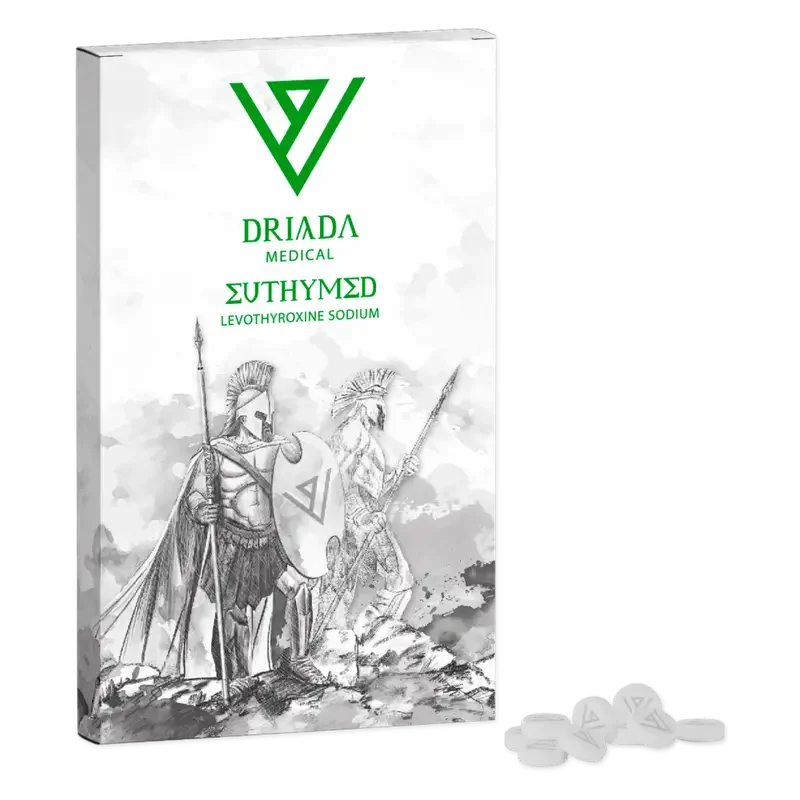
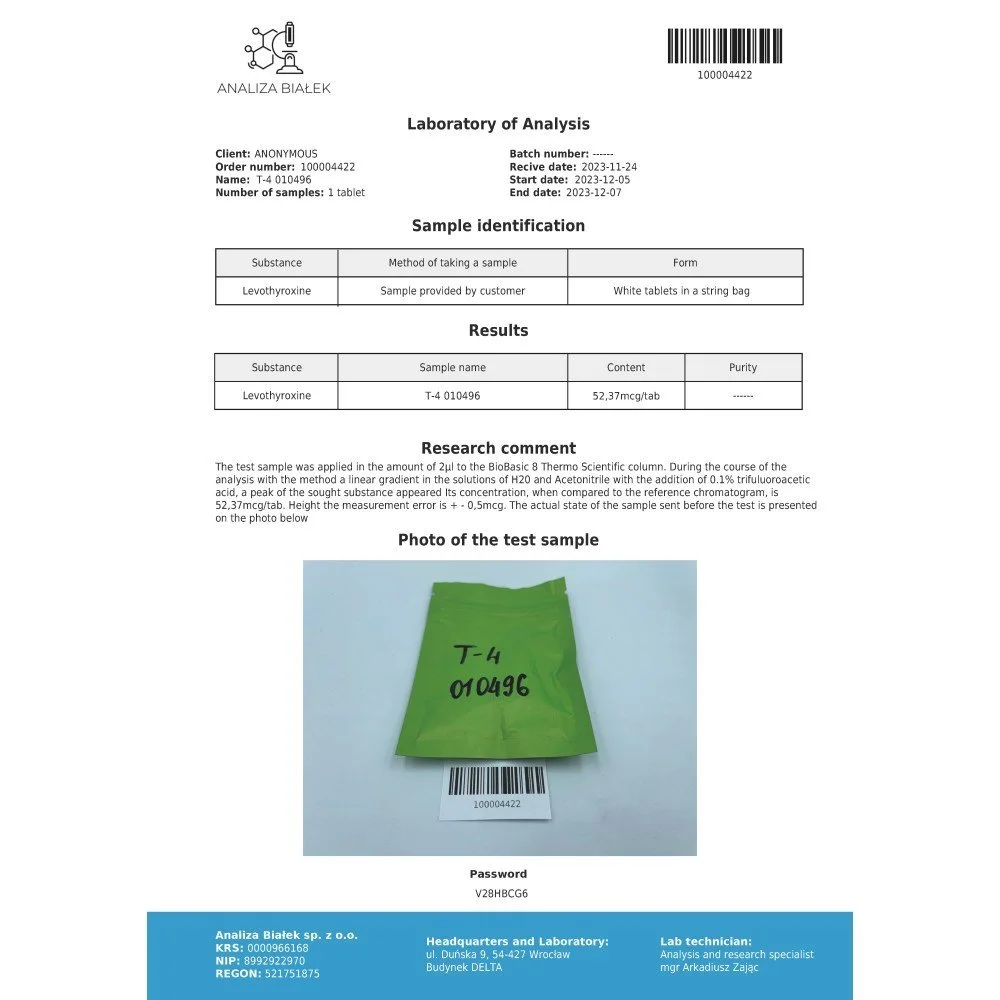
T4 Euthymed 50 mcg (Levothyroxine Sodium) 100 Tablets
Active ingredient: Levothyroxine Sodium (T4)
Type: Thyroid
Form: Oral (tablets)
Description:
Levothyroxine is a synthetic form of thyroxine (T4), an endogenous hormone secreted by the thyroid gland, which is converted into its active metabolite, L-triiodothyronine (T3). T4 and T3 bind to thyroid receptor proteins in the cell nucleus and cause metabolic effects by controlling DNA transcription and protein synthesis. Like its naturally secreted counterpart, levothyroxine is a chiral compound in the L-form.
Purposes of use:
Levothyroxine is a medication used to treat underactive thyroid (hypothyroidism) and other conditions when a person's production of thyroid hormone is below normal. Levothyroxine sodium replaces or supports thyroid hormone, which is normally produced by the thyroid gland. Low levels of thyroid hormone can occur naturally or when the thyroid gland is damaged by radiation/medications or removed by surgery. Levothyroxine is also known as L-thyroxine or T4.
Enhanced Metabolism:
By normalizing thyroid function, Levothyroxine Sodium helps maintain a healthy metabolism, which is crucial for effective fat loss and muscle gain phases. Increased Energy Levels: Proper thyroid function can lead to improved energy levels, ensuring you have the stamina and endurance needed for rigorous training sessions.
Improved muscle recovery:
Balanced thyroid hormones can aid in protein synthesis and muscle repair, crucial for bodybuilders in the recovery phase.
Weight control
: By regulating metabolism, this medication helps maintain a healthy weight, a key factor in bodybuilding for both aesthetic and performance goals. Consistent performance: Stable thyroid levels ensure consistent physical and mental performance, crucial for athletes who need to maintain a high level of training intensity.
Use with growth hormone:
Patients receiving Human Growth Hormone (HGH) should take T4 to prevent a deficiency of this hormone, as growth hormone significantly increases the conversion of T4 to T3, which can cause pathological T4 deficiency.
Dosage and Administration:
It is recommended that levothyroxine be taken on an empty stomach approximately half an hour to one hour before meals to maximize its absorption. It is also recommended that the patient take the tablet with a glass of water to facilitate swallowing, as well as to help the tablet dissolve for absorption. Dosages vary according to age groups and the individual patient's condition, body weight, and adherence to medication and diet. The maximum dosage can reach 300-400 mcg per day, but this is rare. Most people need to be careful to start with a low dosage and consult a doctor to determine the ideal dose.
How to use:
Basically, the dosage starts with 25-50 mcg per day and increases by 25-50 mcg per day every 5-6 days. The maximum is 300-400 mcg per day. Spread a few tablets throughout the day. The maximum cycle lasts seven weeks. At least six weeks should pass between cycles. Additionally, it will help the thyroid gland return to normal function. It is commonly combined with clenbuterol to make both even more effective at burning fat.
Average dose: 100 to 200 mcg per day.
Effective dosage: pyramidal method. Proven cycle: 5-6 weeks.
Pharmacokinetics:
Absorption of orally administered levothyroxine varies from 40 to 80%, with most of the drug absorbed by the jejunum and upper ileum. Levothyroxine absorption increases with fasting and decreases in certain syndromes, with certain foods, and with age.
The elimination half-life is 6–7 days for people with normal laboratory results; 9–10 days for people with hypothyroidism; and 3–4 days for people with hyperthyroidism. Thyroid hormones are primarily eliminated by the kidneys (approximately 80%), with urinary excretion decreasing with age. The remaining 20% of T4 is eliminated in the feces.
Effects
: Regulates your metabolism
; Burns fat;
Increases anabolic processes and muscle growth;
Stimulates the central nervous system.
Side Effects:
Allergies to the medication are unlikely, but if the patient develops a severe reaction to this medication such as difficulty breathing, shortness of breath, or swelling of the face and tongue, it is essential that the patient seek medical attention immediately. Adverse events are generally caused by incorrect dosage. Side effects of excessive doses include weight loss, difficulty tolerating heat, sweating, anxiety, difficulty sleeping, tremors, and rapid heartbeat. Use is not recommended in people who have had a recent heart attack. Use during pregnancy has been considered safe. Acute overdose can cause fever, hypoglycemia, heart failure, coma, and unrecognized adrenal insufficiency. Massive acute overdose can be fatal; treatment should be symptomatic and supportive. Massive overdose may require beta-blockers to increase sympathomimetic activity. Side effects of overdose appear 6 hours to 11 days after ingestion.
Chest pain, discomfort, or tightness
; Difficulty swallowing;
Extreme fatigue
; Fainting; Rapid, slow, irregular, accelerated, or pounding heartbeat or pulse;
Heat intolerance
; Nausea;
Sweating
; Tremors
Profile
Half-life: 6-24 hours
Frequency of intake: 1-2 times per day
Precautions:
Prolonged use of high dosages can lead to serious problems in the thyroid system and suppression of endogenous hormone production. Studies show a decrease of up to 20% in endogenous production after 3 weeks of use. However, when used properly at recommended dosages, thyroid function is restored after 3-4 weeks. Levothyroxine has effects similar to those of adrenaline, including increased heart rate and nervousness, which could be avoided with the use of beta-blockers.
Contraindications:
Levothyroxine is contraindicated in people with hypersensitivity to levothyroxine sodium or any component of the formulation, people with acute myocardial infarction, and people with thyrotoxicosis of any etiology. Levothyroxine is also contraindicated in people with uncorrected adrenal insufficiency, as thyroid hormones can cause acute adrenal crisis by increasing the metabolic clearance of glucocorticoids.
Drug Interactions:
There are also foods and other substances that can interfere with the absorption of thyroxine replacement. Avoid taking calcium and iron supplements within 4 hours of medication and avoid taking soy products within 3 hours of medication, as they can reduce drug absorption. Other substances that reduce absorption are antacids containing aluminum and magnesium, simethicone or sucralfate, cholestyramine, colestipol, and Kayexalato.
Other substances cause other adverse effects that can be serious. Ketamine can cause hypertension and tachycardia, and tricyclic and tetracyclic antidepressants increase its toxicity. On the other hand, lithium causes hyperthyroidism by affecting iodine metabolism in the thyroid itself and therefore also inhibits synthetic levothyroxine.
Special warnings:
Levothyroxine sodium should be introduced very gradually in patients over 50 years of age and in those with long-standing hypothyroidism to avoid any sudden increase in metabolic demands. Patients with panhypopituitarism or other predisposing causes of adrenal insufficiency may react to levothyroxine treatment; it is advisable to initiate corticosteroid therapy before administering levothyroxine to these patients. Levothyroxine sodium should be used with caution in patients with cardiovascular disease, including angina, coronary artery disease, hypertension, and in elderly patients who are more likely to have occult heart disease.
Contraindicated in patients with untreated subclinical overt thyrotoxicosis (suppressed serum TSH levels with normal T3 and T4 levels) of any etiology and in patients with acute myocardial infarction. Thyroid replacement therapy may cause an increase in insulin dosage requirements or other antidiabetic therapy (such as metformin). Caution is necessary in patients with diabetes mellitus and diabetes insipidus. Subclinical hyperthyroidism may be associated with bone loss. To minimize the risk of osteoporosis, the levothyroxine sodium dose should be titrated to the lowest effective level possible.
Storage:
Keep out of reach of children.
Store in a cool, dry place, away from direct sunlight.
Store at room temperature.
Do not use after the expiration date.
Active ingredient: Levothyroxine Sodium (T4)
Type: Thyroid
Form: Oral (tablets)
Description:
Levothyroxine is a synthetic form of thyroxine (T4), an endogenous hormone secreted by the thyroid gland, which is converted into its active metabolite, L-triiodothyronine (T3). T4 and T3 bind to thyroid receptor proteins in the cell nucleus and cause metabolic effects by controlling DNA transcription and protein synthesis. Like its naturally secreted counterpart, levothyroxine is a chiral compound in the L-form.
Purposes of use:
Levothyroxine is a medication used to treat underactive thyroid (hypothyroidism) and other conditions when a person's production of thyroid hormone is below normal. Levothyroxine sodium replaces or supports thyroid hormone, which is normally produced by the thyroid gland. Low levels of thyroid hormone can occur naturally or when the thyroid gland is damaged by radiation/medications or removed by surgery. Levothyroxine is also known as L-thyroxine or T4.
Enhanced Metabolism:
By normalizing thyroid function, Levothyroxine Sodium helps maintain a healthy metabolism, which is crucial for effective fat loss and muscle gain phases. Increased Energy Levels: Proper thyroid function can lead to improved energy levels, ensuring you have the stamina and endurance needed for rigorous training sessions.
Improved muscle recovery:
Balanced thyroid hormones can aid in protein synthesis and muscle repair, crucial for bodybuilders in the recovery phase.
Weight control
: By regulating metabolism, this medication helps maintain a healthy weight, a key factor in bodybuilding for both aesthetic and performance goals. Consistent performance: Stable thyroid levels ensure consistent physical and mental performance, crucial for athletes who need to maintain a high level of training intensity.
Use with growth hormone:
Patients receiving Human Growth Hormone (HGH) should take T4 to prevent a deficiency of this hormone, as growth hormone significantly increases the conversion of T4 to T3, which can cause pathological T4 deficiency.
Dosage and Administration:
It is recommended that levothyroxine be taken on an empty stomach approximately half an hour to one hour before meals to maximize its absorption. It is also recommended that the patient take the tablet with a glass of water to facilitate swallowing, as well as to help the tablet dissolve for absorption. Dosages vary according to age groups and the individual patient's condition, body weight, and adherence to medication and diet. The maximum dosage can reach 300-400 mcg per day, but this is rare. Most people need to be careful to start with a low dosage and consult a doctor to determine the ideal dose.
How to use:
Basically, the dosage starts with 25-50 mcg per day and increases by 25-50 mcg per day every 5-6 days. The maximum is 300-400 mcg per day. Spread a few tablets throughout the day. The maximum cycle lasts seven weeks. At least six weeks should pass between cycles. Additionally, it will help the thyroid gland return to normal function. It is commonly combined with clenbuterol to make both even more effective at burning fat.
Average dose: 100 to 200 mcg per day.
Effective dosage: pyramidal method. Proven cycle: 5-6 weeks.
Pharmacokinetics:
Absorption of orally administered levothyroxine varies from 40 to 80%, with most of the drug absorbed by the jejunum and upper ileum. Levothyroxine absorption increases with fasting and decreases in certain syndromes, with certain foods, and with age.
The elimination half-life is 6–7 days for people with normal laboratory results; 9–10 days for people with hypothyroidism; and 3–4 days for people with hyperthyroidism. Thyroid hormones are primarily eliminated by the kidneys (approximately 80%), with urinary excretion decreasing with age. The remaining 20% of T4 is eliminated in the feces.
Effects
: Regulates your metabolism
; Burns fat;
Increases anabolic processes and muscle growth;
Stimulates the central nervous system.
Side Effects:
Allergies to the medication are unlikely, but if the patient develops a severe reaction to this medication such as difficulty breathing, shortness of breath, or swelling of the face and tongue, it is essential that the patient seek medical attention immediately. Adverse events are generally caused by incorrect dosage. Side effects of excessive doses include weight loss, difficulty tolerating heat, sweating, anxiety, difficulty sleeping, tremors, and rapid heartbeat. Use is not recommended in people who have had a recent heart attack. Use during pregnancy has been considered safe. Acute overdose can cause fever, hypoglycemia, heart failure, coma, and unrecognized adrenal insufficiency. Massive acute overdose can be fatal; treatment should be symptomatic and supportive. Massive overdose may require beta-blockers to increase sympathomimetic activity. Side effects of overdose appear 6 hours to 11 days after ingestion.
Chest pain, discomfort, or tightness
; Difficulty swallowing;
Extreme fatigue
; Fainting; Rapid, slow, irregular, accelerated, or pounding heartbeat or pulse;
Heat intolerance
; Nausea;
Sweating
; Tremors
Profile
Half-life: 6-24 hours
Frequency of intake: 1-2 times per day
Precautions:
Prolonged use of high dosages can lead to serious problems in the thyroid system and suppression of endogenous hormone production. Studies show a decrease of up to 20% in endogenous production after 3 weeks of use. However, when used properly at recommended dosages, thyroid function is restored after 3-4 weeks. Levothyroxine has effects similar to those of adrenaline, including increased heart rate and nervousness, which could be avoided with the use of beta-blockers.
Contraindications:
Levothyroxine is contraindicated in people with hypersensitivity to levothyroxine sodium or any component of the formulation, people with acute myocardial infarction, and people with thyrotoxicosis of any etiology. Levothyroxine is also contraindicated in people with uncorrected adrenal insufficiency, as thyroid hormones can cause acute adrenal crisis by increasing the metabolic clearance of glucocorticoids.
Drug Interactions:
There are also foods and other substances that can interfere with the absorption of thyroxine replacement. Avoid taking calcium and iron supplements within 4 hours of medication and avoid taking soy products within 3 hours of medication, as they can reduce drug absorption. Other substances that reduce absorption are antacids containing aluminum and magnesium, simethicone or sucralfate, cholestyramine, colestipol, and Kayexalato.
Other substances cause other adverse effects that can be serious. Ketamine can cause hypertension and tachycardia, and tricyclic and tetracyclic antidepressants increase its toxicity. On the other hand, lithium causes hyperthyroidism by affecting iodine metabolism in the thyroid itself and therefore also inhibits synthetic levothyroxine.
Special warnings:
Levothyroxine sodium should be introduced very gradually in patients over 50 years of age and in those with long-standing hypothyroidism to avoid any sudden increase in metabolic demands. Patients with panhypopituitarism or other predisposing causes of adrenal insufficiency may react to levothyroxine treatment; it is advisable to initiate corticosteroid therapy before administering levothyroxine to these patients. Levothyroxine sodium should be used with caution in patients with cardiovascular disease, including angina, coronary artery disease, hypertension, and in elderly patients who are more likely to have occult heart disease.
Contraindicated in patients with untreated subclinical overt thyrotoxicosis (suppressed serum TSH levels with normal T3 and T4 levels) of any etiology and in patients with acute myocardial infarction. Thyroid replacement therapy may cause an increase in insulin dosage requirements or other antidiabetic therapy (such as metformin). Caution is necessary in patients with diabetes mellitus and diabetes insipidus. Subclinical hyperthyroidism may be associated with bone loss. To minimize the risk of osteoporosis, the levothyroxine sodium dose should be titrated to the lowest effective level possible.
Storage:
Keep out of reach of children.
Store in a cool, dry place, away from direct sunlight.
Store at room temperature.
Do not use after the expiration date.