

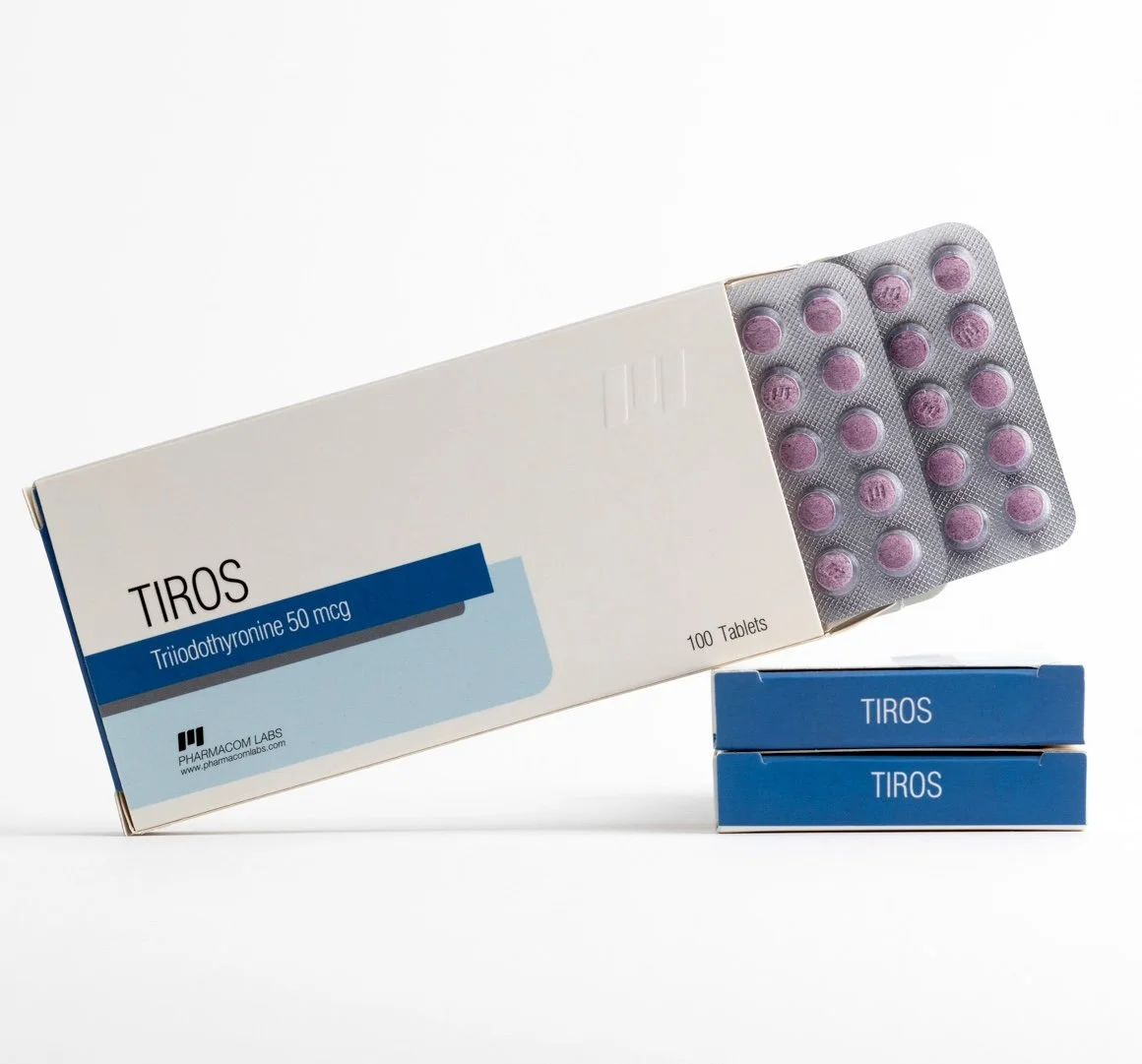
T3 50mcg
Triiodothyronine (also known as T3) is a thyroid hormone used in the treatment of hypothyroidism and significantly affects a wide range of physiological processes in the body, including growth and development, metabolism, body temperature, and heart rate. T3 is involved in many cellular functions, including the metabolism of carbohydrates, fats, and proteins. Losing fat is extremely difficult when suffering from hypothyroidism; moreover, it is very common to gain body fat with this condition. People with thyroid hormone deficiency also often experience energy loss. Supplementation with T3 solves this problem by providing the body with the necessary thyroid hormone. T3 increases the basal metabolic rate and, consequently, the body's oxygen and energy consumption. It increases the rate of protein breakdown, allowing the body to enter a negative nitrogen balance, and also potentiates the effects of β-adrenergic receptors on glucose metabolism. Therefore, it increases the rate of glycogen breakdown and glucose synthesis in gluconeogenesis. T3 stimulates cholesterol breakdown and increases the number of LDL receptors, thus raising the rate of lipolysis. T3 increases heart rate and force of contraction, increasing cardiac output by increasing the levels of β-adrenergic receptors in the myocardium. This results in increased systolic blood pressure and decreased diastolic blood pressure.
Many athletes who use performance-enhancing substances like to use triiodothyronine (T3) to enhance fat burning. The use of T3, along with a low-calorie diet, promotes significant and accelerated fat burning. While this approach can be effective for weight loss, it is generally not recommended without the use of anabolic steroids. Without the aid of an anabolic agent, the relatively high doses of T3 needed to promote more intense fat burning and the consequent depletion of ATP (adenosine triphosphate) can lead to the loss of lean muscle mass. In other words, the body will use whatever it needs, wherever it is available, to meet its energy needs. For this reason, the use of an anabolic protector is usually recommended when supplementing with T3.
Chemical name : (2S)-2-amino-3-[4-(4-hydroxy-3-iodophenoxy)-3,5-diiodophenyl]propanoic acid
Formula C15H12I3NO4
Anabolic activity index is not a steroid.
Androgenic activity index is not a steroid.
Triiodothyronine (also known as T3) is a thyroid hormone used in the treatment of hypothyroidism and significantly affects a wide range of physiological processes in the body, including growth and development, metabolism, body temperature, and heart rate. T3 is involved in many cellular functions, including the metabolism of carbohydrates, fats, and proteins. Losing fat is extremely difficult when suffering from hypothyroidism; moreover, it is very common to gain body fat with this condition. People with thyroid hormone deficiency also often experience energy loss. Supplementation with T3 solves this problem by providing the body with the necessary thyroid hormone. T3 increases the basal metabolic rate and, consequently, the body's oxygen and energy consumption. It increases the rate of protein breakdown, allowing the body to enter a negative nitrogen balance, and also potentiates the effects of β-adrenergic receptors on glucose metabolism. Therefore, it increases the rate of glycogen breakdown and glucose synthesis in gluconeogenesis. T3 stimulates cholesterol breakdown and increases the number of LDL receptors, thus raising the rate of lipolysis. T3 increases heart rate and force of contraction, increasing cardiac output by increasing the levels of β-adrenergic receptors in the myocardium. This results in increased systolic blood pressure and decreased diastolic blood pressure.
Many athletes who use performance-enhancing substances like to use triiodothyronine (T3) to enhance fat burning. The use of T3, along with a low-calorie diet, promotes significant and accelerated fat burning. While this approach can be effective for weight loss, it is generally not recommended without the use of anabolic steroids. Without the aid of an anabolic agent, the relatively high doses of T3 needed to promote more intense fat burning and the consequent depletion of ATP (adenosine triphosphate) can lead to the loss of lean muscle mass. In other words, the body will use whatever it needs, wherever it is available, to meet its energy needs. For this reason, the use of an anabolic protector is usually recommended when supplementing with T3.
Chemical name : (2S)-2-amino-3-[4-(4-hydroxy-3-iodophenoxy)-3,5-diiodophenyl]propanoic acid
Formula C15H12I3NO4
Anabolic activity index is not a steroid.
Androgenic activity index is not a steroid.