

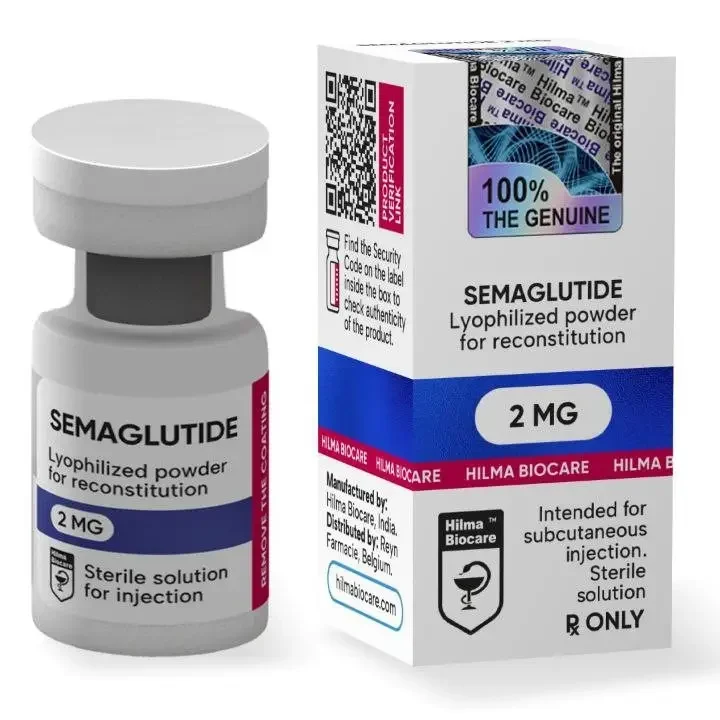
Semaglutide 2mg – Hilma Biocare
Semaglutide Specifications:
Company: Hilma Biocare
Molecular formula: C187H291N45O59
Molecular weight: 4113.641 g/mol
CAS number: 910463-68-2
Form: Lyophilized powder (freeze-dried) for reconstruction, sterile solution
Route: Injection
Caution: Does not include bacteriostatic water for reconstruction.
Product Description
Semaglutide is a glucagon-like peptide-1 receptor agonist. It is an antidiabetic medication used to treat type 2 diabetes and an anti-obesity medication used for long-term weight management. Semaglutide should not be used in people with type 1 diabetes. Semaglutide is indicated as an adjunct to diet and exercise to improve glycemic control in patients. The higher-dose formulation of Semaglutide is indicated as an adjunct to diet and exercise for long-term weight management in adults who are obese (baseline body mass index (BMI) ≥ 30 kg/m2) or overweight (baseline BMI ≥ 27 kg/m2) and have at least one weight-related comorbidity.
Effects:
– Weight loss of up to 8 kg in 3 months
– Suppresses appetite
– Improves metabolism
– Stabilizes blood sugar levels
– Reduces inflammation, improves recovery
Action:
Semaglutide reduces high blood sugar by increasing the amount of insulin released, decreasing the amount of glucagon released, and slowing gastric emptying. Semaglutide also controls appetite and helps reduce the amount of food a person wants to eat. In addition, semaglutide reduces the preference for high-fat meals.
In clinical studies, Semaglutide had a positive effect on plasma lipids, reduced systolic blood pressure, and reduced inflammation. In animal studies, Semaglutide slowed the development of atherosclerosis by preventing the progression of aortic plaque development and reducing plaque inflammation.
Warnings:
Inform your doctor if you have signs of a thyroid tumor, such as swelling or a lump in your neck, difficulty swallowing, hoarseness, or shortness of breath.
You should not use Semaglutide if you have multiple endocrine neoplasia type 2 (tumors in the glands) or a personal or family history of medullary thyroid cancer.
Ask your doctor about taking Semaglutide if you have ever had the following diseases or conditions:
– diabetic ketoacidosis
– pancreatitis;
– kidney disease
– eye problems caused by diabetes (retinopathy).
Semaglutide Specifications:
Company: Hilma Biocare
Molecular formula: C187H291N45O59
Molecular weight: 4113.641 g/mol
CAS number: 910463-68-2
Form: Lyophilized powder (freeze-dried) for reconstruction, sterile solution
Route: Injection
Caution: Does not include bacteriostatic water for reconstruction.
Product Description
Semaglutide is a glucagon-like peptide-1 receptor agonist. It is an antidiabetic medication used to treat type 2 diabetes and an anti-obesity medication used for long-term weight management. Semaglutide should not be used in people with type 1 diabetes. Semaglutide is indicated as an adjunct to diet and exercise to improve glycemic control in patients. The higher-dose formulation of Semaglutide is indicated as an adjunct to diet and exercise for long-term weight management in adults who are obese (baseline body mass index (BMI) ≥ 30 kg/m2) or overweight (baseline BMI ≥ 27 kg/m2) and have at least one weight-related comorbidity.
Effects:
– Weight loss of up to 8 kg in 3 months
– Suppresses appetite
– Improves metabolism
– Stabilizes blood sugar levels
– Reduces inflammation, improves recovery
Action:
Semaglutide reduces high blood sugar by increasing the amount of insulin released, decreasing the amount of glucagon released, and slowing gastric emptying. Semaglutide also controls appetite and helps reduce the amount of food a person wants to eat. In addition, semaglutide reduces the preference for high-fat meals.
In clinical studies, Semaglutide had a positive effect on plasma lipids, reduced systolic blood pressure, and reduced inflammation. In animal studies, Semaglutide slowed the development of atherosclerosis by preventing the progression of aortic plaque development and reducing plaque inflammation.
Warnings:
Inform your doctor if you have signs of a thyroid tumor, such as swelling or a lump in your neck, difficulty swallowing, hoarseness, or shortness of breath.
You should not use Semaglutide if you have multiple endocrine neoplasia type 2 (tumors in the glands) or a personal or family history of medullary thyroid cancer.
Ask your doctor about taking Semaglutide if you have ever had the following diseases or conditions:
– diabetic ketoacidosis
– pancreatitis;
– kidney disease
– eye problems caused by diabetes (retinopathy).