

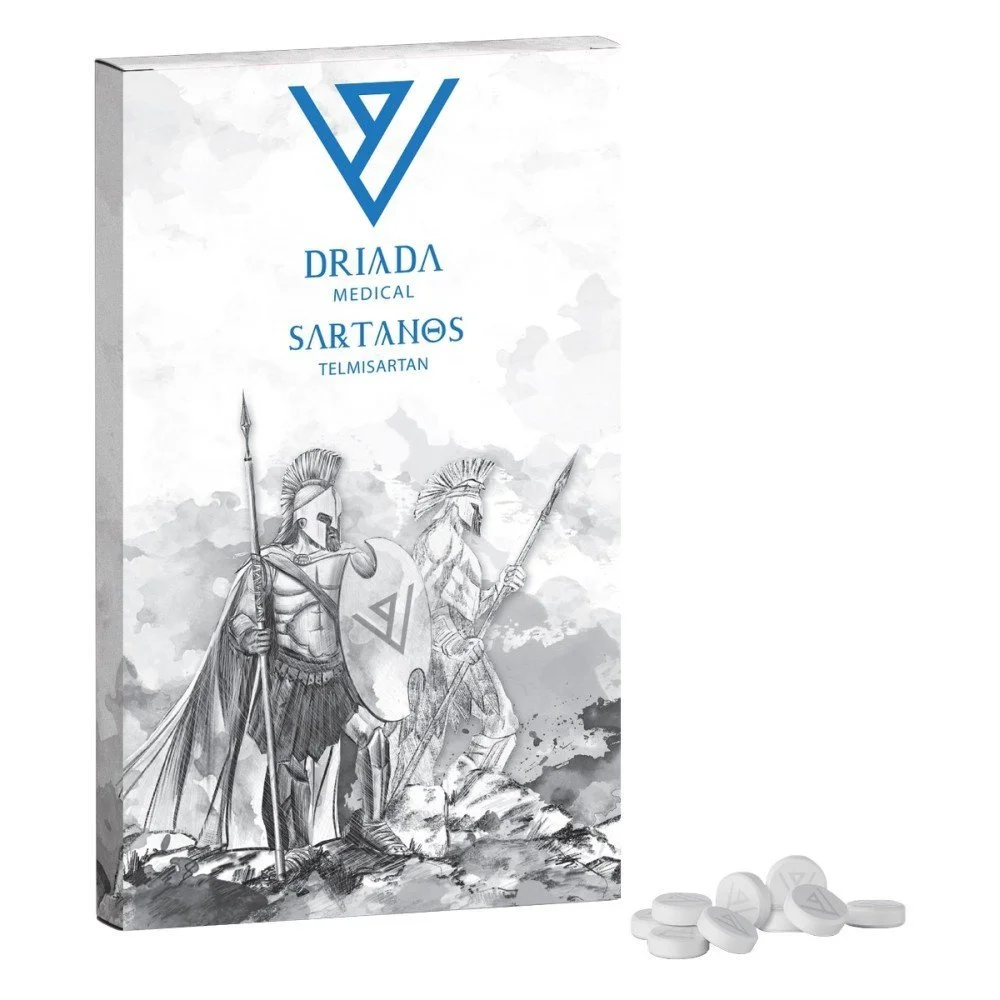
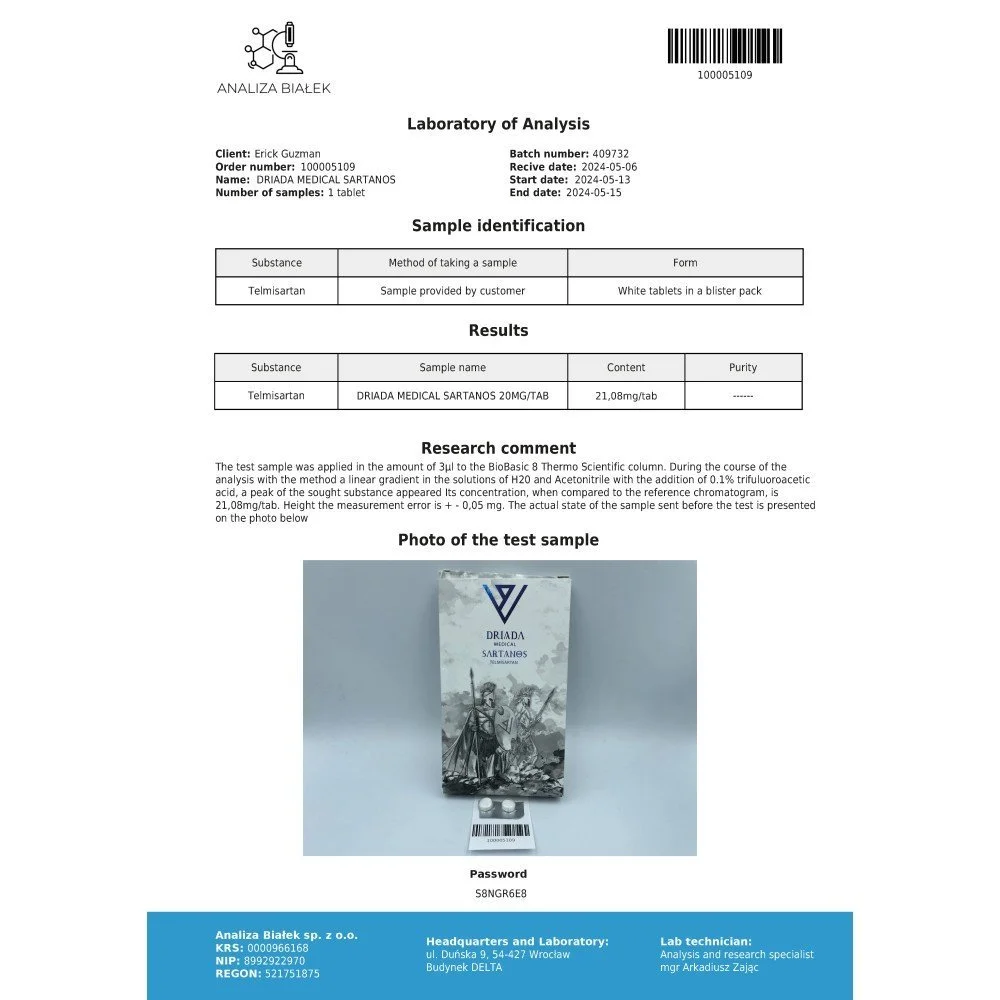
Sartanos 20mg (Telmisartan) 100 Tabs
Active ingredient: Telmisartan
Type: Antihypertensive agent, angiotensin II receptor antagonist (type AT1)
Form: Oral (tablets)
Description:
Telmisartan is an antihypertensive agent, an angiotensin II receptor antagonist (type AT1). It has a very high affinity for this receptor subtype. Telmisartan displaces angiotensin II from its association with AT1 receptors. Affinity for other AT receptor subtypes has not been found. The functional significance of other receptor subtypes and the effect of elevated angiotensin II levels (as a result of telmisartan administration) on them are unknown.
The Renin-Angiotensin-Aldosterone System (RAAS) is responsible for regulating blood pressure and fluid balance. It regulates your response to substances like angiotensin, a natural chemical that narrows blood vessels and can increase blood pressure. One specific type of angiotensin – specifically, angiotensin II – is important to us here because the use of anabolic steroids increases levels of this specific type of hormone.
Telmisartan reduces plasma aldosterone levels, but does not inhibit plasma renin, does not block ion channels, and does not inhibit ACE (kinase II), which also destroys bradykinin. Therefore, there are no side effects associated with bradykinin.
Blockade of the renin-angiotensin system with ACE inhibitors, which inhibit the biosynthesis of angiotensin II from angiotensin I, is widely used in the treatment of hypertension. ACE inhibitors also inhibit the degradation of bradykinin, a reaction also catalyzed by ACE. Because telmisartan does not inhibit ACE (kininase II), it does not affect the bradykinin response. It is not yet known whether this difference has clinical relevance. Telmisartan does not bind to or block other hormone receptors or ion channels known to be important in cardiovascular regulation. Blockade of the angiotensin II receptor inhibits the negative regulatory feedback of angiotensin II on renin secretion, but the resulting increase in plasma renin activity and circulating angiotensin II levels does not outweigh the effect of telmisartan on blood pressure.
Objective of using
Telmisartan reduces left ventricular hypertrophy (LVH) and visceral fat. This should be of particular interest to athletes. LVH is an adaptive response to intense weight training, the effects of which are amplified by steroid use. LVH is generally benign in highly trained athletes, but is associated with decreased cardiac function, particularly at the athlete's age. Reductions in visceral fat are also associated with decreased cardiovascular risk. The use of telmisartan is a scientifically proven harm reduction strategy that reduces overall mortality as well as the risks of cardiovascular disease in particular.
Pharmacokinetics
When taken orally, it is rapidly absorbed from the gastrointestinal tract. Bioavailability is 50%. When taken with food, the decrease in AUC ranges from 6% (at a dose of 40 mg) to 19% (at a dose of 160 mg). Plasma concentration stabilizes 3 hours after ingestion, regardless of whether it is taken with food or on an empty stomach. Plasma protein binding is 99.5%. Mean apparent Vd values at steady state are 500 l. Metabolized by conjugation with glucuronic acid. The metabolites are pharmacologically inactive. T1/2 – more than 20 hours. Excreted unchanged from the intestines. Cumulative renal excretion is less than 1%. Total plasma clearance – 1000 ml/min (renal blood flow – 1500 ml/min).
How to use
For adults, the daily dose is 20-40 mg (once daily). In some patients, the hypotensive effect can be achieved with a dose of 20 mg/day. If necessary, the dose can be increased to 80 mg/day.
Patients with renal impairment, as well as elderly patients, do not require dose adjustments.
For patients with hepatic impairment, the recommended daily dose is 40 mg.
Dosages for athletes are the same – a daily dose of 20 to 40 mg once a day is used to reduce the risk of atherosclerosis, cardiovascular disease, and/or stroke in bodybuilders using steroids with pre-hypertension. This may also lead to improvements in HDL cholesterol levels, insulin sensitivity, mitochondrial activity, endothelial function, and cognitive function.
Effects
on high blood pressure:
Reduce cardiovascular risk
; Improve HDL cholesterol levels; Increase
insulin sensitivity
; Increase mitochondrial activity ; Improve
endothelial function ; Improve
cognitive function;
Reduce left ventricular hypertrophy (LVH)
; Reduce visceral fat
; Reduce water retention
; Decrease adrenaline production, which causes vasoconstriction of blood vessels.
Side effects
of Telmisartan are rare and may include:
Changes in vision,
dizziness, fainting or passing out,
rapid heartbeat
, large hives,
painful urination or changes in urinary frequency,
swelling in the hands, legs and feet.
Profile
Half-life: 24 hours.
Frequency of intake: 1-2 times a day.
Contraindications:
Hypotension,
Pregnancy.
If pregnancy is detected, Telmisartan tablets should be discontinued as soon as possible.
Storage instructions:
Keep out of reach of children.
Store in a cool, dry place away from direct sunlight.
Store at 25°C (77°F); excursions allowed from 15°-30°C (59°-86°F).
Do not use after the expiration date.
Active ingredient: Telmisartan
Type: Antihypertensive agent, angiotensin II receptor antagonist (type AT1)
Form: Oral (tablets)
Description:
Telmisartan is an antihypertensive agent, an angiotensin II receptor antagonist (type AT1). It has a very high affinity for this receptor subtype. Telmisartan displaces angiotensin II from its association with AT1 receptors. Affinity for other AT receptor subtypes has not been found. The functional significance of other receptor subtypes and the effect of elevated angiotensin II levels (as a result of telmisartan administration) on them are unknown.
The Renin-Angiotensin-Aldosterone System (RAAS) is responsible for regulating blood pressure and fluid balance. It regulates your response to substances like angiotensin, a natural chemical that narrows blood vessels and can increase blood pressure. One specific type of angiotensin – specifically, angiotensin II – is important to us here because the use of anabolic steroids increases levels of this specific type of hormone.
Telmisartan reduces plasma aldosterone levels, but does not inhibit plasma renin, does not block ion channels, and does not inhibit ACE (kinase II), which also destroys bradykinin. Therefore, there are no side effects associated with bradykinin.
Blockade of the renin-angiotensin system with ACE inhibitors, which inhibit the biosynthesis of angiotensin II from angiotensin I, is widely used in the treatment of hypertension. ACE inhibitors also inhibit the degradation of bradykinin, a reaction also catalyzed by ACE. Because telmisartan does not inhibit ACE (kininase II), it does not affect the bradykinin response. It is not yet known whether this difference has clinical relevance. Telmisartan does not bind to or block other hormone receptors or ion channels known to be important in cardiovascular regulation. Blockade of the angiotensin II receptor inhibits the negative regulatory feedback of angiotensin II on renin secretion, but the resulting increase in plasma renin activity and circulating angiotensin II levels does not outweigh the effect of telmisartan on blood pressure.
Objective of using
Telmisartan reduces left ventricular hypertrophy (LVH) and visceral fat. This should be of particular interest to athletes. LVH is an adaptive response to intense weight training, the effects of which are amplified by steroid use. LVH is generally benign in highly trained athletes, but is associated with decreased cardiac function, particularly at the athlete's age. Reductions in visceral fat are also associated with decreased cardiovascular risk. The use of telmisartan is a scientifically proven harm reduction strategy that reduces overall mortality as well as the risks of cardiovascular disease in particular.
Pharmacokinetics
When taken orally, it is rapidly absorbed from the gastrointestinal tract. Bioavailability is 50%. When taken with food, the decrease in AUC ranges from 6% (at a dose of 40 mg) to 19% (at a dose of 160 mg). Plasma concentration stabilizes 3 hours after ingestion, regardless of whether it is taken with food or on an empty stomach. Plasma protein binding is 99.5%. Mean apparent Vd values at steady state are 500 l. Metabolized by conjugation with glucuronic acid. The metabolites are pharmacologically inactive. T1/2 – more than 20 hours. Excreted unchanged from the intestines. Cumulative renal excretion is less than 1%. Total plasma clearance – 1000 ml/min (renal blood flow – 1500 ml/min).
How to use
For adults, the daily dose is 20-40 mg (once daily). In some patients, the hypotensive effect can be achieved with a dose of 20 mg/day. If necessary, the dose can be increased to 80 mg/day.
Patients with renal impairment, as well as elderly patients, do not require dose adjustments.
For patients with hepatic impairment, the recommended daily dose is 40 mg.
Dosages for athletes are the same – a daily dose of 20 to 40 mg once a day is used to reduce the risk of atherosclerosis, cardiovascular disease, and/or stroke in bodybuilders using steroids with pre-hypertension. This may also lead to improvements in HDL cholesterol levels, insulin sensitivity, mitochondrial activity, endothelial function, and cognitive function.
Effects
on high blood pressure:
Reduce cardiovascular risk
; Improve HDL cholesterol levels; Increase
insulin sensitivity
; Increase mitochondrial activity ; Improve
endothelial function ; Improve
cognitive function;
Reduce left ventricular hypertrophy (LVH)
; Reduce visceral fat
; Reduce water retention
; Decrease adrenaline production, which causes vasoconstriction of blood vessels.
Side effects
of Telmisartan are rare and may include:
Changes in vision,
dizziness, fainting or passing out,
rapid heartbeat
, large hives,
painful urination or changes in urinary frequency,
swelling in the hands, legs and feet.
Profile
Half-life: 24 hours.
Frequency of intake: 1-2 times a day.
Contraindications:
Hypotension,
Pregnancy.
If pregnancy is detected, Telmisartan tablets should be discontinued as soon as possible.
Storage instructions:
Keep out of reach of children.
Store in a cool, dry place away from direct sunlight.
Store at 25°C (77°F); excursions allowed from 15°-30°C (59°-86°F).
Do not use after the expiration date.