

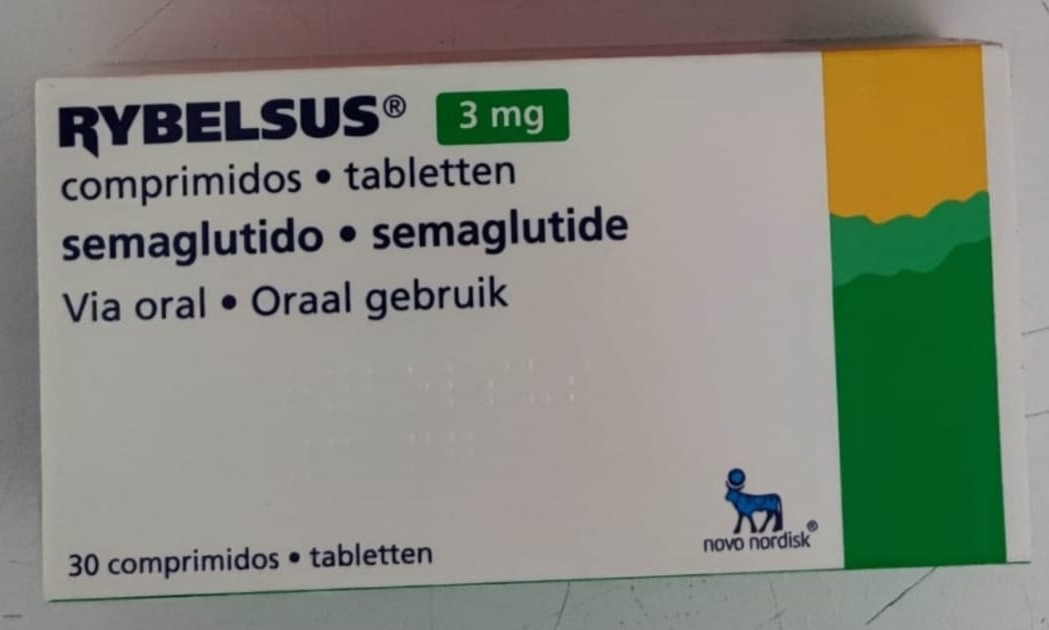
Rybelsus ( oral semaglutide)It is the first tablet medication in the class of GLP-1 analogs, indicated for adults with type 2 diabetes.It stimulates insulin production and reduces appetite, which also helps with weight control. [ 1 , 2 , 3 , 4 ]
For the medication to be absorbed correctly, it is essential to follow these strict rules:
When to take it: It should be taken on an empty stomach, upon waking.
Before eating: You must wait at least 30 minutes before consuming any food, drink, or other medication.
How to swallow: The tablet should be swallowed whole with a maximum of half a glass of water (up to 120 ml) . Do not break, crush or chew it. [ 1 , 2 , 3 ]
The usual maintenance doses are 7 mg or 14 mg, always starting with a dose of 3 mg in the first month. Because the absorption of this medication is complex, incorrect intake may negate its effect. [ 1 , 2 , 3 ]
The most common side effects include nausea, diarrhea, vomiting, and constipation. For detailed information on official package inserts or specific guidelines for your region, consult the official documents of the European Medicines Agency – EMA or visit the portal.
Rybelsus ( oral semaglutide)It is the first tablet medication in the class of GLP-1 analogs, indicated for adults with type 2 diabetes.It stimulates insulin production and reduces appetite, which also helps with weight control. [ 1 , 2 , 3 , 4 ]
For the medication to be absorbed correctly, it is essential to follow these strict rules:
When to take it: It should be taken on an empty stomach, upon waking.
Before eating: You must wait at least 30 minutes before consuming any food, drink, or other medication.
How to swallow: The tablet should be swallowed whole with a maximum of half a glass of water (up to 120 ml) . Do not break, crush or chew it. [ 1 , 2 , 3 ]
The usual maintenance doses are 7 mg or 14 mg, always starting with a dose of 3 mg in the first month. Because the absorption of this medication is complex, incorrect intake may negate its effect. [ 1 , 2 , 3 ]
The most common side effects include nausea, diarrhea, vomiting, and constipation. For detailed information on official package inserts or specific guidelines for your region, consult the official documents of the European Medicines Agency – EMA or visit the portal.