

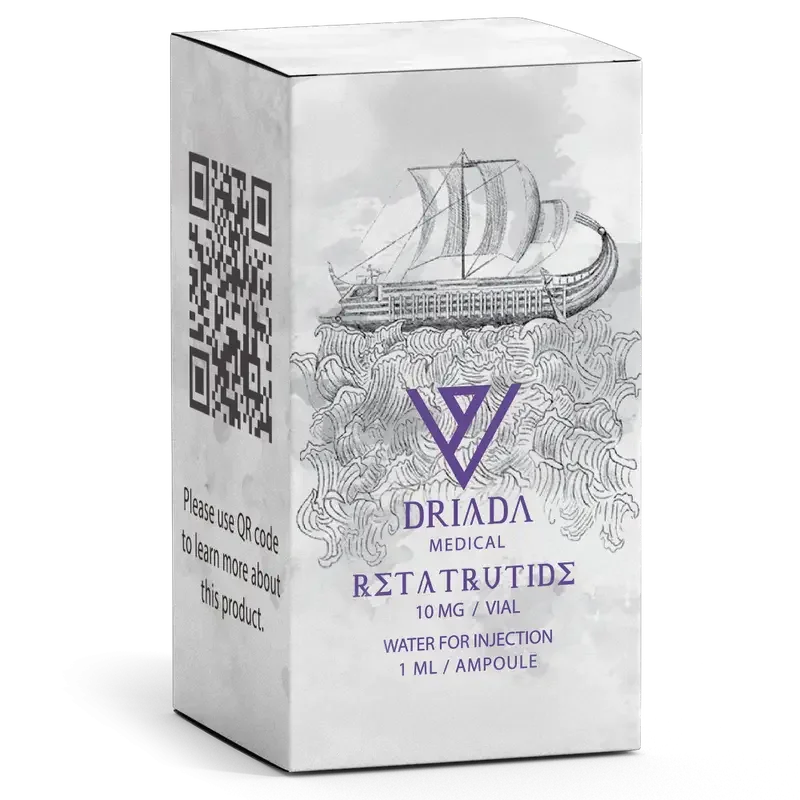
Retatrutide 10mg
Composition: Retatrutide 10 mg
Category: Peptide
Objective: Weight loss
Presentation: Bottle containing lyophilized powder + 1 ml ampoule of bacteriostatic water for reconstitution.
Administration: Subcutaneous injections
What is Retatrutida?
Retatrutide is an experimental peptide-based drug developed for weight loss and metabolic normalization. It works through a triple mechanism, activating GLP-1, GIP, and glucagon receptors—hormones that regulate appetite, blood sugar, and energy expenditure. This unique combination currently makes it one of the most promising new candidates for the treatment of obesity and metabolic disorders.
Who can benefit from Retatrutide?
✓ If you want to lose weight and control your appetite without extreme diets or starving yourself — Retatrutide reduces appetite and prolongs the feeling of fullness, helping you eat less and eliminate excess weight comfortably.
✓ If you have insulin resistance, metabolic syndrome, or prediabetes — this medication improves insulin sensitivity and helps regulate blood sugar.
✓ If you suffer from obesity and related conditions such as high blood pressure, fatigue, or inflammation, Retatrutide helps reduce pressure on internal organs and improves your metabolism.
✓ If you have been diagnosed with type 2 diabetes — this can help you better control your blood sugar, reduce food cravings, and serve as an additional therapeutic tool.
✓ If you want to prevent fatty liver disease — Retatrutide can reduce fat levels in the liver and reduce systemic inflammation.
How to take Retatrutide?
Retatrutide comes in a vial containing 10 mg of lyophilized powder. It must be reconstituted with the bacteriostatic water provided before use. You can read detailed instructions on how to prepare peptides and administer injections HERE .
Instructions for use:
Administer once a week, on the same day each week.
Before injecting, visually inspect the solution (it should be clear, without particles or sediment).
If nausea or weakness occurs, reduce the dose or take a 1-week break.
Dosage schedule:
To help the body adapt, start with a low dose—typically 2.5 mg per week—and gradually increase by 2.5 mg every 3 to 4 weeks. The target dose for strong clinical effects is 10 to 12 mg per week.
The most significant weight loss results were observed at these doses after 3–6 months of treatment.
Contraindications and precautions:
Do not use if you have or have a family history of medullary thyroid cancer or MEN2 syndrome.
Be careful if you have pancreatitis, gallbladder disease, or thyroid problems.
Do not combine with medications that decrease gastrointestinal motility without medical advice.
Possible side effects:
Nausea (especially in the first few weeks)
Loss of appetite
Bloating, gas, loose stools or constipation
Fatigue, headache
Rare: elevated pancreatic enzymes, abdominal pain (discontinue use if severe pain occurs)
How does Retatrutide work?
Retatrudide acts on three essential hormone receptors involved in the feeding response and metabolic regulation: GLP-1 , GIP , and the glucagon receptor . Their combined activation leads to appetite suppression, improved glucose control, and increased fat burning.
LPG-1
GLP-1 (glucagon-like peptide-1) is a hormone secreted by the intestine after meals. It signals to the brain that the body has received enough food, promoting early satiety and reducing hunger for several hours. It also slows gastric emptying, which prolongs the feeling of fullness.
In addition to controlling appetite, GLP-1 stimulates the pancreas to release insulin precisely when blood sugar levels rise—particularly important for people with insulin resistance. It also reduces the secretion of glucagon, a hormone that raises blood sugar levels. This dual mechanism helps restore proper metabolic balance in people who are overweight or have metabolic dysfunction.
GIP
GIP (glucose-dependent insulinotropic peptide) is another hormone released after meals. It helps regulate blood sugar, but in a different way than GLP-1. GIP amplifies the body's insulin response, especially after consuming carbohydrates and fats.
It increases insulin production and improves the ability of cells to absorb glucose, promoting its use as energy instead of leaving it in circulation. Elevated blood sugar levels can overload the pancreas, increase systemic inflammation, and accelerate fat accumulation—which increases the risk of diabetes. GIP also suppresses hepatic glucose production and may help regulate lipid metabolism, limiting fat storage.
Interestingly, GIP on its own has a limited impact, but in combination with GLP-1, the results are significantly stronger — leading to greater blood sugar control and more effective weight loss.
Glucagon
Glucagon is a hormone that acts in opposition to insulin. While insulin promotes the storage of nutrients after meals, glucagon is activated during fasting or in cases of hypoglycemia. It triggers the mobilization of internal energy reserves: breaking down glycogen in the liver, initiating lipolysis (fat breakdown), and stimulating the production of glucose from amino acids.
When glucagon receptors are artificially activated—as with Retatrutide—the body increases energy expenditure, even at rest. Lipolysis intensifies, so that fat stored in adipose tissue is broken down and used as fuel.
Retatrutide vs Semaglutide vs Tirzepatide
Semaglutide, tirrizepatide, and retatrutide belong to the same class of drugs—they target hormones involved in appetite, glucose regulation, and energy balance. But they differ fundamentally in how they work, and studies show differences in clinical outcomes.
In short:
Semaglutide acts on a receptor (GLP-1)
Tirzepatide targets two (GLP-1 and GIP)
Retatrutida active three (GLP-1, GIP and glucagon)
Composition: Retatrutide 10 mg
Category: Peptide
Objective: Weight loss
Presentation: Bottle containing lyophilized powder + 1 ml ampoule of bacteriostatic water for reconstitution.
Administration: Subcutaneous injections
What is Retatrutida?
Retatrutide is an experimental peptide-based drug developed for weight loss and metabolic normalization. It works through a triple mechanism, activating GLP-1, GIP, and glucagon receptors—hormones that regulate appetite, blood sugar, and energy expenditure. This unique combination currently makes it one of the most promising new candidates for the treatment of obesity and metabolic disorders.
Who can benefit from Retatrutide?
✓ If you want to lose weight and control your appetite without extreme diets or starving yourself — Retatrutide reduces appetite and prolongs the feeling of fullness, helping you eat less and eliminate excess weight comfortably.
✓ If you have insulin resistance, metabolic syndrome, or prediabetes — this medication improves insulin sensitivity and helps regulate blood sugar.
✓ If you suffer from obesity and related conditions such as high blood pressure, fatigue, or inflammation, Retatrutide helps reduce pressure on internal organs and improves your metabolism.
✓ If you have been diagnosed with type 2 diabetes — this can help you better control your blood sugar, reduce food cravings, and serve as an additional therapeutic tool.
✓ If you want to prevent fatty liver disease — Retatrutide can reduce fat levels in the liver and reduce systemic inflammation.
How to take Retatrutide?
Retatrutide comes in a vial containing 10 mg of lyophilized powder. It must be reconstituted with the bacteriostatic water provided before use. You can read detailed instructions on how to prepare peptides and administer injections HERE .
Instructions for use:
Administer once a week, on the same day each week.
Before injecting, visually inspect the solution (it should be clear, without particles or sediment).
If nausea or weakness occurs, reduce the dose or take a 1-week break.
Dosage schedule:
To help the body adapt, start with a low dose—typically 2.5 mg per week—and gradually increase by 2.5 mg every 3 to 4 weeks. The target dose for strong clinical effects is 10 to 12 mg per week.
The most significant weight loss results were observed at these doses after 3–6 months of treatment.
Contraindications and precautions:
Do not use if you have or have a family history of medullary thyroid cancer or MEN2 syndrome.
Be careful if you have pancreatitis, gallbladder disease, or thyroid problems.
Do not combine with medications that decrease gastrointestinal motility without medical advice.
Possible side effects:
Nausea (especially in the first few weeks)
Loss of appetite
Bloating, gas, loose stools or constipation
Fatigue, headache
Rare: elevated pancreatic enzymes, abdominal pain (discontinue use if severe pain occurs)
How does Retatrutide work?
Retatrudide acts on three essential hormone receptors involved in the feeding response and metabolic regulation: GLP-1 , GIP , and the glucagon receptor . Their combined activation leads to appetite suppression, improved glucose control, and increased fat burning.
LPG-1
GLP-1 (glucagon-like peptide-1) is a hormone secreted by the intestine after meals. It signals to the brain that the body has received enough food, promoting early satiety and reducing hunger for several hours. It also slows gastric emptying, which prolongs the feeling of fullness.
In addition to controlling appetite, GLP-1 stimulates the pancreas to release insulin precisely when blood sugar levels rise—particularly important for people with insulin resistance. It also reduces the secretion of glucagon, a hormone that raises blood sugar levels. This dual mechanism helps restore proper metabolic balance in people who are overweight or have metabolic dysfunction.
GIP
GIP (glucose-dependent insulinotropic peptide) is another hormone released after meals. It helps regulate blood sugar, but in a different way than GLP-1. GIP amplifies the body's insulin response, especially after consuming carbohydrates and fats.
It increases insulin production and improves the ability of cells to absorb glucose, promoting its use as energy instead of leaving it in circulation. Elevated blood sugar levels can overload the pancreas, increase systemic inflammation, and accelerate fat accumulation—which increases the risk of diabetes. GIP also suppresses hepatic glucose production and may help regulate lipid metabolism, limiting fat storage.
Interestingly, GIP on its own has a limited impact, but in combination with GLP-1, the results are significantly stronger — leading to greater blood sugar control and more effective weight loss.
Glucagon
Glucagon is a hormone that acts in opposition to insulin. While insulin promotes the storage of nutrients after meals, glucagon is activated during fasting or in cases of hypoglycemia. It triggers the mobilization of internal energy reserves: breaking down glycogen in the liver, initiating lipolysis (fat breakdown), and stimulating the production of glucose from amino acids.
When glucagon receptors are artificially activated—as with Retatrutide—the body increases energy expenditure, even at rest. Lipolysis intensifies, so that fat stored in adipose tissue is broken down and used as fuel.
Retatrutide vs Semaglutide vs Tirzepatide
Semaglutide, tirrizepatide, and retatrutide belong to the same class of drugs—they target hormones involved in appetite, glucose regulation, and energy balance. But they differ fundamentally in how they work, and studies show differences in clinical outcomes.
In short:
Semaglutide acts on a receptor (GLP-1)
Tirzepatide targets two (GLP-1 and GIP)
Retatrutida active three (GLP-1, GIP and glucagon)