

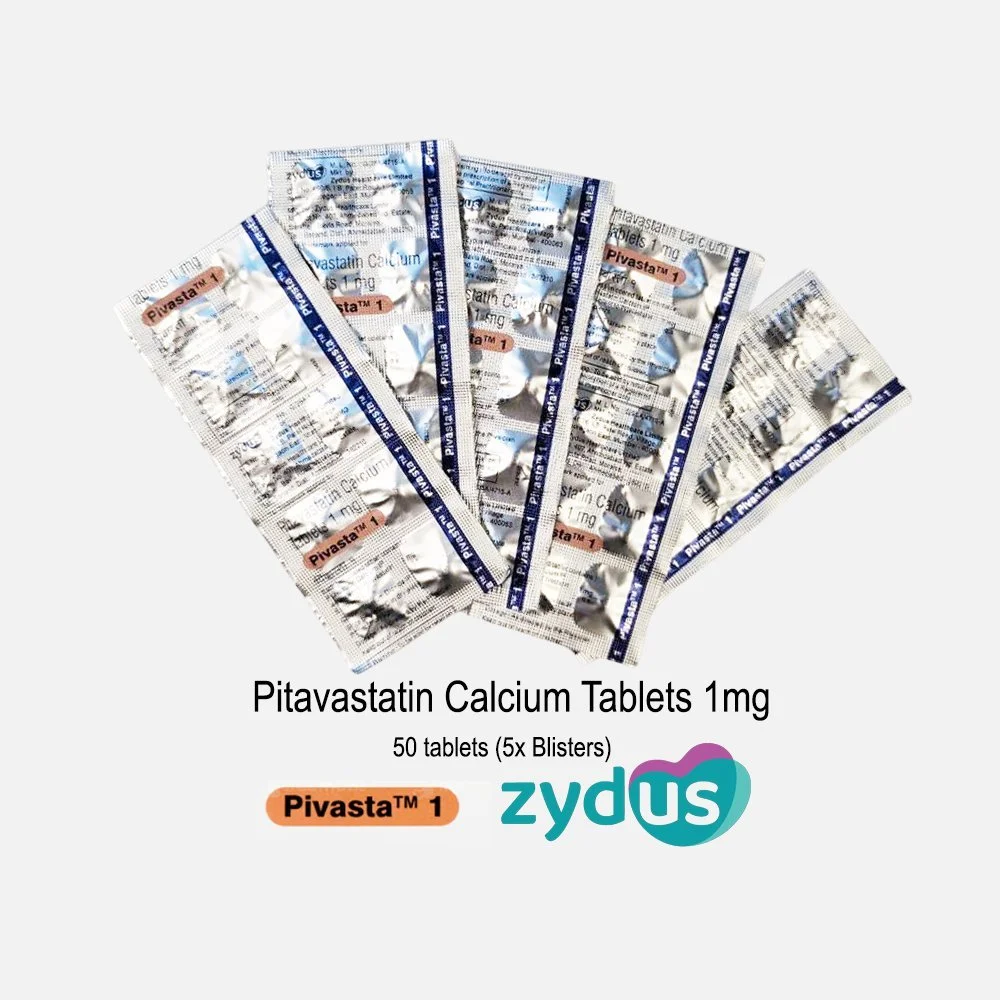
Pitavastatin 1 mg (Pivasta 1) (50 tablets, 5 blister packs)
Composition: pitavastatin 1 mg.
Category: Menstrual cycle support (statin).
Objective: correction of lipid profile, reduction of LDL, support of HDL, prevention of cardiovascular complications.
Format: tablets.
Administration: oral.
What is pitavastatin?
Pitavastatin is a statin medication that reduces low-density lipoprotein (LDL) levels and improves overall lipid balance (HDL). Its main advantage over other statins is that it does not increase blood glucose levels, making it one of the safest medications for long-term use.
It is excellent as a support during anabolic steroid cycles, which cause an increase in LDL and a decrease in HDL, raising the risk of heart disease if left untreated. Thus, pitavastatin stands out as a safe, effective, and low-cost option.
Main effects of pitavastatin
🔽 Reduction of LDL cholesterol.
❤️ Increase and maintain HDL cholesterol.
📉 Reduction of triglyceride levels.
🛡️ Reducing the risk of atherosclerosis and other cardiovascular complications.
🫀 Maintaining vascular health during intense and moderate exercise.
🍬 Neutralizing effect on glucose levels (other statins may increase blood sugar and reduce insulin resistance).
How do I take pitavastatin?
Dosage and administration schedule of pitavastatin
Initial dosage : 1 mg once daily.
Increase the dosage gradually up to a maximum of 4 mg per day (if the lipid profile still shows high LDL levels).
Dosage: once a day, always at the same time, regardless of food intake.
Duration of use when used in cycle with AAS: throughout the cycle and for an additional 4 to 6 weeks after its completion to minimize risks.
Discontinue use when lipid profile results are good and stable (LDL reduced to normal levels).
✅ For best results, it can be taken with Ezetimibe . Ezetimibe blocks the intestinal absorption of cholesterol and, when combined with Pitavastatin, the reduction of LDL is significantly more effective than monotherapy. Approximate dosages:
Pitavastatin 1 mg.
Ezetimibe 10 mg.
Once a day, always at the same time.
Important to note
It is advisable to avoid alcohol due to the risk of excessive strain on the liver.
Avoid taking this medication with certain antibiotics and antifungals due to the risk of side effects such as muscle pain or liver overload.
The medication can disrupt the energy balance in muscle cells and affect mitochondrial function, so we recommend measuring creatine kinase levels to monitor for potential muscle damage.
Perform a lipid profile and liver enzyme test to assess the effect of the medication.
If you experience severe muscle pain, weakness, or dark urine, discontinue use immediately and get tested.
Side effects
Headaches.
Mild nausea or gastrointestinal symptoms.
Fatigue and weakness.
Rarely, muscle pain or cramps may occur. This side effect is related to the fact that statins can disrupt the energy balance of muscle cells and affect mitochondrial function. In severe cases, this can lead to increased levels of creatine kinase, so it is important to monitor these levels if symptoms arise.
How should pitavastatin be stored?
Store in a dry place at room temperature.
Store in a dark place, away from sunlight.
Keep out of reach of children.
How does pitavastatin work?
Our liver needs cholesterol; it is an essential component for the production of bile acids (which aid in the digestion of fats), steroid hormones, and vitamin D.
LDL transports cholesterol from the liver to the tissues and, in excess, can be deposited on the walls of blood vessels.
HDL, on the other hand, removes excess cholesterol from tissues and blood vessels, returning it to the liver to be processed.
Anabolic steroids, especially anabolic-androgenic steroids (AAS), increase LDL levels and decrease HDL levels; therefore, liver and heart support is always necessary during a steroid cycle.
Inhibition of cholesterol synthesis and increase in LDL receptors.
Pitavastatin blocks the HMG-CoA reductase enzyme in the liver, which is essential for cholesterol production. When this enzyme is temporarily inhibited, the liver produces less cholesterol and the body begins to actively remove it from the blood.
When total cholesterol levels decrease, liver cells develop traps on their surface called LDL receptors, which capture cholesterol. Normally, LDL transports cholesterol from the liver to the tissues, but when its levels become too high, the liver begins to actively reabsorb LDL particles from the blood using specific receptors, thus reducing LDL levels and the risk of cholesterol deposits on the artery walls.
( Taguchi et al., 2018 , Yokote et al., 2011 , Adams et al., 2020 )
Additional effects of pitavastatin
In addition to its effects on cholesterol, pitavastatin influences many other factors.
For example, pitavastatin reduces the activity of immune cells in the walls of blood vessels and also reduces the production of inflammatory molecules (C-reactive protein, etc.), thus reducing arterial wall irritation and chronic inflammation in general ( Yoshika et al., 2010 ) .
Antioxidant activity protects tissue against damage, improves blood flow, and prevents thrombus formation ( Inamoto et al., 2010 ) . At the same time, endothelial function (the inner lining of blood vessels) improves, regulating vascular tone and nitric oxide production, which helps blood vessels dilate while reducing pressure ( Takase et al., 2013 ).
Studies also show that pitavastatin may support cognitive function ( Kurata et al., 2011 ) , reduce the risk of dementia ( Filho et al., 2025 ) , have positive effects on bones ( Majima et al., 2007 ) and on the gut microbiota ( Dias et al., 2020 ) .
Composition: pitavastatin 1 mg.
Category: Menstrual cycle support (statin).
Objective: correction of lipid profile, reduction of LDL, support of HDL, prevention of cardiovascular complications.
Format: tablets.
Administration: oral.
What is pitavastatin?
Pitavastatin is a statin medication that reduces low-density lipoprotein (LDL) levels and improves overall lipid balance (HDL). Its main advantage over other statins is that it does not increase blood glucose levels, making it one of the safest medications for long-term use.
It is excellent as a support during anabolic steroid cycles, which cause an increase in LDL and a decrease in HDL, raising the risk of heart disease if left untreated. Thus, pitavastatin stands out as a safe, effective, and low-cost option.
Main effects of pitavastatin
🔽 Reduction of LDL cholesterol.
❤️ Increase and maintain HDL cholesterol.
📉 Reduction of triglyceride levels.
🛡️ Reducing the risk of atherosclerosis and other cardiovascular complications.
🫀 Maintaining vascular health during intense and moderate exercise.
🍬 Neutralizing effect on glucose levels (other statins may increase blood sugar and reduce insulin resistance).
How do I take pitavastatin?
Dosage and administration schedule of pitavastatin
Initial dosage : 1 mg once daily.
Increase the dosage gradually up to a maximum of 4 mg per day (if the lipid profile still shows high LDL levels).
Dosage: once a day, always at the same time, regardless of food intake.
Duration of use when used in cycle with AAS: throughout the cycle and for an additional 4 to 6 weeks after its completion to minimize risks.
Discontinue use when lipid profile results are good and stable (LDL reduced to normal levels).
✅ For best results, it can be taken with Ezetimibe . Ezetimibe blocks the intestinal absorption of cholesterol and, when combined with Pitavastatin, the reduction of LDL is significantly more effective than monotherapy. Approximate dosages:
Pitavastatin 1 mg.
Ezetimibe 10 mg.
Once a day, always at the same time.
Important to note
It is advisable to avoid alcohol due to the risk of excessive strain on the liver.
Avoid taking this medication with certain antibiotics and antifungals due to the risk of side effects such as muscle pain or liver overload.
The medication can disrupt the energy balance in muscle cells and affect mitochondrial function, so we recommend measuring creatine kinase levels to monitor for potential muscle damage.
Perform a lipid profile and liver enzyme test to assess the effect of the medication.
If you experience severe muscle pain, weakness, or dark urine, discontinue use immediately and get tested.
Side effects
Headaches.
Mild nausea or gastrointestinal symptoms.
Fatigue and weakness.
Rarely, muscle pain or cramps may occur. This side effect is related to the fact that statins can disrupt the energy balance of muscle cells and affect mitochondrial function. In severe cases, this can lead to increased levels of creatine kinase, so it is important to monitor these levels if symptoms arise.
How should pitavastatin be stored?
Store in a dry place at room temperature.
Store in a dark place, away from sunlight.
Keep out of reach of children.
How does pitavastatin work?
Our liver needs cholesterol; it is an essential component for the production of bile acids (which aid in the digestion of fats), steroid hormones, and vitamin D.
LDL transports cholesterol from the liver to the tissues and, in excess, can be deposited on the walls of blood vessels.
HDL, on the other hand, removes excess cholesterol from tissues and blood vessels, returning it to the liver to be processed.
Anabolic steroids, especially anabolic-androgenic steroids (AAS), increase LDL levels and decrease HDL levels; therefore, liver and heart support is always necessary during a steroid cycle.
Inhibition of cholesterol synthesis and increase in LDL receptors.
Pitavastatin blocks the HMG-CoA reductase enzyme in the liver, which is essential for cholesterol production. When this enzyme is temporarily inhibited, the liver produces less cholesterol and the body begins to actively remove it from the blood.
When total cholesterol levels decrease, liver cells develop traps on their surface called LDL receptors, which capture cholesterol. Normally, LDL transports cholesterol from the liver to the tissues, but when its levels become too high, the liver begins to actively reabsorb LDL particles from the blood using specific receptors, thus reducing LDL levels and the risk of cholesterol deposits on the artery walls.
( Taguchi et al., 2018 , Yokote et al., 2011 , Adams et al., 2020 )
Additional effects of pitavastatin
In addition to its effects on cholesterol, pitavastatin influences many other factors.
For example, pitavastatin reduces the activity of immune cells in the walls of blood vessels and also reduces the production of inflammatory molecules (C-reactive protein, etc.), thus reducing arterial wall irritation and chronic inflammation in general ( Yoshika et al., 2010 ) .
Antioxidant activity protects tissue against damage, improves blood flow, and prevents thrombus formation ( Inamoto et al., 2010 ) . At the same time, endothelial function (the inner lining of blood vessels) improves, regulating vascular tone and nitric oxide production, which helps blood vessels dilate while reducing pressure ( Takase et al., 2013 ).
Studies also show that pitavastatin may support cognitive function ( Kurata et al., 2011 ) , reduce the risk of dementia ( Filho et al., 2025 ) , have positive effects on bones ( Majima et al., 2007 ) and on the gut microbiota ( Dias et al., 2020 ) .