

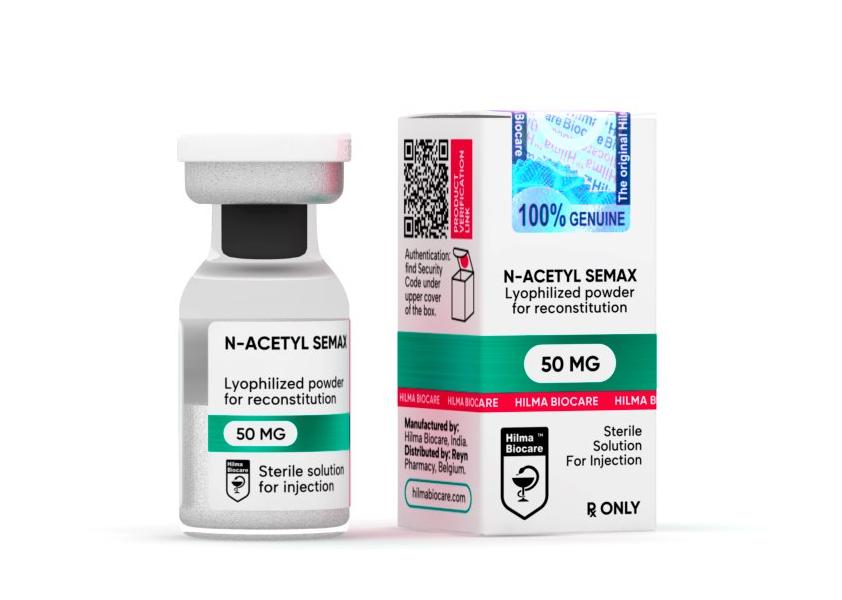
N-Acetyl Semax 50mg
Semax N-Acetyl Specifications
Company: Hilma Biocare
Group: Injectable/Powder
Active half-life (min): 2 to 5
Subgroup: Peptide hormone
Dosage: 50 mg
Application (Men): 0.1-4 mg, depending on the treatment plan
Packaging: 1 vial
Contents (active): N-Acetyl Semax
Retains water: No
Aromatizes: No
DESCRIPTION
N-Acetyl Semax is a synthetic neuropeptide, an analogue of a fragment of adrenocorticotropic hormone (ACTH 4-10), but completely devoid of hormonal activity. It belongs to the class of regulatory peptides and exhibits nootropic, stimulant, neuroprotective, antioxidant, and anti-hypoxic effects. It helps improve mental and physical performance.
This product is a modified, more stable and bioavailable form of the nootropic peptide Semax. Unlike the standard Semax peptide, the addition of an acetyl group increases the half-life and efficacy of the drug, allowing lower doses to be used to achieve results.
In some countries, N-Acetyl Semax is considered a vital and essential medicine.
INDICATIONS
N-Acetyl Semax is used medicinally for the treatment of stroke, transient ischemic attack (TIA), memory and cognitive impairment, gastric ulcers, optic nerve disorders, and to strengthen the immune system.
The medication has the following properties:
● Increased concentration, improved memory and learning;
● Brain stimulation: increased levels of brain-derived neurotrophic factor (BDNF);
● Neuroprotection: protection of neurons during stress and ischemia (oxygen deficiency);
● Accelerated rehabilitation after brain injuries and strokes.
APPLICATION
Several routes of administration are permitted: intranasal (nasal drops) for rapid penetration through the blood-brain barrier (within 4 minutes) or subcutaneous administration into adipose tissue (usually in the abdominal region).
DOSAGE
Dosage is determined individually, depending on the goal of therapy. Studies have demonstrated the effectiveness of the following dosage regimens:
Mental fatigue: 0.1–0.3 mg, 1–3 times a day, for 3–7 days.
Optic nerve atrophy: 0.3 mg, 1–3 times a day, for 7–10 days. This dosage is highly effective when prolonged for up to 30 days, if necessary.
Cognitive impairment associated with encephalopathy and strokes: up to 2 mg, 2–4 times a day, for 10–14 days. Treatment may be repeated if necessary.
Traumatic brain injury: 1–3.5 mg, 3 times a day, for 3–5 days. Treatment may be prolonged to 14 days if necessary.
Moderate stroke: 2–3 mg, 3–4 times a day, with a 3–4 hour interval between doses, for 10 days. Treatment may be repeated, if necessary, after a 20-day interval.
Severe stroke: 3–4 mg, 4–6 times a day, with an interval of 2.5–3 hours between doses, for 10 days.
Studies have also demonstrated the effectiveness of prophylactic treatments for moderate nervous exhaustion with doses of 0.2 to 0.5 mg, 1 to 2 times a day, for up to 30 days.
Dosage and treatment duration are adjusted by the attending physician based on the patient's individual response.
Contraindications
● Hypersensitivity to any of the components of the medication;
● Pregnancy;
● Lactation;
● Acute psychosis;
● Anxiety disorders;
● History of seizures;
● Children under 5 years of age.
DRUG INTERACTIONS
As a precaution, it is not recommended to combine this medication with other stimulants or nootropic agents.
SIDE EFFECTS
When used correctly, side effects are rare. During clinical trials, a small number of patients experienced mild nasopharyngeal discomfort with intranasal administration or mild swelling at the injection site. This is likely due to inadequate aseptic technique and not a reaction to the medication.
Semax N-Acetyl Specifications
Company: Hilma Biocare
Group: Injectable/Powder
Active half-life (min): 2 to 5
Subgroup: Peptide hormone
Dosage: 50 mg
Application (Men): 0.1-4 mg, depending on the treatment plan
Packaging: 1 vial
Contents (active): N-Acetyl Semax
Retains water: No
Aromatizes: No
DESCRIPTION
N-Acetyl Semax is a synthetic neuropeptide, an analogue of a fragment of adrenocorticotropic hormone (ACTH 4-10), but completely devoid of hormonal activity. It belongs to the class of regulatory peptides and exhibits nootropic, stimulant, neuroprotective, antioxidant, and anti-hypoxic effects. It helps improve mental and physical performance.
This product is a modified, more stable and bioavailable form of the nootropic peptide Semax. Unlike the standard Semax peptide, the addition of an acetyl group increases the half-life and efficacy of the drug, allowing lower doses to be used to achieve results.
In some countries, N-Acetyl Semax is considered a vital and essential medicine.
INDICATIONS
N-Acetyl Semax is used medicinally for the treatment of stroke, transient ischemic attack (TIA), memory and cognitive impairment, gastric ulcers, optic nerve disorders, and to strengthen the immune system.
The medication has the following properties:
● Increased concentration, improved memory and learning;
● Brain stimulation: increased levels of brain-derived neurotrophic factor (BDNF);
● Neuroprotection: protection of neurons during stress and ischemia (oxygen deficiency);
● Accelerated rehabilitation after brain injuries and strokes.
APPLICATION
Several routes of administration are permitted: intranasal (nasal drops) for rapid penetration through the blood-brain barrier (within 4 minutes) or subcutaneous administration into adipose tissue (usually in the abdominal region).
DOSAGE
Dosage is determined individually, depending on the goal of therapy. Studies have demonstrated the effectiveness of the following dosage regimens:
Mental fatigue: 0.1–0.3 mg, 1–3 times a day, for 3–7 days.
Optic nerve atrophy: 0.3 mg, 1–3 times a day, for 7–10 days. This dosage is highly effective when prolonged for up to 30 days, if necessary.
Cognitive impairment associated with encephalopathy and strokes: up to 2 mg, 2–4 times a day, for 10–14 days. Treatment may be repeated if necessary.
Traumatic brain injury: 1–3.5 mg, 3 times a day, for 3–5 days. Treatment may be prolonged to 14 days if necessary.
Moderate stroke: 2–3 mg, 3–4 times a day, with a 3–4 hour interval between doses, for 10 days. Treatment may be repeated, if necessary, after a 20-day interval.
Severe stroke: 3–4 mg, 4–6 times a day, with an interval of 2.5–3 hours between doses, for 10 days.
Studies have also demonstrated the effectiveness of prophylactic treatments for moderate nervous exhaustion with doses of 0.2 to 0.5 mg, 1 to 2 times a day, for up to 30 days.
Dosage and treatment duration are adjusted by the attending physician based on the patient's individual response.
Contraindications
● Hypersensitivity to any of the components of the medication;
● Pregnancy;
● Lactation;
● Acute psychosis;
● Anxiety disorders;
● History of seizures;
● Children under 5 years of age.
DRUG INTERACTIONS
As a precaution, it is not recommended to combine this medication with other stimulants or nootropic agents.
SIDE EFFECTS
When used correctly, side effects are rare. During clinical trials, a small number of patients experienced mild nasopharyngeal discomfort with intranasal administration or mild swelling at the injection site. This is likely due to inadequate aseptic technique and not a reaction to the medication.