

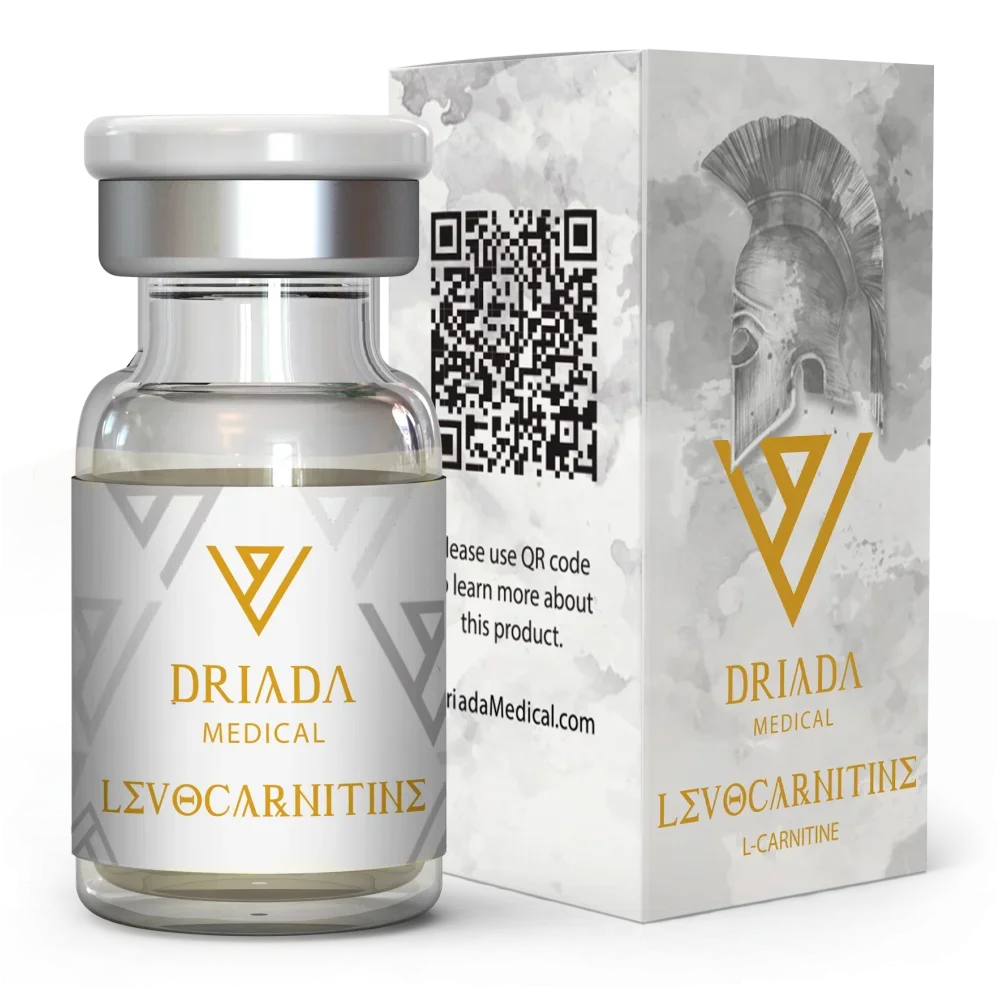
Levocarnitine 500 mg/ml (L-carnitine) 10ml (INTRAMUSCULAR)
L-Carnitine is an amino acid naturally produced in your body, primarily in the liver and kidneys, from two amino acids called lysine and methionine. Its main function is to help move fats into mitochondrial cells, where fats are broken down to create energy, known as ATP. You can obtain L-Carnitine from food sources such as red meat, poultry, fish, and dairy products, but for many athletes and bodybuilders, relying solely on these food sources isn't enough, especially when trying to maximize endurance or cut fat. That's where the injectable version comes in. It's absorbed directly into the bloodstream, allowing for faster and more effective results compared to oral supplements.
The main difference with L-Carnitine – unlike stimulants or thermogenic agents, it doesn't speed up the nervous system or increase body temperature to aid in fat loss. So, you won't feel jittery, anxious, or have a racing heart, making it a much easier option for people who want to avoid the side effects associated with stimulants. What it does instead is help your body use fat more effectively as energy, making things work more smoothly and reliably.
In the world of fitness and bodybuilding, L-Carnitine is also valued for aiding recovery. During training, L-Carnitine helps the body use glycogen more efficiently and also stimulates the use of fat as fuel. Thanks to this, athletes can train longer and more effectively without experiencing severe muscle fatigue. L-Carnitine is frequently used during cutting phases, when the main goal is to lose fat while maintaining muscle mass. L-Carnitine helps maintain stable energy levels during prolonged physical activity, so athletes involved in endurance sports also benefit.
Some studies suggest that L-carnitine may be beneficial for the cardiovascular system, especially for professional athletes. L-carnitine also improves the fat-burning process in heart cells, which helps the heart work more efficiently during intense training.
Main effects and benefits
Fat oxidation and weight control : L-carnitine plays a critical role in transporting long-chain fatty acids to the mitochondria, where they are oxidized for energy production. This makes it an invaluable supplement for athletes during cutting phases or for those seeking to reduce body fat while maintaining lean muscle mass. Research has shown that L-carnitine supplementation increases fat oxidation during exercise, making it a key factor in improving body composition for competitive athletes.
Enhanced endurance and glycogen sparing : L-carnitine increases the use of fat as a fuel source during aerobic exercise, thus sparing muscle glycogen stores. This "glycogen-sparing" effect delays the onset of fatigue, allowing athletes to perform for longer periods without hitting a wall. Studies confirm that athletes who supplement with L-carnitine experience enhanced endurance and prolonged performance during high-intensity training.
Improved recovery and reduced muscle soreness : Intense physical training leads to muscle damage and oxidative stress. L-Carnitine has been shown to reduce post-exercise muscle soreness by increasing blood flow to the muscles, improving oxygen delivery, and reducing inflammation. This accelerates recovery times and minimizes muscle damage, allowing athletes to maintain a high training frequency without prolonged downtime.
Increased anaerobic performance : While L-carnitine is primarily known for increasing aerobic endurance, it has also been shown to improve performance in strength training and high-intensity interval training (HIIT). By reducing fatigue and muscle damage, L-carnitine helps strength athletes complete more repetitions and sets, contributing to greater muscle gains over time.
Endurance and cardiovascular protection : For endurance athletes, maintaining cardiovascular health is crucial. L-carnitine improves heart function by enhancing fat metabolism within the heart muscle, providing a steady source of energy for the heart during prolonged activity. This not only supports overall endurance but also helps protect the heart from exercise-induced stress, which is important for long-duration or high-intensity athletes.
Cognitive function and brain health : L-carnitine, particularly in its acetylated form (acetyl-L-carnitine or ALCAR), has been shown to support cognitive function by improving mitochondrial function in brain cells and increasing the production of acetylcholine, a neurotransmitter involved in learning and memory. Athletes, especially those in mentally demanding sports, benefit from L-carnitine's ability to improve focus, reaction time, and mental clarity.
Neuroprotective effects : L-Carnitine reduces oxidative damage in neurons, which may protect against neurodegenerative conditions and mental fatigue. This makes it a valuable supplement for both younger athletes seeking to optimize mental sharpness and older individuals seeking to preserve cognitive function.
Metabolic Health and Insulin Sensitivity : L-Carnitine has been shown to improve metabolic function in overweight individuals and those with insulin resistance. By promoting fat oxidation, it helps reduce fat accumulation in the liver and muscle tissues, which can increase insulin sensitivity and overall metabolic health. This is particularly beneficial for individuals seeking to manage type 2 diabetes or prevent metabolic syndrome.
Male Fertility Support : L-Carnitine is commonly used in male fertility treatments due to its ability to improve sperm motility and quality. Studies have shown that L-Carnitine supplementation improves sperm maturation and energy production, making it a valuable supplement for improving reproductive health.
Fatigue-related disorders and chronic conditions : L-Carnitine is frequently prescribed for individuals suffering from chronic fatigue syndrome (CFS) or fibromyalgia. By improving mitochondrial efficiency and reducing oxidative stress, L-Carnitine helps alleviate symptoms of fatigue, muscle pain, and cognitive fog, making it an essential supplement for patients with these conditions.
Mechanism of Action
L-Carnitine helps your body use fats effectively as a primary source of energy. The main mechanism of its action is that it transports fatty acids to the mitochondria, where they are converted into energy. This process consists of several stages involving various enzymes and cellular structures, but overall, the essence is that L-Carnitine helps us burn fat faster. Below, we'll take a closer look at the specific processes in which L-Carnitine is involved.
Transport of long-chain fatty acids into the mitochondria
L-Carnitine helps your body burn fat by moving long-chain fatty acids into the mitochondria, where they are converted into energy. Because these fats are too large to enter the mitochondria on their own, L-Carnitine acts as a transporter, carrying them inside. The entire process happens through several steps, including preparing the fatty acids and attaching them to L-Carnitine. Let's break down each of these steps to see how L-Carnitine makes energy production possible:
Fatty acid activation: Before L-carnitine can help move fatty acids into the mitochondria, these fats need to be "activated." This happens in the cell, where long-chain fatty acids are transformed into a form ready for use. This step requires some energy (ATP) to get the fats ready for transport.
Carnitine Acyltransferase I (CPT-I): After fatty acids are activated, they are still unable to cross the mitochondrial membrane. An enzyme called CPT-I helps bind fatty acids to L-Carnitine, forming a new molecule that is small enough to pass through the membrane .
Carnitine-Acylcarnitine Translocase (CACT): Once fatty acids are bound to L-Carnitine, they are transported into the mitochondria by a protein called CACT. This protein exchanges the new fatty acid molecule for a free L-Carnitine molecule, ensuring the cycle continues.
Inside the mitochondria: beta-oxidation of fatty acids.
Once inside the mitochondria, the fatty acid is returned to Coenzyme A (CoA) with the help of an enzyme called CPT-II. This step releases L-Carnitine, which exits the mitochondria, while the fatty acyl-CoA is ready to be broken down.
Beta-oxidation : This is the process where fatty acids are broken down in the mitochondria. During beta-oxidation, fatty acids are divided into smaller pieces, each with two carbon atoms. Each cycle of this process produces:
Acetyl-CoA , which enters the citric acid cycle (Krebs cycle) to create energy (ATP).
FADH2 and NADH , which help generate even more energy through a process called oxidative phosphorylation.
Energy production (ATP synthesis) : The acetyl-CoA produced from beta-oxidation enters the citric acid cycle, where it creates more NADH and FADH2. These molecules then enter the electron transport chain, producing a large amount of ATP.
This entire process is very efficient at creating energy from fat, which is why L-Carnitine plays a key role in maintaining energy levels, helping the body use fat more effectively.
L-Carnitine Recycling
After the fatty acid has been transferred to Coenzyme A within the mitochondria, L-Carnitine is released and ready to be reused. It exits the mitochondria via the same transport protein that helped bring the fatty acid inside. This recycling process allows L-Carnitine to continue bringing more fatty acids into the mitochondria, making it a crucial part of the fat-burning process.
Prevention of toxic accumulation and cellular homeostasis.
L-Carnitine has another important function: ensuring that toxic byproducts of fat metabolism do not accumulate in cells. If fatty acids are not broken down correctly, they can accumulate in the cell and cause problems, leading to something called lipotoxicity. By helping to transport fatty acids to the mitochondria, L-Carnitine prevents these harmful byproducts from accumulating, helping cells remain balanced and healthy.
L-Carnitine also helps clear short- and medium-chain fatty acids that can accumulate in mitochondria during metabolism. Although these fats are smaller, they can still decrease the cell's ability to produce energy if left unchecked. L-Carnitine binds to them and moves them out of the mitochondria, keeping everything functioning smoothly.
Supporting mitochondrial growth and protecting cells.
L-Carnitine not only helps burn fat, but also plays a role in keeping your mitochondria healthy. By ensuring that fatty acids are continuously oxidized, L-Carnitine helps mitochondria work efficiently. Some research even suggests that L-Carnitine may help create new mitochondria, which is especially important for endurance athletes, as more mitochondria mean better energy production and improved performance ( https://doi.org/10.3390/ijms23052717 , https://doi.org/10.1016/j.bbrc.2015.07.009 ).
Furthermore, L-Carnitine acts as an antioxidant, helping to reduce oxidative stress by neutralizing free radicals produced during intense exercise. This protective effect minimizes cell damage, aids in recovery, and helps maintain muscle health over time, increasing endurance and overall performance.
Influence on metabolic regulation and exercise performance.
L-Carnitine not only increases fat metabolism but also helps regulate overall energy use in the body. By increasing fat oxidation, it reduces the body's reliance on glycogen, helping to conserve it. This can extend your ability to exercise, especially during endurance activities. During long aerobic workouts, this change allows athletes to continue exercising without reaching the point of extreme fatigue, often called "hitting the wall," which happens when glycogen levels are depleted.
Conserving Glycogen : L-Carnitine stimulates the body to use fat as its primary energy source, sparing muscle glycogen for when it is truly needed. This is particularly useful for athletes during long or intense activities where glycogen is vital for maintaining energy levels.
Enhanced Recovery : L-Carnitine also helps you recover faster after exercise by reducing muscle damage and clearing waste products like lactic acid. This accelerates muscle repair and reduces soreness, allowing you to return to training sooner and at peak capacity.
The image above illustrates how L-Carnitine helps preserve glycogen by promoting fat as the primary energy source, which helps maintain endurance and delay fatigue.
A study analyzed the effects of long-term carnitine supplementation (2 g twice daily with carbohydrates) on metabolism and endurance performance during exercise. Over six months, subjects exercised at low and high intensities. L-carnitine increased fat oxidation and conserved glycogen at lower intensities, while at higher intensities, it reduced waste accumulation, allowing for more efficient carbohydrate use. As a result, participants achieved greater work output during a 30-minute time trial ( https://doi.org/10.1113/jphysiol.2010.201343 ).
Broad impact on health beyond energy production.
L-Carnitine does more than just help with fat metabolism—it also has broader health benefits. For heart health, it helps the heart muscle use fats more efficiently, which improves heart function and may reduce the risk of cardiovascular disease. L-Carnitine also supports brain health by increasing energy production in brain cells, which may help reduce the risk of neurodegenerative conditions such as Alzheimer's ( https://doi.org/10.1097/00004850-200303000-00001 ).
Uses
L-Carnitine, in all its forms—whether oral, injectable, or transdermal—has wide applications in clinical and athletic settings. It is a versatile nutrient that aids in fat metabolism, energy production, cardiovascular health, and even cognitive function. Below is an in-depth analysis of how L-Carnitine is used in different forms and for various purposes beyond the injectable format.
L-Carnitine is an amino acid naturally produced in your body, primarily in the liver and kidneys, from two amino acids called lysine and methionine. Its main function is to help move fats into mitochondrial cells, where fats are broken down to create energy, known as ATP. You can obtain L-Carnitine from food sources such as red meat, poultry, fish, and dairy products, but for many athletes and bodybuilders, relying solely on these food sources isn't enough, especially when trying to maximize endurance or cut fat. That's where the injectable version comes in. It's absorbed directly into the bloodstream, allowing for faster and more effective results compared to oral supplements.
The main difference with L-Carnitine – unlike stimulants or thermogenic agents, it doesn't speed up the nervous system or increase body temperature to aid in fat loss. So, you won't feel jittery, anxious, or have a racing heart, making it a much easier option for people who want to avoid the side effects associated with stimulants. What it does instead is help your body use fat more effectively as energy, making things work more smoothly and reliably.
In the world of fitness and bodybuilding, L-Carnitine is also valued for aiding recovery. During training, L-Carnitine helps the body use glycogen more efficiently and also stimulates the use of fat as fuel. Thanks to this, athletes can train longer and more effectively without experiencing severe muscle fatigue. L-Carnitine is frequently used during cutting phases, when the main goal is to lose fat while maintaining muscle mass. L-Carnitine helps maintain stable energy levels during prolonged physical activity, so athletes involved in endurance sports also benefit.
Some studies suggest that L-carnitine may be beneficial for the cardiovascular system, especially for professional athletes. L-carnitine also improves the fat-burning process in heart cells, which helps the heart work more efficiently during intense training.
Main effects and benefits
Fat oxidation and weight control : L-carnitine plays a critical role in transporting long-chain fatty acids to the mitochondria, where they are oxidized for energy production. This makes it an invaluable supplement for athletes during cutting phases or for those seeking to reduce body fat while maintaining lean muscle mass. Research has shown that L-carnitine supplementation increases fat oxidation during exercise, making it a key factor in improving body composition for competitive athletes.
Enhanced endurance and glycogen sparing : L-carnitine increases the use of fat as a fuel source during aerobic exercise, thus sparing muscle glycogen stores. This "glycogen-sparing" effect delays the onset of fatigue, allowing athletes to perform for longer periods without hitting a wall. Studies confirm that athletes who supplement with L-carnitine experience enhanced endurance and prolonged performance during high-intensity training.
Improved recovery and reduced muscle soreness : Intense physical training leads to muscle damage and oxidative stress. L-Carnitine has been shown to reduce post-exercise muscle soreness by increasing blood flow to the muscles, improving oxygen delivery, and reducing inflammation. This accelerates recovery times and minimizes muscle damage, allowing athletes to maintain a high training frequency without prolonged downtime.
Increased anaerobic performance : While L-carnitine is primarily known for increasing aerobic endurance, it has also been shown to improve performance in strength training and high-intensity interval training (HIIT). By reducing fatigue and muscle damage, L-carnitine helps strength athletes complete more repetitions and sets, contributing to greater muscle gains over time.
Endurance and cardiovascular protection : For endurance athletes, maintaining cardiovascular health is crucial. L-carnitine improves heart function by enhancing fat metabolism within the heart muscle, providing a steady source of energy for the heart during prolonged activity. This not only supports overall endurance but also helps protect the heart from exercise-induced stress, which is important for long-duration or high-intensity athletes.
Cognitive function and brain health : L-carnitine, particularly in its acetylated form (acetyl-L-carnitine or ALCAR), has been shown to support cognitive function by improving mitochondrial function in brain cells and increasing the production of acetylcholine, a neurotransmitter involved in learning and memory. Athletes, especially those in mentally demanding sports, benefit from L-carnitine's ability to improve focus, reaction time, and mental clarity.
Neuroprotective effects : L-Carnitine reduces oxidative damage in neurons, which may protect against neurodegenerative conditions and mental fatigue. This makes it a valuable supplement for both younger athletes seeking to optimize mental sharpness and older individuals seeking to preserve cognitive function.
Metabolic Health and Insulin Sensitivity : L-Carnitine has been shown to improve metabolic function in overweight individuals and those with insulin resistance. By promoting fat oxidation, it helps reduce fat accumulation in the liver and muscle tissues, which can increase insulin sensitivity and overall metabolic health. This is particularly beneficial for individuals seeking to manage type 2 diabetes or prevent metabolic syndrome.
Male Fertility Support : L-Carnitine is commonly used in male fertility treatments due to its ability to improve sperm motility and quality. Studies have shown that L-Carnitine supplementation improves sperm maturation and energy production, making it a valuable supplement for improving reproductive health.
Fatigue-related disorders and chronic conditions : L-Carnitine is frequently prescribed for individuals suffering from chronic fatigue syndrome (CFS) or fibromyalgia. By improving mitochondrial efficiency and reducing oxidative stress, L-Carnitine helps alleviate symptoms of fatigue, muscle pain, and cognitive fog, making it an essential supplement for patients with these conditions.
Mechanism of Action
L-Carnitine helps your body use fats effectively as a primary source of energy. The main mechanism of its action is that it transports fatty acids to the mitochondria, where they are converted into energy. This process consists of several stages involving various enzymes and cellular structures, but overall, the essence is that L-Carnitine helps us burn fat faster. Below, we'll take a closer look at the specific processes in which L-Carnitine is involved.
Transport of long-chain fatty acids into the mitochondria
L-Carnitine helps your body burn fat by moving long-chain fatty acids into the mitochondria, where they are converted into energy. Because these fats are too large to enter the mitochondria on their own, L-Carnitine acts as a transporter, carrying them inside. The entire process happens through several steps, including preparing the fatty acids and attaching them to L-Carnitine. Let's break down each of these steps to see how L-Carnitine makes energy production possible:
Fatty acid activation: Before L-carnitine can help move fatty acids into the mitochondria, these fats need to be "activated." This happens in the cell, where long-chain fatty acids are transformed into a form ready for use. This step requires some energy (ATP) to get the fats ready for transport.
Carnitine Acyltransferase I (CPT-I): After fatty acids are activated, they are still unable to cross the mitochondrial membrane. An enzyme called CPT-I helps bind fatty acids to L-Carnitine, forming a new molecule that is small enough to pass through the membrane .
Carnitine-Acylcarnitine Translocase (CACT): Once fatty acids are bound to L-Carnitine, they are transported into the mitochondria by a protein called CACT. This protein exchanges the new fatty acid molecule for a free L-Carnitine molecule, ensuring the cycle continues.
Inside the mitochondria: beta-oxidation of fatty acids.
Once inside the mitochondria, the fatty acid is returned to Coenzyme A (CoA) with the help of an enzyme called CPT-II. This step releases L-Carnitine, which exits the mitochondria, while the fatty acyl-CoA is ready to be broken down.
Beta-oxidation : This is the process where fatty acids are broken down in the mitochondria. During beta-oxidation, fatty acids are divided into smaller pieces, each with two carbon atoms. Each cycle of this process produces:
Acetyl-CoA , which enters the citric acid cycle (Krebs cycle) to create energy (ATP).
FADH2 and NADH , which help generate even more energy through a process called oxidative phosphorylation.
Energy production (ATP synthesis) : The acetyl-CoA produced from beta-oxidation enters the citric acid cycle, where it creates more NADH and FADH2. These molecules then enter the electron transport chain, producing a large amount of ATP.
This entire process is very efficient at creating energy from fat, which is why L-Carnitine plays a key role in maintaining energy levels, helping the body use fat more effectively.
L-Carnitine Recycling
After the fatty acid has been transferred to Coenzyme A within the mitochondria, L-Carnitine is released and ready to be reused. It exits the mitochondria via the same transport protein that helped bring the fatty acid inside. This recycling process allows L-Carnitine to continue bringing more fatty acids into the mitochondria, making it a crucial part of the fat-burning process.
Prevention of toxic accumulation and cellular homeostasis.
L-Carnitine has another important function: ensuring that toxic byproducts of fat metabolism do not accumulate in cells. If fatty acids are not broken down correctly, they can accumulate in the cell and cause problems, leading to something called lipotoxicity. By helping to transport fatty acids to the mitochondria, L-Carnitine prevents these harmful byproducts from accumulating, helping cells remain balanced and healthy.
L-Carnitine also helps clear short- and medium-chain fatty acids that can accumulate in mitochondria during metabolism. Although these fats are smaller, they can still decrease the cell's ability to produce energy if left unchecked. L-Carnitine binds to them and moves them out of the mitochondria, keeping everything functioning smoothly.
Supporting mitochondrial growth and protecting cells.
L-Carnitine not only helps burn fat, but also plays a role in keeping your mitochondria healthy. By ensuring that fatty acids are continuously oxidized, L-Carnitine helps mitochondria work efficiently. Some research even suggests that L-Carnitine may help create new mitochondria, which is especially important for endurance athletes, as more mitochondria mean better energy production and improved performance ( https://doi.org/10.3390/ijms23052717 , https://doi.org/10.1016/j.bbrc.2015.07.009 ).
Furthermore, L-Carnitine acts as an antioxidant, helping to reduce oxidative stress by neutralizing free radicals produced during intense exercise. This protective effect minimizes cell damage, aids in recovery, and helps maintain muscle health over time, increasing endurance and overall performance.
Influence on metabolic regulation and exercise performance.
L-Carnitine not only increases fat metabolism but also helps regulate overall energy use in the body. By increasing fat oxidation, it reduces the body's reliance on glycogen, helping to conserve it. This can extend your ability to exercise, especially during endurance activities. During long aerobic workouts, this change allows athletes to continue exercising without reaching the point of extreme fatigue, often called "hitting the wall," which happens when glycogen levels are depleted.
Conserving Glycogen : L-Carnitine stimulates the body to use fat as its primary energy source, sparing muscle glycogen for when it is truly needed. This is particularly useful for athletes during long or intense activities where glycogen is vital for maintaining energy levels.
Enhanced Recovery : L-Carnitine also helps you recover faster after exercise by reducing muscle damage and clearing waste products like lactic acid. This accelerates muscle repair and reduces soreness, allowing you to return to training sooner and at peak capacity.
The image above illustrates how L-Carnitine helps preserve glycogen by promoting fat as the primary energy source, which helps maintain endurance and delay fatigue.
A study analyzed the effects of long-term carnitine supplementation (2 g twice daily with carbohydrates) on metabolism and endurance performance during exercise. Over six months, subjects exercised at low and high intensities. L-carnitine increased fat oxidation and conserved glycogen at lower intensities, while at higher intensities, it reduced waste accumulation, allowing for more efficient carbohydrate use. As a result, participants achieved greater work output during a 30-minute time trial ( https://doi.org/10.1113/jphysiol.2010.201343 ).
Broad impact on health beyond energy production.
L-Carnitine does more than just help with fat metabolism—it also has broader health benefits. For heart health, it helps the heart muscle use fats more efficiently, which improves heart function and may reduce the risk of cardiovascular disease. L-Carnitine also supports brain health by increasing energy production in brain cells, which may help reduce the risk of neurodegenerative conditions such as Alzheimer's ( https://doi.org/10.1097/00004850-200303000-00001 ).
Uses
L-Carnitine, in all its forms—whether oral, injectable, or transdermal—has wide applications in clinical and athletic settings. It is a versatile nutrient that aids in fat metabolism, energy production, cardiovascular health, and even cognitive function. Below is an in-depth analysis of how L-Carnitine is used in different forms and for various purposes beyond the injectable format.