
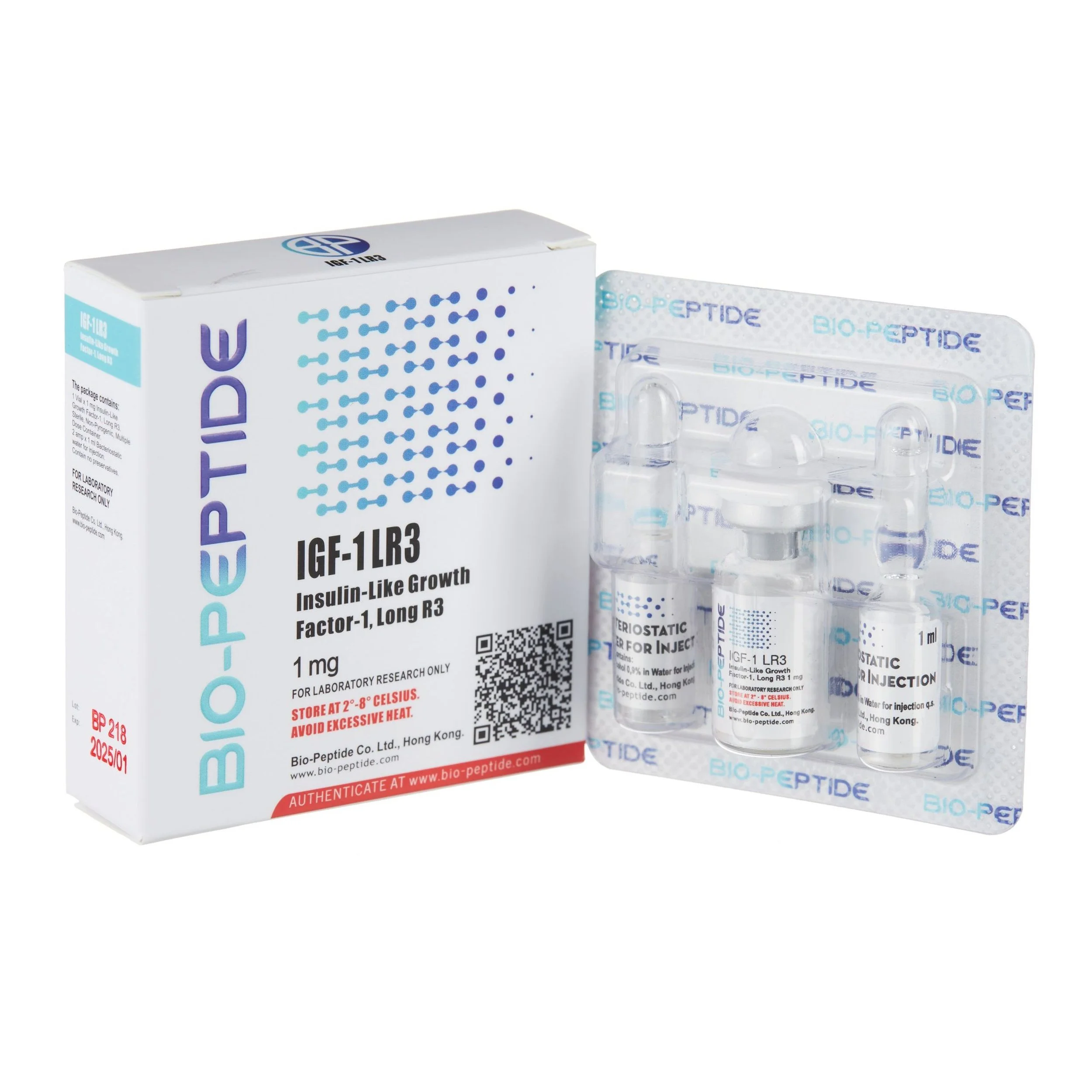
Insulin-like growth factor I long [R3] (IGF-1 Long [R3]) is a recombinant, single, non-glycosylated human polypeptide chain containing 83 amino acids. It is an analog of human IGF-1 comprising the complete sequence of human IGF-1 with the substitution of an arginine (Arg or R) for glutamic acid (Glu or E) at position 3 (hence R3) and a 13-amino acid extension peptide at the N-terminus. This analog was developed for the express purpose of increasing biological activity. IGF-1 Long[R3] is significantly more potent than IGF-1 in vitro and in vivo. The increased potency is due to the markedly decreased binding of IGF-1 Long[R3] to all IGF-binding proteins. These binding proteins normally inhibit the biological actions of IGFs. IGF-1 stands for insulin-like growth factor. It is a naturally occurring substance produced in the human body and reaches its highest natural levels during puberty. During puberty, IGF-1 is largely responsible for the natural muscle growth that occurs during these few years. IGF-1 does many different things in the human body. Among the most positive effects are: increased transport of amino acids to cells; increased glucose transport; increased protein synthesis; decreased protein degradation; and increased RNA synthesis. (For research purposes only.)
Insulin-like growth factor I long [R3] (IGF-1 Long [R3]) is a recombinant, single, non-glycosylated human polypeptide chain containing 83 amino acids. It is an analog of human IGF-1 comprising the complete sequence of human IGF-1 with the substitution of an arginine (Arg or R) for glutamic acid (Glu or E) at position 3 (hence R3) and a 13-amino acid extension peptide at the N-terminus. This analog was developed for the express purpose of increasing biological activity. IGF-1 Long[R3] is significantly more potent than IGF-1 in vitro and in vivo. The increased potency is due to the markedly decreased binding of IGF-1 Long[R3] to all IGF-binding proteins. These binding proteins normally inhibit the biological actions of IGFs. IGF-1 stands for insulin-like growth factor. It is a naturally occurring substance produced in the human body and reaches its highest natural levels during puberty. During puberty, IGF-1 is largely responsible for the natural muscle growth that occurs during these few years. IGF-1 does many different things in the human body. Among the most positive effects are: increased transport of amino acids to cells; increased glucose transport; increased protein synthesis; decreased protein degradation; and increased RNA synthesis. (For research purposes only.)