
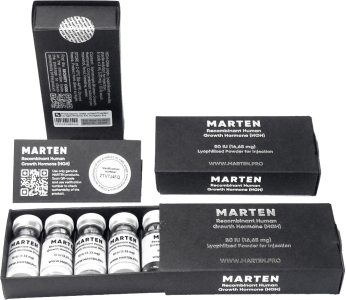
HGH Somatropin Powder 100UI (10IUx10 vials) – Marten
Marten by Hilma Biocare/Roidteam
Understanding growth hormone
Known as somatotropin or human growth hormone (GH), this essential peptide hormone is produced in the anterior section of the pituitary gland. It is essential for increasing protein production, regulating carbohydrate and sugar metabolism, aiding in tissue recovery after injury, and supporting the optimal operation of various organs and systems. Growth hormone is fundamental for stimulating growth, cell development, and regeneration in humans and animals, highlighting its importance in the developmental stages of life.
Growth hormone (GH) is fundamental in the development and growth of body tissues and organs, leading bone growth and influencing the metabolism of fats, carbohydrates, proteins, and minerals. It also ensures fluid and electrolyte balance in the body. It initiates fat breakdown in adipocytes, increases amino acid absorption, and maintains nitrogen in muscles, all of which helps preserve strength and muscle mass. Furthermore, GH affects the secretion of insulin-like growth factor 1 (IGF-1), primarily in the liver, which significantly impacts growth and metabolic functions.
Peak growth hormone production occurs during growth phases, facilitating our progression from childhood to full adulthood. The highest hormone secretion happens in early adolescence and during puberty, with a noticeable decrease beginning around age 25.
Growth hormone is valued for its ability to increase muscle mass through anabolic and anti-catabolic effects, promoting protein synthesis and slowing its breakdown. It is crucial in reducing subcutaneous fat layers and increasing fat burning during physical activity, making it highly valued by athletes.
Furthermore, somatotropin manages carbohydrate metabolism by producing an anti-insulin effect (reducing the effectiveness of insulin), which increases blood glucose levels to provide energy during physical exertion. It also helps prevent osteoporosis by improving calcium absorption by bones, which is particularly vital during muscular exertion.
Effects of growth hormone
Growth hormone acts as an essential intermediary, primarily involved in the production of insulin-like growth factor (IGF-1), which performs most of the effects commonly associated with growth hormone. Growth hormone also directly affects various bodily functions through binding to specific receptors.
The main functions facilitated by growth hormone include:
Stimulation of lipolysis – the transformation of fat molecules into fatty acids.
To increase the permeability of cell membranes to certain amino acids, thereby providing vital building blocks for cells.
It increases calcium retention in the body, which strengthens bones.
Strengthening the immune system.
Facilitating the conversion of thyroxine (T4) into triiodothyronine (T3).
Increased blood glucose levels.
Role of growth hormone in IGF-1 production
Although some of the actions of growth hormone are immediate, many of its functions are mediated by insulin-like growth factor IGF-1 (formerly known as somatomedin C). Produced in the liver under the influence of somatotropin, IGF-1 is crucial for the development of internal organs. Most of the benefits of growth hormone in athletics stem from IGF-1, positioning growth hormone primarily as a facilitator in the synthesis of this secondary hormone. The growth and enhancement of body tissues attributed to growth hormone are predominantly due to the effects of IGF-1.
Additional benefits of IGF-1 include:
Increasing the body's antioxidants.
Reducing inflammation.
Maintain stable blood sugar and electrolyte levels.
Helping to prevent cardiovascular disease.
Improving cognitive function is particularly useful in stroke recovery.
To support muscle growth through anabolic activity.
Accelerating the healing process by increasing collagen production.
Strengthening bones by increasing calcium retention, thereby improving bone density.
Applications of growth hormone
Improving the resilience of tendons and joints.
In sports like powerlifting, where tendon strength is essential, growth hormone shows significant benefits. For team sports and combat disciplines with frequent tendon injuries, growth hormone is increasingly used for faster recovery.
Improving explosive power
Useful for sprinters and athletes in dynamic sports, growth hormone helps increase speed and explosiveness.
Increasing muscle mass
Higher levels of somatotropin lead to increased protein synthesis and reduced amino acid oxidation, aiding in muscle growth. Growth hormone also blocks glucose uptake by fat cells, promoting muscle anabolism and preventing fat accumulation.
Fat reduction
With its strong fat-burning properties, growth hormone is popular among bodybuilders and those seeking an athletic physique.
Anti-aging effects
Starting in the early 40s, the natural decline in somatotropin production can lead to symptoms of aging. Synthetic growth hormone may help mitigate these effects.
Recommended dosages
For anti-aging: 1-1.5 IU daily
To improve tendon and joint strength and aid in recovery: 2-3 IU per day.
To accelerate recovery after strenuous activity: 3-4 IU per day.
For fat reduction: 3-6 IU daily
To increase muscle mass: 6-12 IU per day
Risks and Limitations
People with cardiovascular problems
Individuals diagnosed with cancer
People with type 2 diabetes
Possible side effects
Generally safe when used correctly, growth hormone can cause some side effects, such as fluid retention, increased blood pressure, and higher blood sugar levels. These may include:
Carpal tunnel syndrome
Fluid retention
High blood pressure
Decreased thyroid activity
Hyperglycemia
Joint pain
Handling and storage of growth hormone
The dry form of growth hormone comes with a vial of powder and an ampoule of water for reconstitution. This lyophilized powder must be mixed with the supplied solvent (bacteriostatic water) according to the specific guidelines to prepare the solution. Once reconstituted, store the liquid hormone as instructed to maintain its potency.
Preparing the hormonal solution
Place the solvent in the syringe, usually about one milliliter per vial.
Inject the solvent into the vial containing the lyophilized powder, allowing the liquid to run down the side of the vial to avoid direct contact with the powder.
Gently swirl the vial to dissolve the powder without shaking vigorously. Once dissolved, the hormone is ready for use and should be stored refrigerated for up to 14 days or at room temperature for up to three days.
Proper storage methods
Keep the unmixed powder at room temperature or refrigerated, away from direct light and heat. The dry form of somatotropin remains stable for up to three years under appropriate conditions.
Once the bottle is opened, the hormone should be used within two weeks to maintain its effectiveness, and it is advisable to refrigerate the product if the integrity of the packaging is compromised.
The bacteriostatic water used for reconstitution should also be kept refrigerated to preserve its sterility and effectiveness.
Frequently Asked Questions
Is post-cycle therapy necessary after using human growth hormone?
Post-cycle therapy is not necessary after using growth hormone, as it does not affect sex hormone levels.
Are HGH injections painful?
Administered with a fine needle, HGH injections are designed to be minimally invasive and are generally painless.
Effects of growth hormone in women
Many women use HGH for anti-aging and weight loss. Deficiency symptoms such as dry skin, hair loss, and increased belly fat can be alleviated with hormone therapy, which also supports healthy skin and bone structure.
Expectations regarding the use of growth hormone
In sports, growth hormone is sought after for its fat-reducing capabilities. Studies also show increases in lean muscle mass and muscle cell volume from its use.
Combining growth hormone with anabolic steroids
Combining growth hormone with anabolic steroids is a common practice among bodybuilders to enhance the effects of the steroids.
Marten by Hilma Biocare/Roidteam
Understanding growth hormone
Known as somatotropin or human growth hormone (GH), this essential peptide hormone is produced in the anterior section of the pituitary gland. It is essential for increasing protein production, regulating carbohydrate and sugar metabolism, aiding in tissue recovery after injury, and supporting the optimal operation of various organs and systems. Growth hormone is fundamental for stimulating growth, cell development, and regeneration in humans and animals, highlighting its importance in the developmental stages of life.
Growth hormone (GH) is fundamental in the development and growth of body tissues and organs, leading bone growth and influencing the metabolism of fats, carbohydrates, proteins, and minerals. It also ensures fluid and electrolyte balance in the body. It initiates fat breakdown in adipocytes, increases amino acid absorption, and maintains nitrogen in muscles, all of which helps preserve strength and muscle mass. Furthermore, GH affects the secretion of insulin-like growth factor 1 (IGF-1), primarily in the liver, which significantly impacts growth and metabolic functions.
Peak growth hormone production occurs during growth phases, facilitating our progression from childhood to full adulthood. The highest hormone secretion happens in early adolescence and during puberty, with a noticeable decrease beginning around age 25.
Growth hormone is valued for its ability to increase muscle mass through anabolic and anti-catabolic effects, promoting protein synthesis and slowing its breakdown. It is crucial in reducing subcutaneous fat layers and increasing fat burning during physical activity, making it highly valued by athletes.
Furthermore, somatotropin manages carbohydrate metabolism by producing an anti-insulin effect (reducing the effectiveness of insulin), which increases blood glucose levels to provide energy during physical exertion. It also helps prevent osteoporosis by improving calcium absorption by bones, which is particularly vital during muscular exertion.
Effects of growth hormone
Growth hormone acts as an essential intermediary, primarily involved in the production of insulin-like growth factor (IGF-1), which performs most of the effects commonly associated with growth hormone. Growth hormone also directly affects various bodily functions through binding to specific receptors.
The main functions facilitated by growth hormone include:
Stimulation of lipolysis – the transformation of fat molecules into fatty acids.
To increase the permeability of cell membranes to certain amino acids, thereby providing vital building blocks for cells.
It increases calcium retention in the body, which strengthens bones.
Strengthening the immune system.
Facilitating the conversion of thyroxine (T4) into triiodothyronine (T3).
Increased blood glucose levels.
Role of growth hormone in IGF-1 production
Although some of the actions of growth hormone are immediate, many of its functions are mediated by insulin-like growth factor IGF-1 (formerly known as somatomedin C). Produced in the liver under the influence of somatotropin, IGF-1 is crucial for the development of internal organs. Most of the benefits of growth hormone in athletics stem from IGF-1, positioning growth hormone primarily as a facilitator in the synthesis of this secondary hormone. The growth and enhancement of body tissues attributed to growth hormone are predominantly due to the effects of IGF-1.
Additional benefits of IGF-1 include:
Increasing the body's antioxidants.
Reducing inflammation.
Maintain stable blood sugar and electrolyte levels.
Helping to prevent cardiovascular disease.
Improving cognitive function is particularly useful in stroke recovery.
To support muscle growth through anabolic activity.
Accelerating the healing process by increasing collagen production.
Strengthening bones by increasing calcium retention, thereby improving bone density.
Applications of growth hormone
Improving the resilience of tendons and joints.
In sports like powerlifting, where tendon strength is essential, growth hormone shows significant benefits. For team sports and combat disciplines with frequent tendon injuries, growth hormone is increasingly used for faster recovery.
Improving explosive power
Useful for sprinters and athletes in dynamic sports, growth hormone helps increase speed and explosiveness.
Increasing muscle mass
Higher levels of somatotropin lead to increased protein synthesis and reduced amino acid oxidation, aiding in muscle growth. Growth hormone also blocks glucose uptake by fat cells, promoting muscle anabolism and preventing fat accumulation.
Fat reduction
With its strong fat-burning properties, growth hormone is popular among bodybuilders and those seeking an athletic physique.
Anti-aging effects
Starting in the early 40s, the natural decline in somatotropin production can lead to symptoms of aging. Synthetic growth hormone may help mitigate these effects.
Recommended dosages
For anti-aging: 1-1.5 IU daily
To improve tendon and joint strength and aid in recovery: 2-3 IU per day.
To accelerate recovery after strenuous activity: 3-4 IU per day.
For fat reduction: 3-6 IU daily
To increase muscle mass: 6-12 IU per day
Risks and Limitations
People with cardiovascular problems
Individuals diagnosed with cancer
People with type 2 diabetes
Possible side effects
Generally safe when used correctly, growth hormone can cause some side effects, such as fluid retention, increased blood pressure, and higher blood sugar levels. These may include:
Carpal tunnel syndrome
Fluid retention
High blood pressure
Decreased thyroid activity
Hyperglycemia
Joint pain
Handling and storage of growth hormone
The dry form of growth hormone comes with a vial of powder and an ampoule of water for reconstitution. This lyophilized powder must be mixed with the supplied solvent (bacteriostatic water) according to the specific guidelines to prepare the solution. Once reconstituted, store the liquid hormone as instructed to maintain its potency.
Preparing the hormonal solution
Place the solvent in the syringe, usually about one milliliter per vial.
Inject the solvent into the vial containing the lyophilized powder, allowing the liquid to run down the side of the vial to avoid direct contact with the powder.
Gently swirl the vial to dissolve the powder without shaking vigorously. Once dissolved, the hormone is ready for use and should be stored refrigerated for up to 14 days or at room temperature for up to three days.
Proper storage methods
Keep the unmixed powder at room temperature or refrigerated, away from direct light and heat. The dry form of somatotropin remains stable for up to three years under appropriate conditions.
Once the bottle is opened, the hormone should be used within two weeks to maintain its effectiveness, and it is advisable to refrigerate the product if the integrity of the packaging is compromised.
The bacteriostatic water used for reconstitution should also be kept refrigerated to preserve its sterility and effectiveness.
Frequently Asked Questions
Is post-cycle therapy necessary after using human growth hormone?
Post-cycle therapy is not necessary after using growth hormone, as it does not affect sex hormone levels.
Are HGH injections painful?
Administered with a fine needle, HGH injections are designed to be minimally invasive and are generally painless.
Effects of growth hormone in women
Many women use HGH for anti-aging and weight loss. Deficiency symptoms such as dry skin, hair loss, and increased belly fat can be alleviated with hormone therapy, which also supports healthy skin and bone structure.
Expectations regarding the use of growth hormone
In sports, growth hormone is sought after for its fat-reducing capabilities. Studies also show increases in lean muscle mass and muscle cell volume from its use.
Combining growth hormone with anabolic steroids
Combining growth hormone with anabolic steroids is a common practice among bodybuilders to enhance the effects of the steroids.