

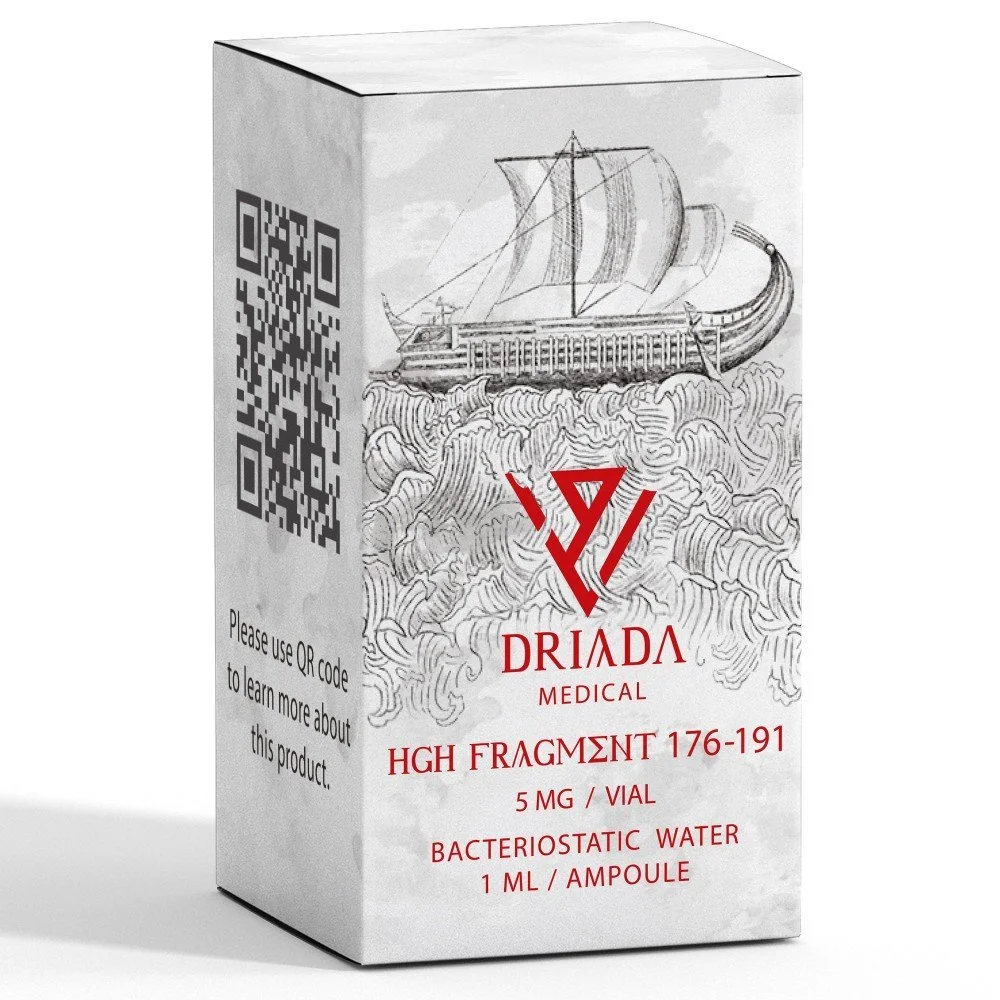
HGH Fragment 176-191 5mg
Active ingredient: HGH fragment 176-191
Type: peptide hormone
Form: Injections
Description:
The current peptide (laboratory code AOD9604) is part of amino acids 176 to 191 of growth hormone, which is directly responsible for fat burning. Data on the drug's efficacy are confirmed by laboratory research in animals and also in vitro in human adipose tissue. The main interest of scientists is the study of the HGH 176-191 Fragment with the aim of reducing fat mass in overweight people. Obesity is a very common problem in today's world and is generally associated with problems such as heart disease, cancer, and diabetes.
Recombinant growth hormone was a candidate for fat reduction in obese individuals. However, the clinical use of growth hormone for the treatment of obesity has not been successful due to intolerance to long-term use, insulin resistance, edema, and hypertension.
For these reasons, the development of a safe and effective means for the treatment of obesity has always been relevant. One such development was AOD9604, later referred to in sports circles as HGH Fragment 176-191.
Mechanism of action
The HGH Fragment is capable of increasing fat oxidation in vivo and in vitro, and is also capable of increasing lipolysis and reducing lipogenesis ex vivo and in vitro. This makes it likely that the HGH Fragment is acting directly on adipose tissue. The drug increases the expression of the beta-3-adrenergic receptor gene. The beta-3-adrenergic receptor is an important component of the sympathetic nervous system that primarily mediates the destruction of fat cells, adipocytes, and thermoregulation. However, it has been revealed that this is not considered the only mechanism of the drug's effect on lipolysis.
Ex vivo analysis of adipose tissue showed that the HGH fragment significantly reduced lipogenic activity and increased lipolytic activity in this tissue. The increased catabolism was also reflected in a marked increase in energy expenditure and glucose and fat oxidation. Furthermore, the HGH fragment increased lipolytic activity in vitro and decreased lipogenic activity in isolated rodents and human adipose tissue. Taken together, these data indicate that the HGH fragment alters lipid metabolism in adipose tissue, resulting in reduced body weight gain in obese animals. The pronounced lipolytic and antilipogenic effects of the HGH fragment in human adipose tissue suggest that this peptide has great potential in the treatment of obesity in humans.
The main advantage of HGH Fragment is the absence of side effects that accompany people using growth hormone. It should be noted that the drug also lacks the desired effects that an athlete receives with the use of growth hormone, as HGH Fragment does not bind to growth hormone receptors and only affects adipose and bone tissue. During the experiment, HGH Fragment had no effect on serum IGF-1 levels, which supports the hypothesis that HGH Fragment does not act through IGF-1.
The results of the glucose tolerance test showed that, unlike growth hormone, the HGH Fragment does not negatively affect carbohydrate metabolism.
In contrast to growth hormone, for which antibodies are formed sooner or later and negate all the advantages of its use, no antibodies were found against HGH Fragment. There were no serious side effects associated with the use of this substance in any of the studies. The drug showed a very good safety and tolerability profile, indistinguishable from placebo.
Effects:
The main effect of the drug is the burning of subcutaneous fat.
It is also worth mentioning a study that speaks of a positive effect on cartilage from intra-articular administration, which is certainly a useful property both for people with various disorders of the articular-ligamentous system and for athletes, but to confirm this property in humans, more research is needed.
Side effects:
Studies of the results of using HGH Fragment allow us to conclude that the negative consequences of taking the drug are minimal. In rare cases, there is a burning and itching sensation at the injection site. Similar negative effects disappear within a few minutes after injection.
How to use:
Based on the practical knowledge of athletes, the ideal dose of the drug is mcg per day, divided into several doses (2-3). As with most drugs that are in the pre-clinical and clinical trial phase, at the moment there is no reliable data on the possible duration of the course. There is only data from various internet sources indicating a duration of several months, based on the opinion and personal experience of athletes who use this drug. Our recommendation is that you determine the course duration based on the desired end result of using it in your cycle. Often, this cycle will depend on other medications you are taking concurrently, as well as your diet. It's important to note that the use of this peptide will be more effective if accompanied by a low-fat diet.
Combination with other drugs:
It can be used in combination with other means used in sports practice. For example, some athletes use HGH fragments along with growth hormone or growth hormone-releasing peptides, as well as IGF-1 to enhance performance. Combined use may provide a synergistic effect for fat reduction.
How to prepare a solution
: To prepare an injectable solution, you take a syringe that already contains a diluent and inject it into an injection vial containing a lyophilized powder. Tilt the vial so that the needle touches the wall of the vial. Avoid injecting the diluent directly into the lyophilized powder. The solvent should flow slowly down the wall of the vial (do not fill it all at once and do not rush).
After all the diluent has been added to the peptide vial, gently mix (but do not shake or agitate the vial) until the lyophilized powder dissolves and you are left with a clear liquid. The medication is now ready for use.
Never mix one peptide with another in the same syringe. This creates a risk of destroying fragile peptide molecules.
The injection
can be subcutaneous or intramuscular, depending on personal preference.
Storage:
The liquid can be stored for approximately 21 days in a refrigerator at a temperature of 2-8 degrees Celsius. The storage time increases if the liquid was prepared using bacteriostatic water.
Active ingredient: HGH fragment 176-191
Type: peptide hormone
Form: Injections
Description:
The current peptide (laboratory code AOD9604) is part of amino acids 176 to 191 of growth hormone, which is directly responsible for fat burning. Data on the drug's efficacy are confirmed by laboratory research in animals and also in vitro in human adipose tissue. The main interest of scientists is the study of the HGH 176-191 Fragment with the aim of reducing fat mass in overweight people. Obesity is a very common problem in today's world and is generally associated with problems such as heart disease, cancer, and diabetes.
Recombinant growth hormone was a candidate for fat reduction in obese individuals. However, the clinical use of growth hormone for the treatment of obesity has not been successful due to intolerance to long-term use, insulin resistance, edema, and hypertension.
For these reasons, the development of a safe and effective means for the treatment of obesity has always been relevant. One such development was AOD9604, later referred to in sports circles as HGH Fragment 176-191.
Mechanism of action
The HGH Fragment is capable of increasing fat oxidation in vivo and in vitro, and is also capable of increasing lipolysis and reducing lipogenesis ex vivo and in vitro. This makes it likely that the HGH Fragment is acting directly on adipose tissue. The drug increases the expression of the beta-3-adrenergic receptor gene. The beta-3-adrenergic receptor is an important component of the sympathetic nervous system that primarily mediates the destruction of fat cells, adipocytes, and thermoregulation. However, it has been revealed that this is not considered the only mechanism of the drug's effect on lipolysis.
Ex vivo analysis of adipose tissue showed that the HGH fragment significantly reduced lipogenic activity and increased lipolytic activity in this tissue. The increased catabolism was also reflected in a marked increase in energy expenditure and glucose and fat oxidation. Furthermore, the HGH fragment increased lipolytic activity in vitro and decreased lipogenic activity in isolated rodents and human adipose tissue. Taken together, these data indicate that the HGH fragment alters lipid metabolism in adipose tissue, resulting in reduced body weight gain in obese animals. The pronounced lipolytic and antilipogenic effects of the HGH fragment in human adipose tissue suggest that this peptide has great potential in the treatment of obesity in humans.
The main advantage of HGH Fragment is the absence of side effects that accompany people using growth hormone. It should be noted that the drug also lacks the desired effects that an athlete receives with the use of growth hormone, as HGH Fragment does not bind to growth hormone receptors and only affects adipose and bone tissue. During the experiment, HGH Fragment had no effect on serum IGF-1 levels, which supports the hypothesis that HGH Fragment does not act through IGF-1.
The results of the glucose tolerance test showed that, unlike growth hormone, the HGH Fragment does not negatively affect carbohydrate metabolism.
In contrast to growth hormone, for which antibodies are formed sooner or later and negate all the advantages of its use, no antibodies were found against HGH Fragment. There were no serious side effects associated with the use of this substance in any of the studies. The drug showed a very good safety and tolerability profile, indistinguishable from placebo.
Effects:
The main effect of the drug is the burning of subcutaneous fat.
It is also worth mentioning a study that speaks of a positive effect on cartilage from intra-articular administration, which is certainly a useful property both for people with various disorders of the articular-ligamentous system and for athletes, but to confirm this property in humans, more research is needed.
Side effects:
Studies of the results of using HGH Fragment allow us to conclude that the negative consequences of taking the drug are minimal. In rare cases, there is a burning and itching sensation at the injection site. Similar negative effects disappear within a few minutes after injection.
How to use:
Based on the practical knowledge of athletes, the ideal dose of the drug is mcg per day, divided into several doses (2-3). As with most drugs that are in the pre-clinical and clinical trial phase, at the moment there is no reliable data on the possible duration of the course. There is only data from various internet sources indicating a duration of several months, based on the opinion and personal experience of athletes who use this drug. Our recommendation is that you determine the course duration based on the desired end result of using it in your cycle. Often, this cycle will depend on other medications you are taking concurrently, as well as your diet. It's important to note that the use of this peptide will be more effective if accompanied by a low-fat diet.
Combination with other drugs:
It can be used in combination with other means used in sports practice. For example, some athletes use HGH fragments along with growth hormone or growth hormone-releasing peptides, as well as IGF-1 to enhance performance. Combined use may provide a synergistic effect for fat reduction.
How to prepare a solution
: To prepare an injectable solution, you take a syringe that already contains a diluent and inject it into an injection vial containing a lyophilized powder. Tilt the vial so that the needle touches the wall of the vial. Avoid injecting the diluent directly into the lyophilized powder. The solvent should flow slowly down the wall of the vial (do not fill it all at once and do not rush).
After all the diluent has been added to the peptide vial, gently mix (but do not shake or agitate the vial) until the lyophilized powder dissolves and you are left with a clear liquid. The medication is now ready for use.
Never mix one peptide with another in the same syringe. This creates a risk of destroying fragile peptide molecules.
The injection
can be subcutaneous or intramuscular, depending on personal preference.
Storage:
The liquid can be stored for approximately 21 days in a refrigerator at a temperature of 2-8 degrees Celsius. The storage time increases if the liquid was prepared using bacteriostatic water.