

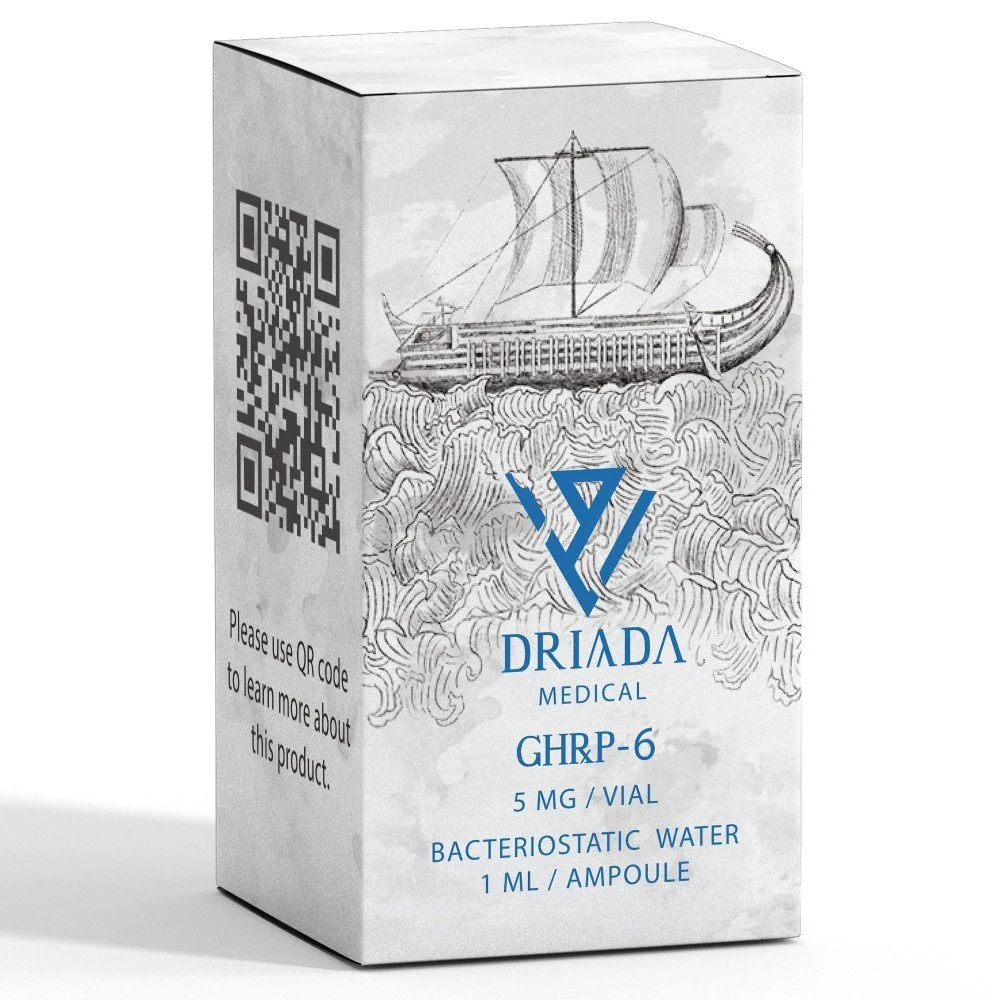
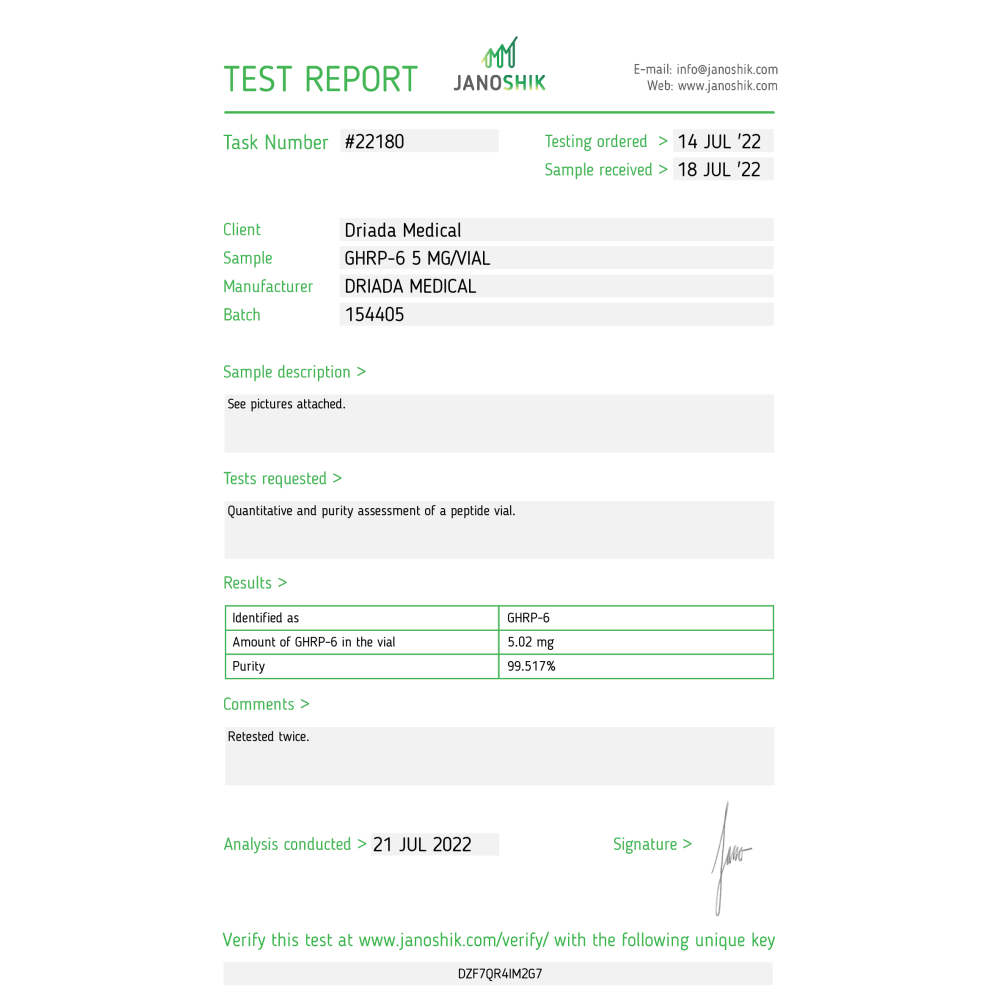
GHRP-6 5mg
Buy GHRP-6 5mg Online for Growth Hormone Boost and Muscle Gain in Portugal and throughout Europe.
GHRP-6 (Growth Hormone Releasing Peptide-6) is an effective peptide in stimulating the secretion of growth hormone, used both to increase muscle mass and to improve post-workout recovery. This peptide, which resembles GHRP-2, has a marked effect on increasing growth hormone levels through the activation of ghrelin receptors.
Benefits of GHRP-6 5mg:
Increased growth hormone (GH): Stimulates the body's natural production of GH, promoting significant anabolic effects.
Muscle mass gain: Increases lean muscle mass, promoting muscle growth and tissue regeneration after intense exercise.
Increased IGF-1: Raises IGF-1 levels, which strengthens tendons and promotes muscle and bone recovery.
Increased appetite: It stimulates appetite, which can be helpful for those seeking to increase caloric intake while gaining muscle mass.
Neuroprotective and immunological properties: Promotes the protection of the nervous system and improves immune function.
⚖️ Precautions and care:
Storage: Store GHRP-6 in a refrigerated place between 2-8ºC. Once diluted, it can be stored for up to 21 days.
Responsible use: Follow the recommended dosage (100-200 mcg per injection). Consulting a healthcare professional before use is recommended to ensure safety and efficacy.
What is GHRP-6?
GHRP-6 is a peptide that stimulates the secretion of growth hormone. These substances were developed to treat growth hormone deficiency. GHRP-6 is very similar to GHRP-2; the main difference is that the latter is about 1.5 times more powerful as a GH booster, but it also increases prolactin and cortisol concentrations. These peptides can be used in combination to achieve a synergistic effect. The maximum concentration of growth hormone in the blood has been observed with the combined administration of GHRP-6 and GHRP-2. The entire line of GHRP peptides has a significant effect on appetite; however, according to athlete evaluations, GHRP-6 has a slightly greater effect on appetite. This effect weakens by the second week of the cycle. GHRP-6 can be injected into the body in several ways: subcutaneously, orally, under the tongue, but most frequently intramuscularly. The molecules of this substance are so small that they can enter the blood vessels of the mouth and stomach before being destroyed by digestive enzymes. However, only injectable routes of administration provide optimal bioavailability.GHRP Group:
The abbreviation GHRP stands for Growth Hormone Releasing Peptide, the peptide that stimulates the secretion of growth hormone. All drugs in this group are ghrelin receptor agonists. Their activation lies in the fact that they bind to and activate ghrelin receptors (ghrelin is a peptide hormone that possesses the properties of gonadotropin and other metabolic and endocrine functions). As a result, the secretion of its own somatotropic hormone by the pituitary gland is stimulated. This method of growth hormone release has its advantages and disadvantages, which we will describe below.In medicine, these medications were originally studied to replace expensive growth hormone treatment in children and adults with insufficient autotropin secretion. Later, it was discovered that this class of medications has significantly greater therapeutic potential. GHRP medications are most often used for the same purposes as growth hormone and can be chosen as a more co-effective alternative. This can include increasing muscle mass, improving the cosmetic appearance of the skin, and strengthening healing after injuries.
Mechanism of action:
All GHRPs are mimetics of ghrelin, a hormone produced by stomach cells in response to fasting. Ghrelin and ghrelin mimetics act by activating the ghrelin receptor (GHS-R1a). Elevated ghrelin levels increase growth hormone levels by stimulating ghrelin receptors in the pituitary gland. GHRPs stimulate growth hormone release in the same way that fasting-induced ghrelin increases it.Studies have shown that stimulating growth hormone secretion with GHRP medications has many positive anabolic effects associated with increased plasma growth hormone levels. The increase in growth hormone levels is followed by increased secretion of the protein IGF-1, which also has many other beneficial properties, such as strengthening tendons through increased collagen synthesis, as well as neuroprotective properties and a positive effect on the immune system.
Effects of Increased Growth Hormone and IGF-1:
Growth hormone plays a fundamental role in regulating body composition. An important property of GH is its powerful lipolytic effect. Administering growth hormone to individuals with a deficiency reduces body fat mass and significantly increases lean body mass. A recent meta-analysis concluded that growth hormone supplementation in healthy athletes increased body mass by an average of 1.8 kg.Growth hormone directly increases lipolysis by reducing the action of a number of lipogenic enzymes and indirectly increasing the production of other lipolytic hormones, such as the catecholamines glucagon, as well as increasing the expression of adrenoreceptors in adipocytes. In general, these effects lead to an increase in the utilization of body fat. But it is impossible to state with certainty that drugs in the GHRP group affect adipose tissue in exactly the same way, because, as experiments have shown, these peptides can have effects independent of increasing the amount of fat in the body.
Growth hormone plays an important role as an anabolic agent in human skeletal muscle and tendon connective tissue, which provides a matrix for the transmission of force from individual muscle fibers to bone. Thus, strengthened connective tissue will provide a stronger and more resilient muscle and tendon structure. This is why growth hormone is used by athletes to treat muscle and tendon injuries. Similarly, elevated levels of growth hormone improve bone strength directly and indirectly by increasing intestinal calcium absorption and serum vitamin D concentrations.
One of the most well-established effects of growth hormone is its effect on muscle anabolism. A decrease in muscle mass and protein synthesis is observed with a decrease in the production of growth hormone and IGF-1. Growth hormone induces glucose and amino acid uptake and stimulates protein synthesis, possibly using energy derived from its lipolytic activity. The effect of growth hormone on proteins is mediated both indirectly through IGF-1 and directly.
Cardioprotective Properties:
In addition to increasing growth hormone and IGF-1 levels, the GHRP family has demonstrated many other beneficial properties in numerous animal studies that still need to be explored in the future. All additional properties of GHRP are exerted independently of growth hormone and are related to the ability to bind to two different receptors (GHS-R1a and CD36) that appear to mediate its cytoprotective, cardioprotective, and other pharmacological properties.Experiments in animal models have shown that GHRP improves cardiac performance in several ways and creates favorable factors, such as: increased injection fraction, decreased blood pressure, improvement of all dysfunctional disorders of the heart ventricles (including their reduction with pathological enlargement), and reduction of cardiac fibrosis. The cardioprotective properties of GHRP are capable of preventing the death of cardiomyocytes (heart cells) and causing the restoration of critical heart functions during ischemic episodes. These properties make GHRP a new generation of potentially promising cardioprotective agents.
Cytoprotective Properties:
The GHRP group possesses not only cardioprotective properties but also cytoprotective properties (protection of cells against damage from various influences) for many different cells in the body. The results of the reviewed studies are consistent with the external cytoprotective effect on various organs, reducing inflammation and preventing necrosis (cell damage leading to premature death) and apoptosis (the process of cell self-destruction according to a genetically determined program in response to a specific external or internal stimulus). One of these ketoprotective properties found in experiments is hepatoprotective properties. Furthermore, these peptide drugs prevent damage to the gastric mucosa caused by any form of stress.Anti-inflammatory properties:
In addition, this group of peptides has an anti-inflammatory effect, demonstrated by experiments in rabbits with arthritis, in which inflammation of the diseased joints was significantly reduced when the substance was administered.GHRPs are very promising as a potential drug for the future, with a wide range of therapeutic effects on various bodily functions and tissues. In a large number of tests, no serious side effects were found from their use, both in animals and humans. In modern sports practice, athletes often use this group of peptides to increase blood growth hormone or increase appetite for muscle mass gain, but the experimental results presented open new possibilities for this class of drugs, which may also become popular among athletes in the future. Currently, GHRP drugs require further research, including in humans, to confirm the consistency of these properties in medical practice.
Effects:
Growth Hormone-Releasing Peptides (GHRPs) are capable of creating a greater growth hormone boost than Growth Hormone-Releasing Hormone (GHRH).
GHRP peptides do not inhibit the production of endogenous growth hormone.
Main biological properties:
Increased levels of growth hormone and IGF-α in the blood, which has the effect of the main properties of these hormones, such as: lipolysis, tendon strengthening, increased muscle mass, neuroprotection, and strengthening of the immune system.
Positive inotropic effect (increases the strength of cardiac contractions).
Antifibrotic effect (Fibrosis is a proliferation of connective tissue with the appearance of scarring changes in organs, which usually occurs as a result of chronic inflammation. Fibrous tissue replacement leads to the gradual loss of its functions and dysfunction of the affected organ). This effect also improves wound healing.
Anti-inflammatory effect.
Cytoprotective effect. (Cytoprotective action is the action of protecting the body's cells against harmful influences). GHRP reduces the side effects of reactive oxygen species (oxygen ions, free radicals, peroxides), and increases antioxidant protection. These cytoprotective capabilities have been found in heart neurons, gastrointestinal tract cells, and liver cells, representing a full spectrum of protection for parenchymal organs (liver, spleen, lungs, kidneys, pancreas, and thyroid).
Cardioprotective action – as shown, includes several biological actions that combine to increase the survival of cardiomyocytes (heart muscle cells).
Vasodilator effect.
Side effects:
All medications in the group (except Ipamorelin) contribute to increased levels of prolactin and cortisol.
In addition to the GHRH group, GHRP peptides increase growth hormone levels, regardless of the level of autotoxostatin (growth hormone inhibitor) in the blood. If the autotoxostatin level is elevated for any reason, GHRH medications will not increase growth hormone levels in the blood.
In the first few weeks, all of these medications (except Ipamorelin) increase hunger, which isn't very good if your goal is to reduce body fat.
GHRP-6
Also known as somatotropin-releasing hexapeptide, it was created in 1980 (according to other sources – in 1976) and is one of the first drugs in this area. In terms of effectiveness, it ranks only third among the drugs listed here. It increases cortisol and prolactin in the blood, but the level of these hormones will not be very high if the dosages used are around 100 micrograms per injection. GHRP-6 also increases appetite.GHRP-2
was created by modifying the GHRP-6 molecule – the result was a drug that is significantly more potent than its "parent." It increases cortisol and prolactin levels in the blood, as well as increasing appetite after injection, as demonstrated during the experiment. Appetite increased so much that subjects ate 35.9 +/- 10.9% more when given GHRP-2 compared to the placebo, and each increased their intake even per kg of body weight (32.5 kcal/kg vs 24.2 kcal/kg). This effect will be useful for athletes during the mass gain phase, but it will certainly interfere if their goal is to remove excess fat.Hexarelin
(also known as Examorelin) is the most powerful somatotropic hormone-stimulating agent belonging to the GHRP group and probably the most powerful peptide stimulator of hormones in general. At all dosage levels, it has the strongest effect on cortisol and prolactin levels, raising these hormone levels to the upper limits of normal.Ipamorelin
is the first GHRP receptor agonist with growth hormone release selectivity similar to that of GHRH. The drug is generally devoid of side effects characteristic of the GHRP group – its use, even at high dosages, does not lead to increased levels of cortisol and prolactin in the blood plasma. It also does not cause a strong feeling of hunger, unlike other representatives of this group of peptides. In terms of its effect on blood growth hormone levels, Ipamorelin is comparable to GHRP-6.How to use:
Growth hormone concentration increases significantly within 40-60 minutes after injection, depending on the medication. In the two hours following injection, growth hormone concentration gradually decreases to the initial level. This suggests that the desired injection frequency should be at least 3 times a day. For best results, take at least 30-60 minutes before a meal while blood glucose is not high.The optimal single dose is 100-200 mcg per injection. Exceeding the recommended dose does not lead to a significant increase in growth hormone secretion.
The duration of the course should be determined by your goals, but it's important to consider that experimental data shows a decrease in the impact on growth hormone levels after 4-16 weeks of use. This rate of decline in effectiveness will depend on individual body characteristics.
Combination with other drugs
: As GHRPs and GHRHs act on different receptors to increase growth hormone levels, administering GHRP and GHRH will have a synergistic effect. Significant GH-boosting effects will be observed when using CJC-1295 (DAC) 100 mcg once weekly with any GHRP formulation 100 mcg three times daily. There is also evidence of a good positive effect from the combined use of GHRP and L-arginine.How to prepare a solution
: To prepare an injectable solution, you take a syringe that already contains a diluent and inject it into an injection vial containing a lyophilized powder. Tilt the vial so that the needle touches the wall of the vial. Avoid injecting the diluent directly into the lyophilized powder. The solvent should flow slowly down the wall of the vial (do not fill it all at once and do not rush). After all the diluent has been added to the peptide vial, gently mix (but do not shake or agitate the vial) until the lyophilized powder dissolves and you are left with a clear liquid. Now the medication is ready for use.Never mix one peptide with another in the same syringe. This creates a risk of destroying fragile peptide molecules.
Use
The injection can be subcutaneous or intramuscular, depending on personal preference.
Storage:
The resulting solution can be stored for approximately 21 days in the refrigerator at a temperature of 2 to 8 degrees Celsius. The storage time increases if the solution is prepared with bacteriostatic water.
Buy GHRP-6 5mg Online for Growth Hormone Boost and Muscle Gain in Portugal and throughout Europe.
GHRP-6 (Growth Hormone Releasing Peptide-6) is an effective peptide in stimulating the secretion of growth hormone, used both to increase muscle mass and to improve post-workout recovery. This peptide, which resembles GHRP-2, has a marked effect on increasing growth hormone levels through the activation of ghrelin receptors.
Benefits of GHRP-6 5mg:
Increased growth hormone (GH): Stimulates the body's natural production of GH, promoting significant anabolic effects.
Muscle mass gain: Increases lean muscle mass, promoting muscle growth and tissue regeneration after intense exercise.
Increased IGF-1: Raises IGF-1 levels, which strengthens tendons and promotes muscle and bone recovery.
Increased appetite: It stimulates appetite, which can be helpful for those seeking to increase caloric intake while gaining muscle mass.
Neuroprotective and immunological properties: Promotes the protection of the nervous system and improves immune function.
⚖️ Precautions and care:
Storage: Store GHRP-6 in a refrigerated place between 2-8ºC. Once diluted, it can be stored for up to 21 days.
Responsible use: Follow the recommended dosage (100-200 mcg per injection). Consulting a healthcare professional before use is recommended to ensure safety and efficacy.
What is GHRP-6?
GHRP-6 is a peptide that stimulates the secretion of growth hormone. These substances were developed to treat growth hormone deficiency. GHRP-6 is very similar to GHRP-2; the main difference is that the latter is about 1.5 times more powerful as a GH booster, but it also increases prolactin and cortisol concentrations. These peptides can be used in combination to achieve a synergistic effect. The maximum concentration of growth hormone in the blood has been observed with the combined administration of GHRP-6 and GHRP-2. The entire line of GHRP peptides has a significant effect on appetite; however, according to athlete evaluations, GHRP-6 has a slightly greater effect on appetite. This effect weakens by the second week of the cycle. GHRP-6 can be injected into the body in several ways: subcutaneously, orally, under the tongue, but most frequently intramuscularly. The molecules of this substance are so small that they can enter the blood vessels of the mouth and stomach before being destroyed by digestive enzymes. However, only injectable routes of administration provide optimal bioavailability.GHRP Group:
The abbreviation GHRP stands for Growth Hormone Releasing Peptide, the peptide that stimulates the secretion of growth hormone. All drugs in this group are ghrelin receptor agonists. Their activation lies in the fact that they bind to and activate ghrelin receptors (ghrelin is a peptide hormone that possesses the properties of gonadotropin and other metabolic and endocrine functions). As a result, the secretion of its own somatotropic hormone by the pituitary gland is stimulated. This method of growth hormone release has its advantages and disadvantages, which we will describe below.In medicine, these medications were originally studied to replace expensive growth hormone treatment in children and adults with insufficient autotropin secretion. Later, it was discovered that this class of medications has significantly greater therapeutic potential. GHRP medications are most often used for the same purposes as growth hormone and can be chosen as a more co-effective alternative. This can include increasing muscle mass, improving the cosmetic appearance of the skin, and strengthening healing after injuries.
Mechanism of action:
All GHRPs are mimetics of ghrelin, a hormone produced by stomach cells in response to fasting. Ghrelin and ghrelin mimetics act by activating the ghrelin receptor (GHS-R1a). Elevated ghrelin levels increase growth hormone levels by stimulating ghrelin receptors in the pituitary gland. GHRPs stimulate growth hormone release in the same way that fasting-induced ghrelin increases it.Studies have shown that stimulating growth hormone secretion with GHRP medications has many positive anabolic effects associated with increased plasma growth hormone levels. The increase in growth hormone levels is followed by increased secretion of the protein IGF-1, which also has many other beneficial properties, such as strengthening tendons through increased collagen synthesis, as well as neuroprotective properties and a positive effect on the immune system.
Effects of Increased Growth Hormone and IGF-1:
Growth hormone plays a fundamental role in regulating body composition. An important property of GH is its powerful lipolytic effect. Administering growth hormone to individuals with a deficiency reduces body fat mass and significantly increases lean body mass. A recent meta-analysis concluded that growth hormone supplementation in healthy athletes increased body mass by an average of 1.8 kg.Growth hormone directly increases lipolysis by reducing the action of a number of lipogenic enzymes and indirectly increasing the production of other lipolytic hormones, such as the catecholamines glucagon, as well as increasing the expression of adrenoreceptors in adipocytes. In general, these effects lead to an increase in the utilization of body fat. But it is impossible to state with certainty that drugs in the GHRP group affect adipose tissue in exactly the same way, because, as experiments have shown, these peptides can have effects independent of increasing the amount of fat in the body.
Growth hormone plays an important role as an anabolic agent in human skeletal muscle and tendon connective tissue, which provides a matrix for the transmission of force from individual muscle fibers to bone. Thus, strengthened connective tissue will provide a stronger and more resilient muscle and tendon structure. This is why growth hormone is used by athletes to treat muscle and tendon injuries. Similarly, elevated levels of growth hormone improve bone strength directly and indirectly by increasing intestinal calcium absorption and serum vitamin D concentrations.
One of the most well-established effects of growth hormone is its effect on muscle anabolism. A decrease in muscle mass and protein synthesis is observed with a decrease in the production of growth hormone and IGF-1. Growth hormone induces glucose and amino acid uptake and stimulates protein synthesis, possibly using energy derived from its lipolytic activity. The effect of growth hormone on proteins is mediated both indirectly through IGF-1 and directly.
Cardioprotective Properties:
In addition to increasing growth hormone and IGF-1 levels, the GHRP family has demonstrated many other beneficial properties in numerous animal studies that still need to be explored in the future. All additional properties of GHRP are exerted independently of growth hormone and are related to the ability to bind to two different receptors (GHS-R1a and CD36) that appear to mediate its cytoprotective, cardioprotective, and other pharmacological properties.Experiments in animal models have shown that GHRP improves cardiac performance in several ways and creates favorable factors, such as: increased injection fraction, decreased blood pressure, improvement of all dysfunctional disorders of the heart ventricles (including their reduction with pathological enlargement), and reduction of cardiac fibrosis. The cardioprotective properties of GHRP are capable of preventing the death of cardiomyocytes (heart cells) and causing the restoration of critical heart functions during ischemic episodes. These properties make GHRP a new generation of potentially promising cardioprotective agents.
Cytoprotective Properties:
The GHRP group possesses not only cardioprotective properties but also cytoprotective properties (protection of cells against damage from various influences) for many different cells in the body. The results of the reviewed studies are consistent with the external cytoprotective effect on various organs, reducing inflammation and preventing necrosis (cell damage leading to premature death) and apoptosis (the process of cell self-destruction according to a genetically determined program in response to a specific external or internal stimulus). One of these ketoprotective properties found in experiments is hepatoprotective properties. Furthermore, these peptide drugs prevent damage to the gastric mucosa caused by any form of stress.Anti-inflammatory properties:
In addition, this group of peptides has an anti-inflammatory effect, demonstrated by experiments in rabbits with arthritis, in which inflammation of the diseased joints was significantly reduced when the substance was administered.GHRPs are very promising as a potential drug for the future, with a wide range of therapeutic effects on various bodily functions and tissues. In a large number of tests, no serious side effects were found from their use, both in animals and humans. In modern sports practice, athletes often use this group of peptides to increase blood growth hormone or increase appetite for muscle mass gain, but the experimental results presented open new possibilities for this class of drugs, which may also become popular among athletes in the future. Currently, GHRP drugs require further research, including in humans, to confirm the consistency of these properties in medical practice.
Effects:
Growth Hormone-Releasing Peptides (GHRPs) are capable of creating a greater growth hormone boost than Growth Hormone-Releasing Hormone (GHRH).
GHRP peptides do not inhibit the production of endogenous growth hormone.
Main biological properties:
Increased levels of growth hormone and IGF-α in the blood, which has the effect of the main properties of these hormones, such as: lipolysis, tendon strengthening, increased muscle mass, neuroprotection, and strengthening of the immune system.
Positive inotropic effect (increases the strength of cardiac contractions).
Antifibrotic effect (Fibrosis is a proliferation of connective tissue with the appearance of scarring changes in organs, which usually occurs as a result of chronic inflammation. Fibrous tissue replacement leads to the gradual loss of its functions and dysfunction of the affected organ). This effect also improves wound healing.
Anti-inflammatory effect.
Cytoprotective effect. (Cytoprotective action is the action of protecting the body's cells against harmful influences). GHRP reduces the side effects of reactive oxygen species (oxygen ions, free radicals, peroxides), and increases antioxidant protection. These cytoprotective capabilities have been found in heart neurons, gastrointestinal tract cells, and liver cells, representing a full spectrum of protection for parenchymal organs (liver, spleen, lungs, kidneys, pancreas, and thyroid).
Cardioprotective action – as shown, includes several biological actions that combine to increase the survival of cardiomyocytes (heart muscle cells).
Vasodilator effect.
Side effects:
All medications in the group (except Ipamorelin) contribute to increased levels of prolactin and cortisol.
In addition to the GHRH group, GHRP peptides increase growth hormone levels, regardless of the level of autotoxostatin (growth hormone inhibitor) in the blood. If the autotoxostatin level is elevated for any reason, GHRH medications will not increase growth hormone levels in the blood.
In the first few weeks, all of these medications (except Ipamorelin) increase hunger, which isn't very good if your goal is to reduce body fat.
GHRP-6
Also known as somatotropin-releasing hexapeptide, it was created in 1980 (according to other sources – in 1976) and is one of the first drugs in this area. In terms of effectiveness, it ranks only third among the drugs listed here. It increases cortisol and prolactin in the blood, but the level of these hormones will not be very high if the dosages used are around 100 micrograms per injection. GHRP-6 also increases appetite.GHRP-2
was created by modifying the GHRP-6 molecule – the result was a drug that is significantly more potent than its "parent." It increases cortisol and prolactin levels in the blood, as well as increasing appetite after injection, as demonstrated during the experiment. Appetite increased so much that subjects ate 35.9 +/- 10.9% more when given GHRP-2 compared to the placebo, and each increased their intake even per kg of body weight (32.5 kcal/kg vs 24.2 kcal/kg). This effect will be useful for athletes during the mass gain phase, but it will certainly interfere if their goal is to remove excess fat.Hexarelin
(also known as Examorelin) is the most powerful somatotropic hormone-stimulating agent belonging to the GHRP group and probably the most powerful peptide stimulator of hormones in general. At all dosage levels, it has the strongest effect on cortisol and prolactin levels, raising these hormone levels to the upper limits of normal.Ipamorelin
is the first GHRP receptor agonist with growth hormone release selectivity similar to that of GHRH. The drug is generally devoid of side effects characteristic of the GHRP group – its use, even at high dosages, does not lead to increased levels of cortisol and prolactin in the blood plasma. It also does not cause a strong feeling of hunger, unlike other representatives of this group of peptides. In terms of its effect on blood growth hormone levels, Ipamorelin is comparable to GHRP-6.How to use:
Growth hormone concentration increases significantly within 40-60 minutes after injection, depending on the medication. In the two hours following injection, growth hormone concentration gradually decreases to the initial level. This suggests that the desired injection frequency should be at least 3 times a day. For best results, take at least 30-60 minutes before a meal while blood glucose is not high.The optimal single dose is 100-200 mcg per injection. Exceeding the recommended dose does not lead to a significant increase in growth hormone secretion.
The duration of the course should be determined by your goals, but it's important to consider that experimental data shows a decrease in the impact on growth hormone levels after 4-16 weeks of use. This rate of decline in effectiveness will depend on individual body characteristics.
Combination with other drugs
: As GHRPs and GHRHs act on different receptors to increase growth hormone levels, administering GHRP and GHRH will have a synergistic effect. Significant GH-boosting effects will be observed when using CJC-1295 (DAC) 100 mcg once weekly with any GHRP formulation 100 mcg three times daily. There is also evidence of a good positive effect from the combined use of GHRP and L-arginine.How to prepare a solution
: To prepare an injectable solution, you take a syringe that already contains a diluent and inject it into an injection vial containing a lyophilized powder. Tilt the vial so that the needle touches the wall of the vial. Avoid injecting the diluent directly into the lyophilized powder. The solvent should flow slowly down the wall of the vial (do not fill it all at once and do not rush). After all the diluent has been added to the peptide vial, gently mix (but do not shake or agitate the vial) until the lyophilized powder dissolves and you are left with a clear liquid. Now the medication is ready for use.Never mix one peptide with another in the same syringe. This creates a risk of destroying fragile peptide molecules.
Use
The injection can be subcutaneous or intramuscular, depending on personal preference.
Storage:
The resulting solution can be stored for approximately 21 days in the refrigerator at a temperature of 2 to 8 degrees Celsius. The storage time increases if the solution is prepared with bacteriostatic water.