

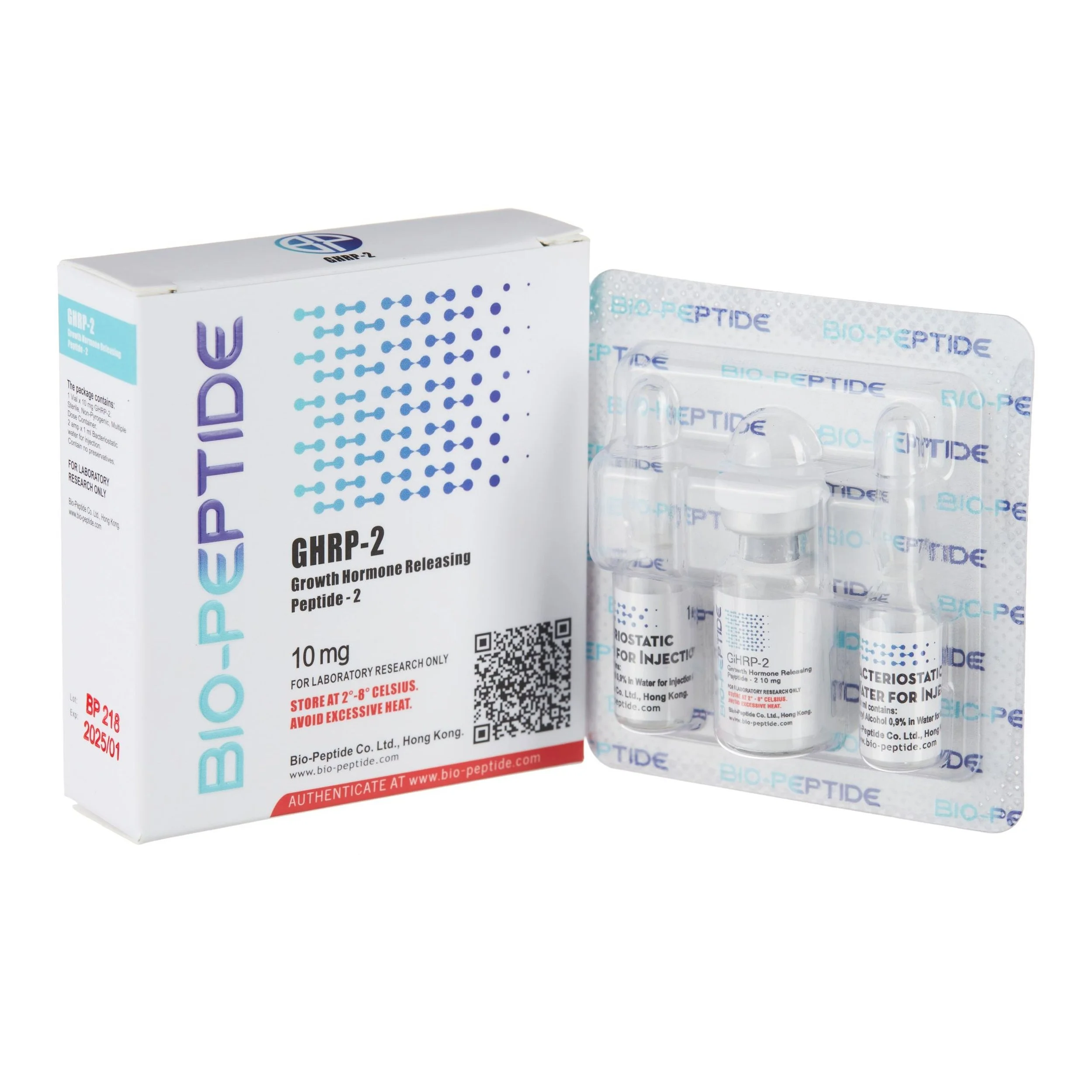
GHRP-2 (also known as KP-102) is a short polypeptide belonging to the group of growth hormone-releasing proteins, containing only six amino acids. Its molecular mass is 817.9 and its molecular formula is C45H55N9O6. This hexapeptide was synthesized in the early 1990s. The group of peptides to which KP-102 belongs was discovered about 20 years ago as synthetic oligopeptides derived from certain amino acids. Few studies have demonstrated its great capacity to stimulate the natural release of endogenous growth hormone through its influence on the G protein receptor. The largest clinical research on peptide hormones, including KP-102, was completed in 1997 by American researchers (University of Arkansas). This research compound was found to increase IGF-1 levels and even stimulate hypothalamic function. But its potent ability to positively affect the stimulation of pituitary gland function remains its main characteristic. Furthermore, GH-releasing peptide-2 has characteristics such as promoting average muscle weight gain. GHRP-2 has also been shown to affect the physiological system, increasing calcium ion influx and possessing some anti-inflammatory properties. For research purposes only.
GHRP-2 (also known as KP-102) is a short polypeptide belonging to the group of growth hormone-releasing proteins, containing only six amino acids. Its molecular mass is 817.9 and its molecular formula is C45H55N9O6. This hexapeptide was synthesized in the early 1990s. The group of peptides to which KP-102 belongs was discovered about 20 years ago as synthetic oligopeptides derived from certain amino acids. Few studies have demonstrated its great capacity to stimulate the natural release of endogenous growth hormone through its influence on the G protein receptor. The largest clinical research on peptide hormones, including KP-102, was completed in 1997 by American researchers (University of Arkansas). This research compound was found to increase IGF-1 levels and even stimulate hypothalamic function. But its potent ability to positively affect the stimulation of pituitary gland function remains its main characteristic. Furthermore, GH-releasing peptide-2 has characteristics such as promoting average muscle weight gain. GHRP-2 has also been shown to affect the physiological system, increasing calcium ion influx and possessing some anti-inflammatory properties. For research purposes only.