
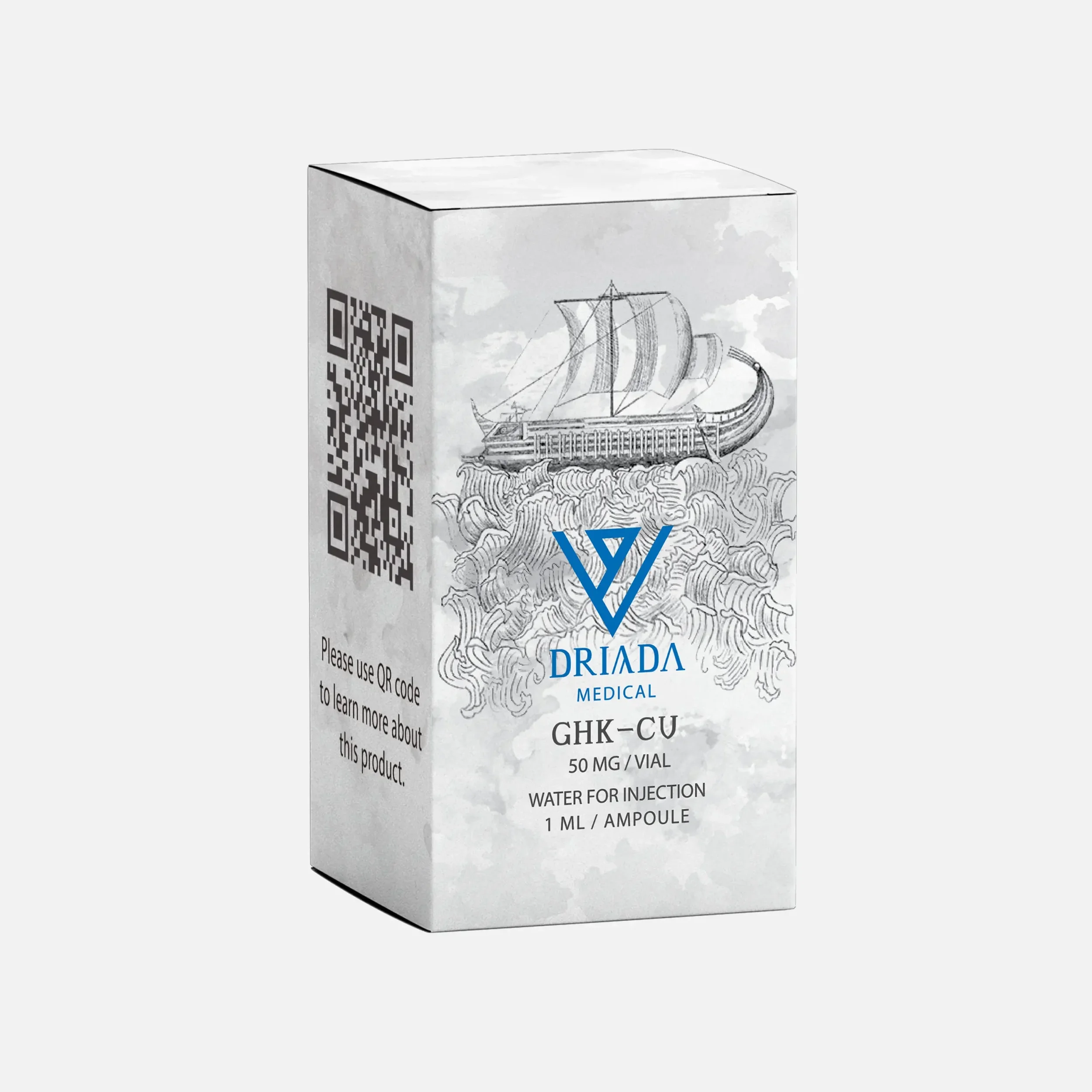
GHK-CU 50mg
Composition
GHK-Cu 50 mg
Category: Peptide
Purpose: Supports tissue repair, skin rejuvenation, and hair growth.
Presentation: One vial containing 50 mg of lyophilized GHK-Cu powder with 1 ml of sterile water for injection for reconstitution.
Administration: Subcutaneous injection.
What is GHK-Cu?
GHK-Cu (Copper Peptide) is a naturally occurring peptide found in human plasma and tissues. It is widely recognized for its role in skin regeneration, wound healing, hair growth, collagen production, and connective tissue repair.
GHK-Cu is commonly used by athletes to support recovery after intense training or injuries, improve skin quality, promote hair growth, and help reduce some cosmetic side effects associated with anabolic steroid use, such as acne and hair thinning.
Key Benefits
✨ Improves skin quality, firmness, and elasticity.
💆♂️ Promotes healthier, thicker hair growth.
🩹 Supports wound healing and tissue regeneration.
🦴 Helps maintain healthy joints, tendons, and ligaments.
🧠 Supports nerve tissue repair and cognitive function.
🧬 Stimulates collagen production and extracellular matrix remodeling.
🔥 Helps reduce inflammation and skin redness.
💉 Improves microcirculation and nutrient delivery to tissues.
How to Use GHK-Cu
Reconstitution
If this is your first time using GHK-Cu, dissolve the contents of the 50 mg vial with 3 ml of bacteriostatic or sterile water.
The package includes only 1 ml of sterile water, so you will need to purchase an additional 2 ml separately.
Inject the water slowly down the inside wall of the vial and allow the powder to dissolve naturally. Do not shake the vial.
After reconstitution:
1 ml (100 IU insulin syringe) ≈ 16.6 mg GHK-Cu
0.1 ml (10 IU) ≈ 1.66 mg GHK-Cu
Example Protocol
A commonly used daily amount is 1–2 mg.
After reconstituting with 3 ml of water:
0.1 ml (10 IU) ≈ 1.66 mg (starting amount)
Increase by 0.05–0.1 ml every 5–7 days if needed.
Typical working amount: 0.2–0.3 ml daily.
Use daily or 5 days per week, depending on your preference.
Typical duration: 4–8 weeks.
There is no need to taper the dose at the end of the cycle.
Recommended Combinations
GHK-Cu + BPC-157 – Enhanced tissue repair and anti-inflammatory support.
GHK-Cu + TB-500 – Improved tendon and ligament recovery.
GHK-Cu + CJC-1295 or Somatropin (HGH) – May further support collagen synthesis through increased growth hormone signaling.
Precautions
Avoid use during active cancer treatment due to the theoretical risk of stimulating tissue regeneration.
Discontinue use if serious adverse reactions occur.
Always disinfect the injection site and use sterile, single-use needles.
Purchase GHK-Cu only from trusted and reputable suppliers.
Possible Side Effects
Mild redness or itching at the injection site.
Rare allergic reactions.
Increased skin sensitivity at higher amounts.
GHK-Cu is generally considered well tolerated, and significant adverse effects have not been reported in clinical research.
Storage
After reconstitution, store refrigerated at 2–8°C (36–46°F).
Protect from direct sunlight.
Do not freeze.
When stored properly, the reconstituted peptide is generally suitable for use for up to 2–3 months.
How Does GHK-Cu Work?
GHK-Cu becomes biologically active after binding to a copper (Cu²⁺) ion. This activated complex interacts with cells involved in tissue repair and regeneration.
Tissue Regeneration
After binding with copper, GHK-Cu stimulates fibroblasts—the primary cells responsible for repairing connective tissue—to increase the production of:
Collagen, which provides strength and structural support to skin and connective tissues.
Elastin, which improves skin elasticity and flexibility.
Extracellular matrix glycoproteins, which help maintain tissue structure, hydration, and repair.
Research suggests that GHK-Cu may influence the expression of more than 4,000 genes involved in tissue regeneration, cellular protection, and wound healing (Pickart et al., 2015).
Hair Growth
GHK-Cu supports hair growth through two primary mechanisms:
Improved Scalp Microcirculation
It enhances blood flow to the scalp, improving the delivery of oxygen, amino acids, vitamins, and other nutrients required for healthy hair growth.
Activation of Dermal Papilla Cells
GHK-Cu stimulates dermal papilla cells (DPCs), which regulate the hair growth cycle. It promotes the transition from the telogen (resting) phase to the anagen (growth) phase and helps prolong the anagen phase, resulting in healthier and thicker hair growth.
Composition
GHK-Cu 50 mg
Category: Peptide
Purpose: Supports tissue repair, skin rejuvenation, and hair growth.
Presentation: One vial containing 50 mg of lyophilized GHK-Cu powder with 1 ml of sterile water for injection for reconstitution.
Administration: Subcutaneous injection.
What is GHK-Cu?
GHK-Cu (Copper Peptide) is a naturally occurring peptide found in human plasma and tissues. It is widely recognized for its role in skin regeneration, wound healing, hair growth, collagen production, and connective tissue repair.
GHK-Cu is commonly used by athletes to support recovery after intense training or injuries, improve skin quality, promote hair growth, and help reduce some cosmetic side effects associated with anabolic steroid use, such as acne and hair thinning.
Key Benefits
✨ Improves skin quality, firmness, and elasticity.
💆♂️ Promotes healthier, thicker hair growth.
🩹 Supports wound healing and tissue regeneration.
🦴 Helps maintain healthy joints, tendons, and ligaments.
🧠 Supports nerve tissue repair and cognitive function.
🧬 Stimulates collagen production and extracellular matrix remodeling.
🔥 Helps reduce inflammation and skin redness.
💉 Improves microcirculation and nutrient delivery to tissues.
How to Use GHK-Cu
Reconstitution
If this is your first time using GHK-Cu, dissolve the contents of the 50 mg vial with 3 ml of bacteriostatic or sterile water.
The package includes only 1 ml of sterile water, so you will need to purchase an additional 2 ml separately.
Inject the water slowly down the inside wall of the vial and allow the powder to dissolve naturally. Do not shake the vial.
After reconstitution:
1 ml (100 IU insulin syringe) ≈ 16.6 mg GHK-Cu
0.1 ml (10 IU) ≈ 1.66 mg GHK-Cu
Example Protocol
A commonly used daily amount is 1–2 mg.
After reconstituting with 3 ml of water:
0.1 ml (10 IU) ≈ 1.66 mg (starting amount)
Increase by 0.05–0.1 ml every 5–7 days if needed.
Typical working amount: 0.2–0.3 ml daily.
Use daily or 5 days per week, depending on your preference.
Typical duration: 4–8 weeks.
There is no need to taper the dose at the end of the cycle.
Recommended Combinations
GHK-Cu + BPC-157 – Enhanced tissue repair and anti-inflammatory support.
GHK-Cu + TB-500 – Improved tendon and ligament recovery.
GHK-Cu + CJC-1295 or Somatropin (HGH) – May further support collagen synthesis through increased growth hormone signaling.
Precautions
Avoid use during active cancer treatment due to the theoretical risk of stimulating tissue regeneration.
Discontinue use if serious adverse reactions occur.
Always disinfect the injection site and use sterile, single-use needles.
Purchase GHK-Cu only from trusted and reputable suppliers.
Possible Side Effects
Mild redness or itching at the injection site.
Rare allergic reactions.
Increased skin sensitivity at higher amounts.
GHK-Cu is generally considered well tolerated, and significant adverse effects have not been reported in clinical research.
Storage
After reconstitution, store refrigerated at 2–8°C (36–46°F).
Protect from direct sunlight.
Do not freeze.
When stored properly, the reconstituted peptide is generally suitable for use for up to 2–3 months.
How Does GHK-Cu Work?
GHK-Cu becomes biologically active after binding to a copper (Cu²⁺) ion. This activated complex interacts with cells involved in tissue repair and regeneration.
Tissue Regeneration
After binding with copper, GHK-Cu stimulates fibroblasts—the primary cells responsible for repairing connective tissue—to increase the production of:
Collagen, which provides strength and structural support to skin and connective tissues.
Elastin, which improves skin elasticity and flexibility.
Extracellular matrix glycoproteins, which help maintain tissue structure, hydration, and repair.
Research suggests that GHK-Cu may influence the expression of more than 4,000 genes involved in tissue regeneration, cellular protection, and wound healing (Pickart et al., 2015).
Hair Growth
GHK-Cu supports hair growth through two primary mechanisms:
Improved Scalp Microcirculation
It enhances blood flow to the scalp, improving the delivery of oxygen, amino acids, vitamins, and other nutrients required for healthy hair growth.
Activation of Dermal Papilla Cells
GHK-Cu stimulates dermal papilla cells (DPCs), which regulate the hair growth cycle. It promotes the transition from the telogen (resting) phase to the anagen (growth) phase and helps prolong the anagen phase, resulting in healthier and thicker hair growth.