

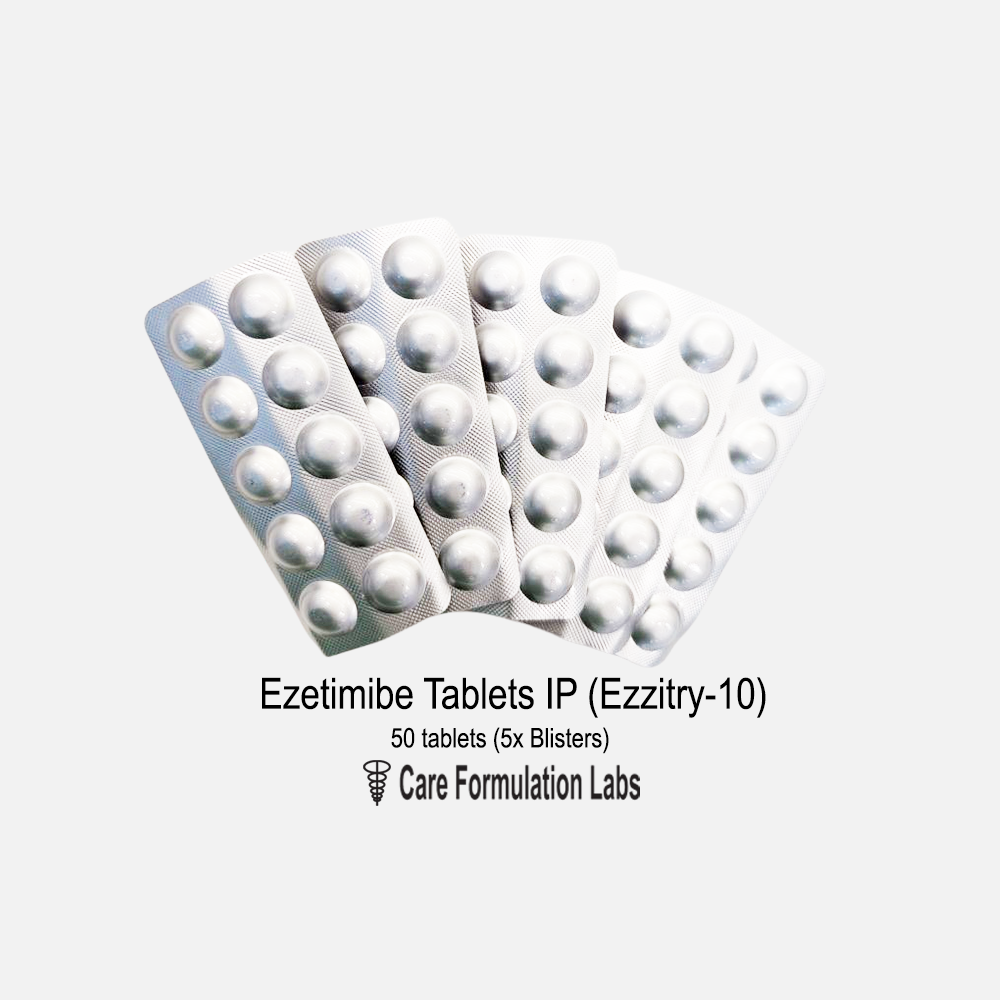
Ezetimibe 10mg (Ezzitry-10) (50 tablets, 5 blister packs)
Composition: ezetimibe 10 mg.
Category: Cycle support (cholesterol absorption inhibitor).
Purpose: Helps improve lipid profile, reduces LDL levels, and protects the cardiovascular system.
Format: tablets.
Administration: oral.
What is ezetimibe?
Ezetimibe is a modern medication that helps reduce total cholesterol, LDL cholesterol, and the risk of cardiovascular disease. Unlike statins, which act on the liver, ezetimibe has a different mechanism of action: it inhibits the absorption of cholesterol from food and bile, preventing its entry into the bloodstream. Due to this differentiated mechanism of action, ezetimibe combines well with statins, significantly increasing their effectiveness.
This medication is especially indicated for athletes who use performance-enhancing substances, particularly anabolic-androgenic steroids (AAS), which increase LDL and decrease HDL, leading to the risk of cardiovascular complications so common among professional athletes.
Main effects of ezetimibe
📉 Reduction of LDL levels.
🔽 Moderate reduction in total cholesterol and triglycerides.
🛡️ Greater effectiveness in maintaining HDL levels when combined with statins (e.g., pitavastatin).
🍃 Less stress on the liver than statin monotherapy.
🫀 Additional cardiovascular protection for athletes who use performance-enhancing substances.
How to take Ezetimibe?
Dosage, dosing schedule and combination with statins
TypeDosageDurationMonotherapy with ezetimibe.10 mg once a day.Minimum duration of 4 to 6 weeks, but can be used long-term.Combination with Pitavastatin .Ezetimibe 10 mg + Pitavastatin 1–4 mg/day.The course typically lasts from 3 to 12 months.
When using anabolic-androgenic steroids (AAS), the same dosages are used throughout the cycle, plus an additional 4 to 6 weeks after completion to maintain the lipid profile and protect the cardiovascular system.
Typically, the dose is fixed (10 mg/day) and there is no need to increase it — effectiveness is achieved with the standard dosage.
The continuation or adjustment of therapy is recommended based on monitoring tests: cholesterol levels (LDL, HDL, total), triglycerides, and liver function tests (ALT, AST).
Precautions
Avoid concomitant use with cyclosporine (increased concentrations).
Monitor liver enzymes (ALT, AST) during combination therapy with statins.
Use with caution in patients with liver disease.
Side effects
Mild gastrointestinal disorders (diarrhea, abdominal pain)
Headaches.
Fatigue.
When combined with statins, the incidence of muscle pain is higher than with monotherapy.
How to store it?
Store in a dry place, at temperatures below 25°C, away from sunlight.
Use before the expiration date.
Keep out of reach of children.
How does ezetimibe work?
Ezetimibe acts in the small intestine, where most of the absorption of dietary cholesterol (present in the food you eat) and biliary cholesterol (cholesterol secreted by the liver in bile to digest fats) occurs. The drug targets a specific transporter protein, NPC1L1 (Niemann-Pick C1-like 1), found on the surface of intestinal cells. This protein acts as a pathway through which cholesterol enters the bloodstream. Ezetimibe closes this pathway, and instead of entering the bloodstream, the cholesterol is naturally eliminated by the intestines. ( Altmann et al., 2004 ).
When cholesterol levels decrease, the liver receives a signal that its reserves are insufficient. As a result, the liver responds by increasing the number of LDL receptors, which transport cholesterol from the blood to the liver ( Sudhop et al., 2002 ). Consequently, LDL levels in the blood decrease.
The more LDL particles are used by the liver, the less "bad" cholesterol will remain to be deposited on the walls of blood vessels.
When combined with statins, the effect is enhanced. The combination of ezetimibe with statins significantly reduces the risk of multiple sclerosis and improves its prevention ( Badarin et al., 2009 , Cannon et al., 2015 ).
Composition: ezetimibe 10 mg.
Category: Cycle support (cholesterol absorption inhibitor).
Purpose: Helps improve lipid profile, reduces LDL levels, and protects the cardiovascular system.
Format: tablets.
Administration: oral.
What is ezetimibe?
Ezetimibe is a modern medication that helps reduce total cholesterol, LDL cholesterol, and the risk of cardiovascular disease. Unlike statins, which act on the liver, ezetimibe has a different mechanism of action: it inhibits the absorption of cholesterol from food and bile, preventing its entry into the bloodstream. Due to this differentiated mechanism of action, ezetimibe combines well with statins, significantly increasing their effectiveness.
This medication is especially indicated for athletes who use performance-enhancing substances, particularly anabolic-androgenic steroids (AAS), which increase LDL and decrease HDL, leading to the risk of cardiovascular complications so common among professional athletes.
Main effects of ezetimibe
📉 Reduction of LDL levels.
🔽 Moderate reduction in total cholesterol and triglycerides.
🛡️ Greater effectiveness in maintaining HDL levels when combined with statins (e.g., pitavastatin).
🍃 Less stress on the liver than statin monotherapy.
🫀 Additional cardiovascular protection for athletes who use performance-enhancing substances.
How to take Ezetimibe?
Dosage, dosing schedule and combination with statins
TypeDosageDurationMonotherapy with ezetimibe.10 mg once a day.Minimum duration of 4 to 6 weeks, but can be used long-term.Combination with Pitavastatin .Ezetimibe 10 mg + Pitavastatin 1–4 mg/day.The course typically lasts from 3 to 12 months.
When using anabolic-androgenic steroids (AAS), the same dosages are used throughout the cycle, plus an additional 4 to 6 weeks after completion to maintain the lipid profile and protect the cardiovascular system.
Typically, the dose is fixed (10 mg/day) and there is no need to increase it — effectiveness is achieved with the standard dosage.
The continuation or adjustment of therapy is recommended based on monitoring tests: cholesterol levels (LDL, HDL, total), triglycerides, and liver function tests (ALT, AST).
Precautions
Avoid concomitant use with cyclosporine (increased concentrations).
Monitor liver enzymes (ALT, AST) during combination therapy with statins.
Use with caution in patients with liver disease.
Side effects
Mild gastrointestinal disorders (diarrhea, abdominal pain)
Headaches.
Fatigue.
When combined with statins, the incidence of muscle pain is higher than with monotherapy.
How to store it?
Store in a dry place, at temperatures below 25°C, away from sunlight.
Use before the expiration date.
Keep out of reach of children.
How does ezetimibe work?
Ezetimibe acts in the small intestine, where most of the absorption of dietary cholesterol (present in the food you eat) and biliary cholesterol (cholesterol secreted by the liver in bile to digest fats) occurs. The drug targets a specific transporter protein, NPC1L1 (Niemann-Pick C1-like 1), found on the surface of intestinal cells. This protein acts as a pathway through which cholesterol enters the bloodstream. Ezetimibe closes this pathway, and instead of entering the bloodstream, the cholesterol is naturally eliminated by the intestines. ( Altmann et al., 2004 ).
When cholesterol levels decrease, the liver receives a signal that its reserves are insufficient. As a result, the liver responds by increasing the number of LDL receptors, which transport cholesterol from the blood to the liver ( Sudhop et al., 2002 ). Consequently, LDL levels in the blood decrease.
The more LDL particles are used by the liver, the less "bad" cholesterol will remain to be deposited on the walls of blood vessels.
When combined with statins, the effect is enhanced. The combination of ezetimibe with statins significantly reduces the risk of multiple sclerosis and improves its prevention ( Badarin et al., 2009 , Cannon et al., 2015 ).