

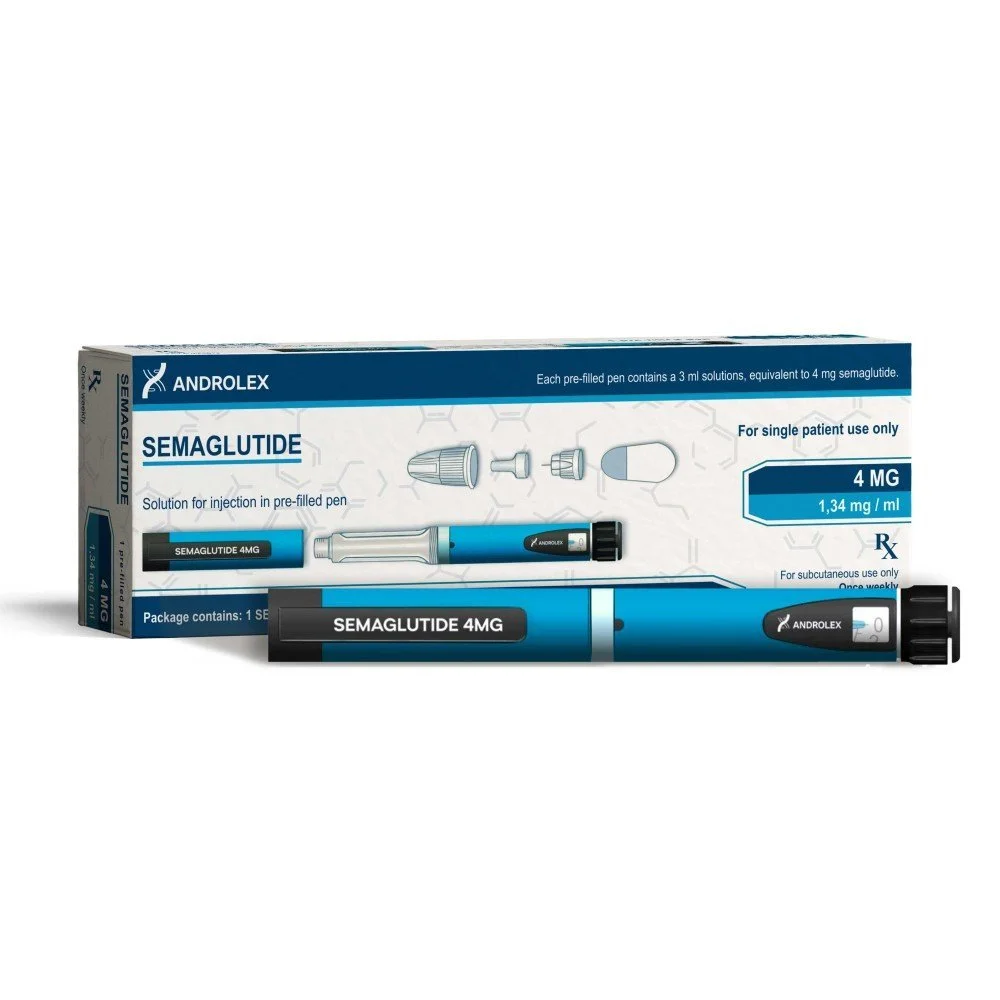
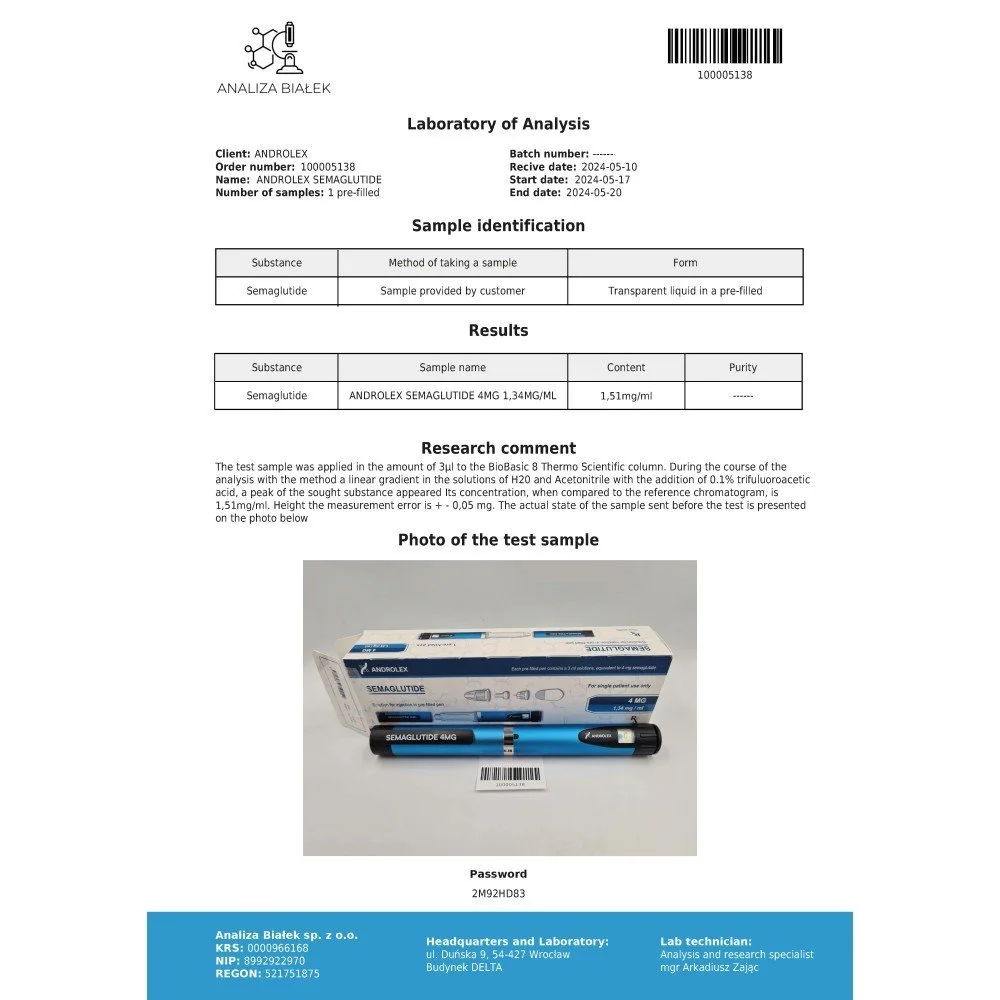
Androlex Pen Semaglutide 4mg
Understanding Semaglutide
Semaglutide is a well-known medication used primarily to treat type 2 diabetes. It is classified as a " GLP-1 receptor agonist ".
In addition to diabetes, it is also prescribed for weight management in people with specific health conditions, as it helps regulate blood sugar and, most importantly, suppress hunger, which can aid in weight loss.
The advantages of the pen form
Semaglutide's pen form provides ease of use, precise dosing, and is easy to carry. Reasons why it stands out include:
Easy to use: The pen's design allows individuals to self-administer the injection, eliminating the need for professional assistance. It is designed to be simple to hold and use, especially compared to traditional injection methods.
Dosage precision: allows users to choose precise dosages, ensuring that the amount of medication is correct every time, thus minimizing the chances of dosage errors.
Practicality: Being pre-filled and disposable, this pen is compact and discreet for easy transport and use, anytime, anywhere.
Minimizing worry about injections: its design, which typically hides the needle, can reduce the discomfort and anxiety associated with injections.
Consistency of treatment: because it is simple and discreet, people may be more committed to their medication regimen, which can improve disease control.
Essentially, the pen makes administering medication convenient and more pleasant for people with type 2 diabetes or other conditions that require injectable treatment.
How it works
Semaglutide mimics the GLP-1 hormone to lower high blood sugar levels in several ways, such as increasing insulin when blood sugar levels are high and decreasing sugar production in the liver, which helps control how much you eat and reduces overall calorie intake.
Advantages of Semaglutide
For those who suffer from type 2 diabetes or want to control their weight, Semaglutide has many benefits:
Better blood sugar control – By promoting insulin production as needed, it reduces blood sugar levels;
Weight loss – There is evidence that it reduces the risk of serious heart problems, such as heart attacks and strokes;
Heart health – Some studies have shown that it can reduce the risk of serious cardiac events, potentially saving lives;
Simplified dosing – With weekly injection schedules, it is more convenient than taking medications daily;
Lower risk of hypoglycemia – Tends to cause fewer low blood sugar levels compared to other diabetes treatments when taken alone.
The role of SEMAGLUTIDE
Semaglutide is the active ingredient in this medication, which helps lower blood sugar levels and may also contribute to the prevention of heart disease.
The use of SEMAGLUTIDE:
Alone – for those whose blood sugar level is not well controlled by diet and exercise and who cannot take metformin;
Combined – with other diabetes medications when more control over blood sugar is needed. It is essential to continue following the diet and exercise regimen as recommended by your doctor.
Possible side effects of Semaglutide
Semaglutide can cause certain side effects, such as:
Nausea
Upset stomach
Digestive problems
Loose stools
Stomach ache
Irregular bowel movements
Headaches
Tiredness
Reducing hunger
Rare but serious problems can include inflammation of the pancreas , kidney complications , and a higher chance of specific thyroid cancers . It is essential to discuss these potential risks with your doctor.
Guidelines for the use of Semaglutide
The medication dosage is adjusted based on how the patient reacts and tolerates it, with a subcutaneous injection once a week. Here is the typical dosage cycle for Semaglutide:
Starting Dose: To begin, it is advisable to take 0.25 mg once a week for one month. This dose is more to accustom your body to the medication than to control blood sugar.
Continuous Dose: The dose may be increased to 0.5 mg weekly after four weeks. The amount may be adjusted based on the patient's needs and tolerance to the medication.
Increasing the dose: For better blood sugar control, the dose may be increased to 1 mg per week after one month — and potentially even doubled eventually, provided it is well tolerated.
Administration of SEMAGLUTIDE
SEMAGLUTIDE is intended for subcutaneous injection. Avoid injecting into veins or muscles.
It is best to administer the injection in the thigh, abdomen, or upper arm.
When to use SEMAGLUTIDE
It should be taken weekly, on the same day if possible.
The exact timing isn't crucial – you can inject it with or without food.
Precautions for use
Pancreatitis: There have been some reports of this condition with medications such as Semaglutide. If you experience symptoms, stop taking the medication and seek medical advice.
For those with diabetic eye disease, be careful, as this may worsen the condition.
Kidney problems: there is a risk of acute and worsening kidney problems, which may require dialysis treatment.
When combined with specific diabetes medications, there is an increased risk of gallbladder problems , such as gallstones.
If you are also taking insulin, be aware that Semaglutide may increase the risk of low blood sugar levels. Talk to your doctor about the possibility of reducing your insulin dose.
Storing SEMAGLUTIDE correctly
Keep it where children cannot find or reach it, and check expiration dates before use. Store unused pens in the refrigerator, but not too close to it and protected from light.
Before using:
Keep it cold before opening and do not let it freeze.
While using:
Store it below 30°C or in the refrigerator, away from the freezer, and do not use it if it is frozen.
To protect from light when not in use, keep the lid on.
Do not dispose of medication carelessly – ask a pharmacist about environmentally friendly disposal methods.
Package contents and other details
What's in SEMAGLUTIDE?
The main ingredient is semaglutide. You get 1.34 mg in each milliliter of the injection. Each pen contains 4 mg in 3 ml of solution. Doses range from 0.25 to 1 mg of semaglutide in 0.74 ml of solvent.
In addition to semaglutide, it also contains: disodium phosphate dihydrate, propylene glycol, phenol, sterile water, and pH balancing agents. For more details on sodium, see another section.
Appearance and packaging details
Semaglutide is presented as a clear, ready-to-use solution in an injector pen, with 3 ml per pen.
The 4 mg dosage is sold in kits containing:
A pen with four needles for single use.
Instructions are provided on how to use the 4 mg Semaglutide injection with the pre-filled pen.
Your injection pen comes pre-filled with 4 mg of Semaglutide.
It is intended for single-use needles, which come with the kit.
Buying Semaglutide
Currently, it is difficult to find this medication in physical pharmacies, which has led to an increase in online purchases. It is generally only dispensed with a prescription for patients with diabetes.
Reasons to consider buying it
Semaglutide may be your answer if you are battling constant hunger on your weight loss journey. Considered safe and beneficial, it helps reduce appetite, lose weight, eliminate fat, and potentially even prevent diabetes.
Frequently Asked Questions:
Dealing with an overdose
Given the packaging, unintentional high doses are unlikely. However, if this does occur, significant drops in blood sugar and serious health consequences are possible. If you have taken too much, seek medical help immediately.
Legality of online shopping
Buying Semaglutide online is not illegal, but be aware of the prescription rules in your country. Avoid large and suspicious mail-order purchases.
Can it help with weight loss?
In fact, it is used for weight loss in people with type 2 diabetes and even for those without diabetes who want to control their weight due to its appetite-reducing properties.
It has gained popularity among celebrities and those seeking a simple weight loss solution.
Is it the same as insulin?
Although some may confuse Semaglutide with insulin, they are not the same thing. It is a GLP-1 receptor agonist that helps lower blood sugar and aids in weight loss, unlike insulin, which can increase fat storage.
Understanding Semaglutide
Semaglutide is a well-known medication used primarily to treat type 2 diabetes. It is classified as a " GLP-1 receptor agonist ".
In addition to diabetes, it is also prescribed for weight management in people with specific health conditions, as it helps regulate blood sugar and, most importantly, suppress hunger, which can aid in weight loss.
The advantages of the pen form
Semaglutide's pen form provides ease of use, precise dosing, and is easy to carry. Reasons why it stands out include:
Easy to use: The pen's design allows individuals to self-administer the injection, eliminating the need for professional assistance. It is designed to be simple to hold and use, especially compared to traditional injection methods.
Dosage precision: allows users to choose precise dosages, ensuring that the amount of medication is correct every time, thus minimizing the chances of dosage errors.
Practicality: Being pre-filled and disposable, this pen is compact and discreet for easy transport and use, anytime, anywhere.
Minimizing worry about injections: its design, which typically hides the needle, can reduce the discomfort and anxiety associated with injections.
Consistency of treatment: because it is simple and discreet, people may be more committed to their medication regimen, which can improve disease control.
Essentially, the pen makes administering medication convenient and more pleasant for people with type 2 diabetes or other conditions that require injectable treatment.
How it works
Semaglutide mimics the GLP-1 hormone to lower high blood sugar levels in several ways, such as increasing insulin when blood sugar levels are high and decreasing sugar production in the liver, which helps control how much you eat and reduces overall calorie intake.
Advantages of Semaglutide
For those who suffer from type 2 diabetes or want to control their weight, Semaglutide has many benefits:
Better blood sugar control – By promoting insulin production as needed, it reduces blood sugar levels;
Weight loss – There is evidence that it reduces the risk of serious heart problems, such as heart attacks and strokes;
Heart health – Some studies have shown that it can reduce the risk of serious cardiac events, potentially saving lives;
Simplified dosing – With weekly injection schedules, it is more convenient than taking medications daily;
Lower risk of hypoglycemia – Tends to cause fewer low blood sugar levels compared to other diabetes treatments when taken alone.
The role of SEMAGLUTIDE
Semaglutide is the active ingredient in this medication, which helps lower blood sugar levels and may also contribute to the prevention of heart disease.
The use of SEMAGLUTIDE:
Alone – for those whose blood sugar level is not well controlled by diet and exercise and who cannot take metformin;
Combined – with other diabetes medications when more control over blood sugar is needed. It is essential to continue following the diet and exercise regimen as recommended by your doctor.
Possible side effects of Semaglutide
Semaglutide can cause certain side effects, such as:
Nausea
Upset stomach
Digestive problems
Loose stools
Stomach ache
Irregular bowel movements
Headaches
Tiredness
Reducing hunger
Rare but serious problems can include inflammation of the pancreas , kidney complications , and a higher chance of specific thyroid cancers . It is essential to discuss these potential risks with your doctor.
Guidelines for the use of Semaglutide
The medication dosage is adjusted based on how the patient reacts and tolerates it, with a subcutaneous injection once a week. Here is the typical dosage cycle for Semaglutide:
Starting Dose: To begin, it is advisable to take 0.25 mg once a week for one month. This dose is more to accustom your body to the medication than to control blood sugar.
Continuous Dose: The dose may be increased to 0.5 mg weekly after four weeks. The amount may be adjusted based on the patient's needs and tolerance to the medication.
Increasing the dose: For better blood sugar control, the dose may be increased to 1 mg per week after one month — and potentially even doubled eventually, provided it is well tolerated.
Administration of SEMAGLUTIDE
SEMAGLUTIDE is intended for subcutaneous injection. Avoid injecting into veins or muscles.
It is best to administer the injection in the thigh, abdomen, or upper arm.
When to use SEMAGLUTIDE
It should be taken weekly, on the same day if possible.
The exact timing isn't crucial – you can inject it with or without food.
Precautions for use
Pancreatitis: There have been some reports of this condition with medications such as Semaglutide. If you experience symptoms, stop taking the medication and seek medical advice.
For those with diabetic eye disease, be careful, as this may worsen the condition.
Kidney problems: there is a risk of acute and worsening kidney problems, which may require dialysis treatment.
When combined with specific diabetes medications, there is an increased risk of gallbladder problems , such as gallstones.
If you are also taking insulin, be aware that Semaglutide may increase the risk of low blood sugar levels. Talk to your doctor about the possibility of reducing your insulin dose.
Storing SEMAGLUTIDE correctly
Keep it where children cannot find or reach it, and check expiration dates before use. Store unused pens in the refrigerator, but not too close to it and protected from light.
Before using:
Keep it cold before opening and do not let it freeze.
While using:
Store it below 30°C or in the refrigerator, away from the freezer, and do not use it if it is frozen.
To protect from light when not in use, keep the lid on.
Do not dispose of medication carelessly – ask a pharmacist about environmentally friendly disposal methods.
Package contents and other details
What's in SEMAGLUTIDE?
The main ingredient is semaglutide. You get 1.34 mg in each milliliter of the injection. Each pen contains 4 mg in 3 ml of solution. Doses range from 0.25 to 1 mg of semaglutide in 0.74 ml of solvent.
In addition to semaglutide, it also contains: disodium phosphate dihydrate, propylene glycol, phenol, sterile water, and pH balancing agents. For more details on sodium, see another section.
Appearance and packaging details
Semaglutide is presented as a clear, ready-to-use solution in an injector pen, with 3 ml per pen.
The 4 mg dosage is sold in kits containing:
A pen with four needles for single use.
Instructions are provided on how to use the 4 mg Semaglutide injection with the pre-filled pen.
Your injection pen comes pre-filled with 4 mg of Semaglutide.
It is intended for single-use needles, which come with the kit.
Buying Semaglutide
Currently, it is difficult to find this medication in physical pharmacies, which has led to an increase in online purchases. It is generally only dispensed with a prescription for patients with diabetes.
Reasons to consider buying it
Semaglutide may be your answer if you are battling constant hunger on your weight loss journey. Considered safe and beneficial, it helps reduce appetite, lose weight, eliminate fat, and potentially even prevent diabetes.
Frequently Asked Questions:
Dealing with an overdose
Given the packaging, unintentional high doses are unlikely. However, if this does occur, significant drops in blood sugar and serious health consequences are possible. If you have taken too much, seek medical help immediately.
Legality of online shopping
Buying Semaglutide online is not illegal, but be aware of the prescription rules in your country. Avoid large and suspicious mail-order purchases.
Can it help with weight loss?
In fact, it is used for weight loss in people with type 2 diabetes and even for those without diabetes who want to control their weight due to its appetite-reducing properties.
It has gained popularity among celebrities and those seeking a simple weight loss solution.
Is it the same as insulin?
Although some may confuse Semaglutide with insulin, they are not the same thing. It is a GLP-1 receptor agonist that helps lower blood sugar and aids in weight loss, unlike insulin, which can increase fat storage.